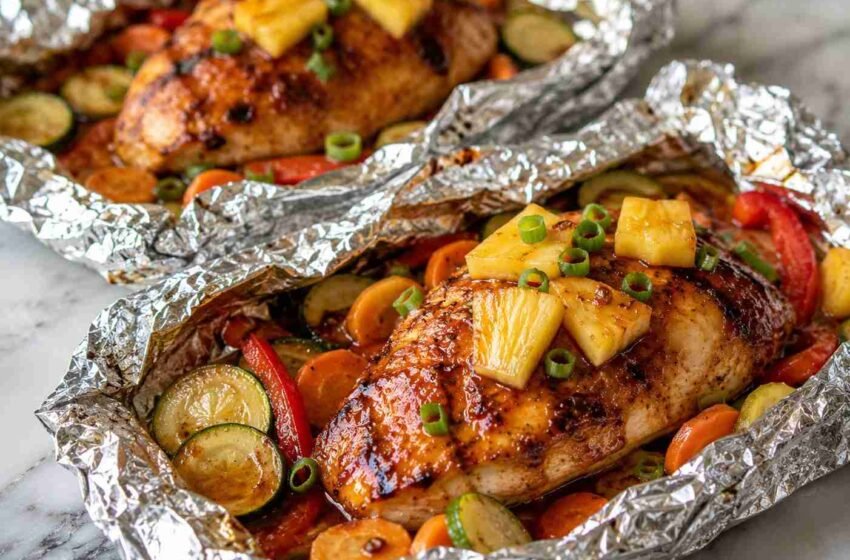
If you’re looking for a healthy dinner that’s packed with lean protein, colorful vegetables, and bold flavor, these Diabetic-Friendly High-Protein Teriyaki Chicken and Pineapple Foil Packets are the perfect choice. This recipe transforms a classic foil packet meal into a nutritious, blood sugar-conscious dish by reducing added sugars, increasing protein, and using fresh ingredients that provide both flavor and nourishment. Every packet locks in moisture while allowing the chicken and vegetables to cook together, creating an incredibly juicy and satisfying meal.
Unlike traditional teriyaki recipes that often contain large amounts of sugar, this version uses a low-sugar homemade teriyaki sauce that delivers all the familiar savory, slightly sweet, and umami flavors without causing unnecessary blood sugar spikes. Fresh pineapple is used in moderation to add natural sweetness, while plenty of fiber-rich vegetables help balance the carbohydrates and create a wholesome meal that fits into a diabetic-friendly lifestyle. Lean chicken breast supplies an excellent amount of protein, making every serving filling and nutritious.
One of the biggest advantages of foil packet meals is their simplicity. Everything cooks together in one sealed packet, allowing the ingredients to steam gently in their own flavorful juices while minimizing cleanup. Whether you’re cooking in the oven, on the grill, or preparing meals ahead for busy weekdays, these Teriyaki Chicken and Pineapple Foil Packets deliver restaurant-quality flavor with very little effort. They’re perfect for family dinners, meal prep, summer cookouts, or anyone looking for a healthy, delicious recipe that doesn’t compromise on taste.
Why You’ll Love This Recipe
- Naturally high in lean protein
- Diabetic-friendly with reduced sugar
- Loaded with colorful vegetables
- Quick and easy to prepare
- Perfect for meal prep
- Minimal cleanup thanks to foil packet cooking
- Juicy, tender chicken every time
- Balanced with healthy carbohydrates
- Rich in vitamins, minerals, and fiber
- Family-friendly and customizable
- Oven and grill friendly
- Naturally gluten-free when using gluten-free tamari
Also CheckOut: 30-Day High-Protein Meal Plan for Weight Loss: Easy Recipes, Meal Prep Tips & Complete Nutrition Guide
Equipments
- Large baking sheet (approximately 18 x 13 inches) to support the foil packets during baking.
- Heavy-duty aluminum foil, approximately 12 x 16-inch sheets, for securely sealing each packet.
- Large 4 to 5-quart mixing bowl for combining vegetables.
- Medium 2-cup mixing bowl for preparing the homemade teriyaki sauce.
- Sharp 8-inch chef’s knife for slicing vegetables evenly.
- Large cutting board for safe food preparation.
- Measuring cups for accurate ingredient portions.
- Measuring spoons for seasoning and sauce ingredients.
- Small whisk for blending the sauce until smooth.
- Silicone pastry brush or spoon for evenly coating the chicken.
- Instant-read meat thermometer to ensure the chicken reaches a safe internal temperature of 165°F (74°C).
- Kitchen tongs for safely handling the hot foil packets.
Ingredients
For the Chicken and Vegetables
- 2 large boneless, skinless chicken breasts (about 8 ounces each)
- 1 cup fresh pineapple chunks
- 1 medium red bell pepper, thinly sliced
- 1 medium zucchini, sliced into ¼-inch rounds
- 1 medium carrot, thinly sliced
- 3 green onions, chopped
- 1 tablespoon olive oil
- ¼ teaspoon sea salt
- ¼ teaspoon freshly ground black pepper
For the Diabetic-Friendly Teriyaki Sauce
- 3 tablespoons low-sodium soy sauce or tamari
- 1 tablespoon rice vinegar
- 1 tablespoon sesame oil
- 1 tablespoon Dijon mustard
- 2 teaspoons grated fresh ginger
- 2 garlic cloves, minced
- 1 teaspoon cornstarch
- 2 tablespoons water
- 1 teaspoon granulated monk fruit sweetener or erythritol
- ½ teaspoon sesame seeds (optional)
Optional Garnishes
- Additional chopped green onions
- Toasted sesame seeds
- Fresh cilantro
- Lime wedges
Ingredients Notes
Chicken Breast
- Boneless, skinless chicken breast provides lean, high-quality protein while keeping the meal lower in saturated fat.
- Uniform thickness ensures even cooking throughout the foil packet.
- Pat the chicken dry before seasoning to help the sauce adhere better.
Fresh Pineapple
- Fresh pineapple provides natural sweetness and tropical flavor while containing digestive enzymes that help tenderize the chicken.
- Using fresh instead of canned avoids unnecessary added sugars.
- Keep the portion moderate to maintain a diabetic-friendly carbohydrate balance.
Red Bell Pepper
- Bell peppers contribute sweetness, crunch, and vibrant color without significantly increasing carbohydrates.
- They’re packed with vitamin C and antioxidants.
- Slice evenly for consistent cooking.
Zucchini
- Zucchini absorbs the flavorful sauce while remaining low in calories and carbohydrates.
- It adds moisture to the foil packets.
- Medium slices prevent overcooking.
Carrot
- Carrots provide natural sweetness, fiber, and beautiful color.
- Thin slices cook quickly alongside the chicken.
- The fiber helps slow carbohydrate absorption.
Green Onions
- Green onions add fresh onion flavor with a mild bite.
- They brighten the finished dish.
- Reserve some for garnish after cooking.
Olive Oil
- Olive oil helps prevent sticking while adding heart-healthy monounsaturated fats.
- It also helps distribute seasonings evenly.
- Extra virgin olive oil offers the best flavor.
Low-Sodium Soy Sauce
- Low-sodium soy sauce delivers deep umami flavor without excessive sodium.
- Tamari works well for a gluten-free option.
- It forms the savory base of the teriyaki sauce.
Rice Vinegar
- Rice vinegar balances the sweetness with gentle acidity.
- It brightens the overall flavor profile.
- A small amount goes a long way.
Sesame Oil
- Sesame oil provides authentic Asian-inspired aroma.
- Only a small quantity is needed because of its concentrated flavor.
- Toasted sesame oil delivers the richest taste.
Dijon Mustard
- Dijon mustard naturally thickens the sauce while adding tanginess.
- It enhances complexity without adding sugar.
- It also helps emulsify the sauce.
Fresh Ginger
- Fresh ginger adds warmth and freshness.
- It complements both the pineapple and soy sauce beautifully.
- Finely grate for smooth texture.
Garlic
- Fresh garlic creates rich savory flavor.
- Minced garlic disperses evenly throughout the sauce.
- Avoid jarred garlic for the freshest taste.
Monk Fruit Sweetener
- Monk fruit provides sweetness without raising blood sugar.
- It replaces traditional brown sugar commonly used in teriyaki sauce.
- Adjust according to your preferred sweetness.
Cornstarch
- Cornstarch lightly thickens the sauce.
- Only a small amount is needed.
- Mix with water first to prevent lumps.
How to Make Teriyaki Chicken and Pineapple Foil Packets
- Preheat your oven to 400°F (200°C) while preparing all ingredients so the oven reaches the proper cooking temperature before the foil packets are assembled.
- Wash the bell pepper, zucchini, green onions, and carrot thoroughly under cold running water before drying them with clean kitchen towels.
- Slice the bell pepper into thin strips, cut the zucchini into even ¼-inch rounds, thinly slice the carrot, and chop the green onions into small pieces.
- Trim any excess fat from the chicken breasts and gently pound the thicker portions until both breasts have an even thickness for consistent cooking.
- Pat the chicken completely dry using paper towels to help the seasonings and sauce cling better during baking.
- In a medium mixing bowl, combine the low-sodium soy sauce, rice vinegar, sesame oil, Dijon mustard, grated ginger, minced garlic, monk fruit sweetener, cornstarch, and water.
- Whisk continuously until the sauce becomes smooth, glossy, and fully blended with no visible lumps remaining.
- Taste the sauce and adjust the balance if desired by adding a small splash of rice vinegar for brightness or a pinch more sweetener if the pineapple is particularly tart.
- Drizzle the chicken breasts lightly with olive oil and season both sides evenly with sea salt and freshly ground black pepper.
- Cut two large sheets of heavy-duty aluminum foil, each large enough to completely wrap one chicken breast together with the vegetables.
- Lightly brush the center of each foil sheet with a few drops of olive oil to help prevent sticking during baking.
- Place one seasoned chicken breast in the center of each prepared foil sheet, leaving enough space around the edges to fold and seal the packets securely.
- Divide the sliced zucchini evenly between both packets, arranging the slices around and slightly underneath each chicken breast so they cook evenly in the flavorful juices.
- Add equal portions of the sliced carrots around each piece of chicken, ensuring they are spread into a single layer rather than piled together for more even cooking.
- Arrange the sliced red bell peppers over and around the chicken, creating a colorful layer that will soften while still maintaining a slight bite.
- Scatter the fresh pineapple chunks evenly over each chicken breast, allowing the juices to naturally flavor both the chicken and vegetables during cooking.
- Spoon the prepared diabetic-friendly teriyaki sauce generously over each chicken breast, making sure some of the sauce coats the vegetables as well.
- Use the back of a spoon or a pastry brush to spread the sauce evenly over the top and sides of the chicken for maximum flavor penetration.
- Sprinkle a small amount of chopped green onions over each packet before sealing to infuse additional aroma throughout the cooking process.
- Carefully bring the long sides of the foil together above the chicken and fold them tightly several times to create a secure seal, leaving a little space inside for steam to circulate.
- Fold the shorter ends of the foil inward several times until each packet is completely sealed. Double-check that there are no openings where steam can escape, as the trapped steam is what keeps the chicken exceptionally moist and tender.
- Place both foil packets on a large baking sheet, leaving a little space between them so the hot air can circulate evenly around each packet during baking.
- Transfer the baking sheet to the preheated oven and bake for approximately 25 to 30 minutes, depending on the thickness of the chicken breasts.
- Avoid opening the packets while they are baking. Keeping the packets sealed allows the chicken, vegetables, pineapple, and sauce to cook together in their own flavorful juices.
- About 25 minutes into cooking, carefully remove one packet and use an instant-read thermometer to check the thickest part of the chicken. The internal temperature should read at least 165°F (74°C).
- If additional cooking time is needed, reseal the packet and continue baking for another 3 to 5 minutes before checking again.
- Once fully cooked, remove the baking sheet from the oven and allow the packets to rest for about 5 minutes. This helps the juices redistribute throughout the chicken, making every bite more tender.
- Carefully open each packet away from your face and hands, as a large amount of hot steam will escape immediately.
- Spoon some of the flavorful cooking juices over the chicken and vegetables before serving to maximize moisture and flavor.
- Sprinkle the remaining chopped green onions over the top for a burst of freshness and color.
- Garnish with toasted sesame seeds if desired to add a subtle nutty crunch.
- Serve immediately while hot, either directly in the foil packet for easy cleanup or transfer everything onto a serving plate.
- Pair with cauliflower rice, steamed broccoli, roasted green beans, or another low-carbohydrate side dish for a complete diabetic-friendly meal.
- If preparing for meal prep, allow the packets to cool slightly before transferring the contents into airtight containers for refrigeration.
Recipe Information
- Prep Time: 20 minutes
- Cook Time: 30 minutes
- Total Time: 50 minutes
- Servings: 2
- Cuisine: Asian-Inspired
- Course: Main Course
Flavor Profile Breakdown
- Savory and rich from the low-sodium soy sauce
- Naturally sweet from fresh pineapple
- Slightly tangy from rice vinegar and Dijon mustard
- Warm and aromatic from fresh ginger
- Deep umami flavor throughout the sauce
- Fresh herbaceous finish from green onions
- Mild nuttiness from sesame oil
- Bright, juicy vegetables with tender chicken
- Balanced sweetness without refined sugar
- Light yet satisfying with every bite
Pro Tips for Best Results
- Pound the chicken breasts to an even thickness before cooking for perfectly even results.
- Always use fresh pineapple instead of canned varieties packed in syrup.
- Allow the chicken to rest for several minutes before opening the packets.
- Use heavy-duty aluminum foil to prevent tearing during cooking.
- Double-fold every seam to lock in moisture and steam.
- Do not overcrowd the vegetables, as even spacing helps them cook evenly.
- Toast the sesame seeds before garnishing for extra aroma and flavor.
- Add a squeeze of fresh lime just before serving for extra brightness.
- Prepare the sauce a few hours ahead to allow the flavors to develop.
- For grilling, cook over medium heat for approximately 12 to 15 minutes per side while keeping the packets sealed.
Variations & Substitutions
- Replace chicken breast with turkey breast for another lean, high-protein option.
- Substitute shrimp for a quicker seafood variation, reducing cooking time accordingly.
- Add broccoli florets for extra fiber and nutrients.
- Include sliced mushrooms for additional umami flavor.
- Replace zucchini with asparagus during spring.
- Add snow peas for extra crunch and color.
- Use coconut aminos instead of soy sauce for a slightly sweeter, soy-free alternative.
- Swap pineapple with peaches in moderation for a seasonal twist.
- Add crushed red pepper flakes for a gentle spicy kick.
- Replace sesame oil with avocado oil if preferred.
Common Mistakes to Avoid
- Using sweet bottled teriyaki sauce that contains excessive added sugar.
- Overcooking the chicken until it becomes dry.
- Cutting vegetables into uneven sizes.
- Not sealing the foil packets tightly.
- Forgetting to check the chicken with a meat thermometer.
- Using canned pineapple packed in heavy syrup.
- Adding too much salt before tasting the sauce.
- Overfilling the foil packets, which can prevent even cooking.
- Opening the packets too early and releasing valuable steam.
- Skipping the resting time after baking.
Serving Suggestions
- Serve over cauliflower rice for a low-carbohydrate dinner.
- Pair with roasted asparagus.
- Enjoy alongside steamed broccoli.
- Add a fresh cucumber salad for extra crunch.
- Serve with garlic sautéed spinach.
- Pair with roasted Brussels sprouts.
- Enjoy with a mixed green salad topped with sesame vinaigrette.
- Add sliced avocado for healthy fats.
- Serve with grilled zucchini.
- Finish with fresh lime wedges for extra freshness.
Storage & Reheating Tips
- Allow leftovers to cool completely before storing.
- Refrigerate in airtight containers for up to 4 days.
- Freeze for up to 2 months without the garnish.
- Thaw overnight in the refrigerator before reheating.
- Reheat gently in a 325°F oven until warmed through.
- Microwave individual servings in 30-second intervals to prevent overcooking.
- Add a splash of water before reheating if the sauce has thickened.
- Garnish with fresh green onions after reheating for the best flavor and presentation.
Nutrition Information (Approximate)
- Calories: 345 kcal
- Protein: 42 g
- Carbohydrates: 15 g
- Fat: 12 g
- Fiber: 3 g
- Sugar: 9 g
- Sodium: 430 mg
Final Thoughts
These Diabetic-Friendly High-Protein Teriyaki Chicken and Pineapple Foil Packets prove that healthy eating can be both incredibly flavorful and wonderfully convenient. By combining lean chicken breast, colorful vegetables, fresh pineapple, and a homemade low-sugar teriyaki sauce, this recipe delivers a satisfying meal that’s rich in protein, fiber, and essential nutrients without relying on refined sugars or processed ingredients. The foil packet cooking method locks in moisture, allowing every bite to remain juicy, tender, and bursting with flavor.
Whether you’re meal prepping for the week, preparing a quick family dinner, or looking for a nutritious option to enjoy after a busy day, this recipe is one you’ll return to again and again. With minimal cleanup, endless customization options, and wholesome ingredients, it’s an easy addition to any healthy meal plan while supporting balanced nutrition and stable energy throughout the day.
FAQs
Can I prepare the foil packets ahead of time?
Yes. Assemble the packets up to 24 hours in advance and refrigerate them until you’re ready to bake.
Is this recipe suitable for people with diabetes?
Yes. The homemade teriyaki sauce uses a sugar-free sweetener, moderate pineapple, lean protein, and fiber-rich vegetables to create a more blood sugar-friendly meal.
Can I grill these foil packets instead of baking them?
Absolutely. Grill over medium heat for about 25 to 30 minutes, turning once halfway through cooking.
Can I use chicken thighs instead of chicken breasts?
Yes. Boneless, skinless chicken thighs work well, although they may require a few extra minutes of cooking.
Can I make this recipe dairy-free?
Yes. The recipe is naturally dairy-free as written.
How do I know when the chicken is fully cooked?
Use an instant-read thermometer. The thickest part of the chicken should reach an internal temperature of 165°F (74°C).
Can I add more vegetables?
Certainly. Broccoli, mushrooms, asparagus, snap peas, and green beans are all excellent additions.
Can I freeze the cooked packets?
Yes. Cool completely before transferring to freezer-safe containers or bags. Freeze for up to two months.