

Introduction
Giada-Style Braciole is a timeless Italian comfort dish that turns simple ingredients into something deeply flavorful and elegant. Thin slices of beef are rolled with a fragrant herb and breadcrumb filling, then gently braised in a rich tomato sauce until irresistibly tender. Each bite delivers savory beef, aromatic herbs, and slow-cooked tomato goodness that feels both rustic and refined.
This dish is perfect for Sunday dinners, special family meals, or anytime you want to serve something comforting yet impressive. The slow simmer allows the flavors to fully develop, creating a sauce that’s perfect for spooning over pasta or soaking up with crusty bread. While it looks sophisticated, braciole is wonderfully approachable and rewarding to make at home.
Why You’ll Love This Recipe
- Tender beef rolls packed with herb-filled flavor
- Slow-braised in a rich, comforting tomato sauce
- Classic Italian dish perfect for family dinners
- Simple ingredients with big, developed flavor
- Excellent for make-ahead meals and leftovers
Ingredients
For the Beef Rolls
- 680 g flank steak or sirloin, thinly sliced and pounded
- 90 g breadcrumbs (or gluten-free breadcrumbs)
- 2 cloves garlic, finely minced
- 2 tablespoons fresh parsley, finely chopped
- 1 tablespoon fresh basil, finely chopped
- Salt, to taste
- Black pepper, to taste
For the Sauce
- 30 ml extra virgin olive oil
- 1 medium onion, finely chopped
- 800 g crushed tomatoes
- 1 teaspoon dried oregano
- ½ teaspoon sugar (optional)
- Salt, to taste
- Black pepper, to taste

How to Make Giada-Style Braciole
- Lay the beef slices flat on a cutting board and season lightly with salt and black pepper
- In a bowl, combine breadcrumbs, minced garlic, chopped parsley, and basil
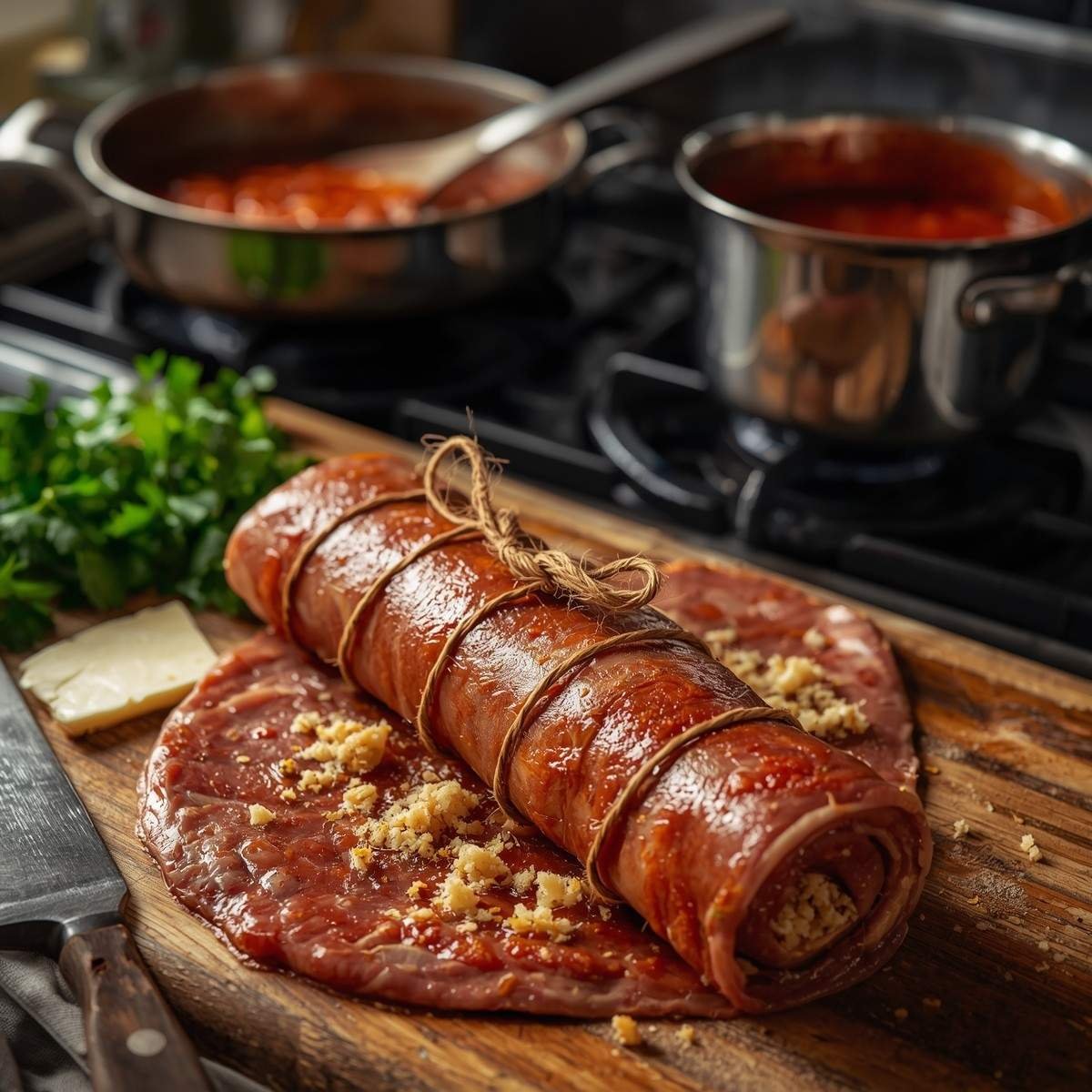
- Spread a thin, even layer of the breadcrumb mixture over each slice of beef
- Roll the beef tightly from one end to form compact rolls
- Secure each roll with kitchen twine or toothpicks
- Heat olive oil in a large, heavy-bottomed pan over medium heat
- Add the beef rolls and sear on all sides until browned
- Remove the beef rolls and set aside
- In the same pan, add chopped onion and sauté until soft and translucent
- Stir in crushed tomatoes, dried oregano, optional sugar, salt, and black pepper
- Bring the sauce to a gentle simmer
- Return the beef rolls to the pan, spooning sauce over them
- Cover and simmer on low heat for 60–90 minutes until the beef is fork-tender
- Remove twine or toothpicks before serving
Recipe Information
Prep Time: 25 minutes
Cook Time: 1 hour 30 minutes
Total Time: 1 hour 55 minutes
Servings: 4
Cuisine: Italian
Course: Main Course
Flavor Profile Breakdown
This braciole is rich, savory, and deeply comforting. The beef becomes tender and juicy, infused with garlic and fresh herbs. The tomato sauce is balanced and aromatic, with oregano adding warmth and optional sugar smoothing out acidity. Together, the dish delivers classic Italian depth and homestyle richness.
Pro Tips for Best Results
Pound the beef evenly so it rolls easily and cooks uniformly. Don’t overfill the rolls — a thin layer of filling ensures proper rolling and even cooking. Sear the beef well before simmering to build flavor. Let the sauce simmer gently rather than boiling to keep the meat tender.
Variations & Substitutions
Use thyme or rosemary in place of basil for a different herb profile. Add grated Parmesan to the breadcrumb filling for extra richness. Swap flank steak for sirloin if preferred. Include a splash of red wine in the sauce for deeper complexity.
Common Mistakes to Avoid
Skipping the sear — it adds essential flavor. Cooking at too high heat — this can toughen the beef. Overstuffing the rolls — leads to filling leakage. Forgetting to remove twine before serving.
Serving Suggestions
Serve Giada-Style Braciole over pasta, creamy polenta, or mashed potatoes. Pair with a crisp green salad and crusty bread to soak up the sauce. It also works beautifully as part of a larger Italian-style spread.
Storage & Reheating Tips
Store leftovers in an airtight container in the refrigerator for up to 3 days. Reheat gently on the stovetop over low heat, adding a splash of water if the sauce thickens too much. Braciole flavors deepen beautifully overnight.
Nutrition Information (Approximate)
Calories: 420 kcal
Protein: 36 g
Carbohydrates: 18 g
Fat: 22 g
Fiber: 3 g
Sugar: 7 g
Sodium: 620 mg

Ingredients
Method
- Lay the beef slices flat on a cutting board and season lightly with salt and black pepper
- In a bowl, combine breadcrumbs, minced garlic, chopped parsley, and basil
- Spread a thin, even layer of the breadcrumb mixture over each slice of beef
- Roll the beef tightly from one end to form compact rolls
- Secure each roll with kitchen twine or toothpicks
- Heat olive oil in a large, heavy-bottomed pan over medium heat
- Add the beef rolls and sear on all sides until browned
- Remove the beef rolls and set aside
- In the same pan, add chopped onion and sauté until soft and translucent
- Stir in crushed tomatoes, dried oregano, optional sugar, salt, and black pepper
- Bring the sauce to a gentle simmer
- Return the beef rolls to the pan, spooning sauce over them
- Cover and simmer on low heat for 60–90 minutes until the beef is fork-tender
- Remove twine or toothpicks before serving
Notes
Carbohydrates: 18 g
Fat: 22 g
Fiber: 3 g
Sugar: 7 g
Sodium: 620 mg
Final Thoughts
Giada-Style Braciole is a perfect example of how traditional Italian cooking transforms humble ingredients into something memorable. Slow-simmered, comforting, and deeply flavorful, this dish is ideal for relaxed dinners and special occasions alike. Once you make it, it’s sure to become a cherished favorite.

FAQs
What cut of beef works best for braciole?
Flank steak or sirloin works best because they’re flavorful and tender when braised.
Can I make braciole ahead of time?
Yes — braciole tastes even better the next day after the flavors have melded.
Do I have to use fresh herbs?
Fresh herbs provide the best flavor, but dried herbs can be used in smaller amounts if needed.
Can I freeze cooked braciole?
Yes — freeze in sauce for up to 2 months, then thaw overnight before reheating.
Is sugar necessary in the sauce?
It’s optional and only used to balance acidity if your tomatoes are very sharp.

