

The Mediterranean diet is consistently recommended by nutrition professionals for its strong association with heart health, metabolic balance, and long-term wellness. One of the most important yet often overlooked aspects of this dietary pattern is breakfast. A Mediterranean-style breakfast focuses on whole, minimally processed foods that provide steady energy, essential nutrients, and long-lasting satiety without excessive sugar or refined carbohydrates.
Unlike heavy or highly processed breakfasts, Mediterranean breakfasts are built around healthy fats, quality proteins, fiber-rich carbohydrates, and antioxidant-dense fruits and vegetables. This combination supports stable blood sugar levels, digestive health, and mental focus throughout the morning. Incorporating Mediterranean breakfast recipes into your daily routine can help improve overall diet quality while keeping meals enjoyable and satisfying.
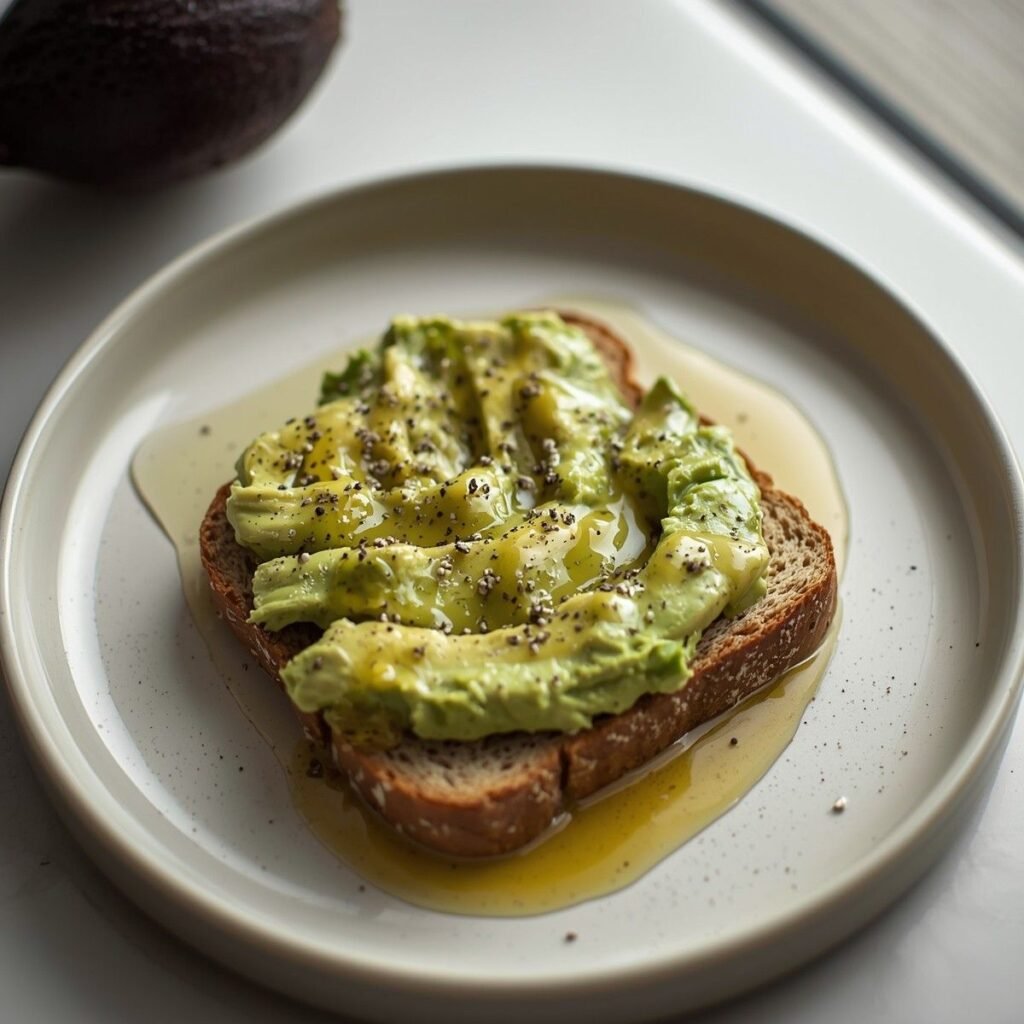
1. Avocado Toast with Whole-Grain Bread
Avocado toast is a modern favorite that fits perfectly within the Mediterranean diet framework. Whole-grain bread provides complex carbohydrates and dietary fiber, while avocado supplies heart-healthy monounsaturated fats. This balance supports sustained energy and fullness throughout the morning. The addition of olive oil enhances antioxidant intake and flavor. This breakfast is ideal for individuals seeking simplicity without compromising nutrition.
Ingredients
- Whole-grain bread – 1 slice
- Ripe avocado – ½ medium
- Extra virgin olive oil – 1 teaspoon
- Lemon juice – 1 teaspoon
- Salt – to taste
- Black pepper – to taste
Instructions
- Toast the whole-grain bread until lightly crisp
- Mash avocado with lemon juice, salt, and pepper
- Spread evenly over toast
- Drizzle olive oil on top
- Serve immediately
Nutrients (Approximate)
- Calories: ~260 kcal
- Protein: ~6 g
- Carbohydrates: ~30 g
- Fat: ~15 g
- Fiber: ~9 g
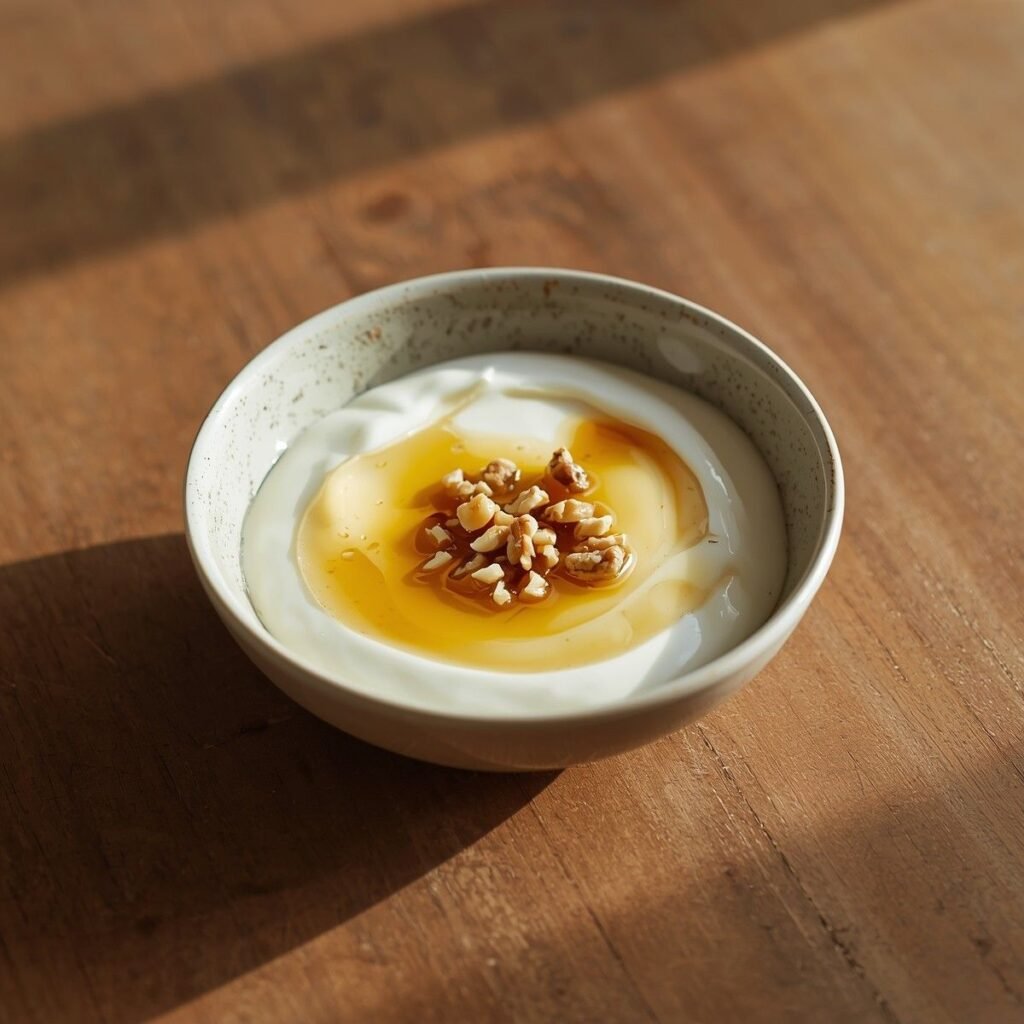
2. Greek Yogurt with Honey and Walnuts
Greek yogurt is a core component of Mediterranean eating due to its high protein content and probiotic benefits. When combined with honey and walnuts, it creates a balanced breakfast that supports digestive health and muscle maintenance. Walnuts provide omega-3 fatty acids, while honey adds natural sweetness without refined sugar. This breakfast is light, satisfying, and suitable for daily consumption.
Ingredients
- Plain Greek yogurt – 1 cup
- Raw honey – 1 teaspoon
- Walnuts (chopped) – 2 tablespoons
Instructions
- Place Greek yogurt in a bowl
- Drizzle honey evenly on top
- Sprinkle walnuts over the yogurt
- Serve fresh
Nutrients (Approximate)
- Calories: ~280 kcal
- Protein: ~17 g
- Carbohydrates: ~20 g
- Fat: ~14 g
- Fiber: ~3 g
3. Vegetable Omelet with Olive Oil
Eggs provide complete protein and essential nutrients such as choline and vitamin B12, making them an excellent Mediterranean breakfast option. A vegetable omelet cooked in olive oil offers protein, healthy fats, and antioxidants in one meal. Vegetables add fiber and micronutrients while keeping the meal light. This breakfast supports satiety and sustained mental focus throughout the morning.
Ingredients
- Eggs – 2 large
- Spinach – ½ cup
- Tomatoes (chopped) – ¼ cup
- Onion (chopped) – 2 tablespoons
- Olive oil – 1 teaspoon
- Salt and pepper – to taste
Instructions
- Heat olive oil in a pan over medium heat
- Sauté onion and vegetables briefly
- Beat eggs and pour into the pan
- Cook until set and fold gently
- Serve warm

Nutrients (Approximate)
- Calories: ~290 kcal
- Protein: ~18 g
- Carbohydrates: ~8 g
- Fat: ~22 g
- Fiber: ~2 g
4. Whole-Grain Bread with Cheese and Olives
This traditional Mediterranean breakfast is simple, flavorful, and nutritionally balanced. Whole-grain bread provides slow-digesting carbohydrates, cheese contributes protein and calcium, and olives supply heart-healthy fats. Although modest in ingredients, this meal is filling and satisfying when eaten in appropriate portions. It reflects the Mediterranean approach of quality over quantity.
Ingredients
- Whole-grain bread – 1 slice
- Feta or mozzarella cheese – 1 oz
- Mixed olives – ¼ cup
Instructions
- Slice or crumble the cheese
- Arrange bread, cheese, and olives on a plate
- Enjoy together

Nutrients (Approximate)
- Calories: ~310 kcal
- Protein: ~10 g
- Carbohydrates: ~28 g
- Fat: ~18 g
- Fiber: ~4 g
5. Fresh Fruit with Nuts
Fresh fruit paired with nuts is a light yet nutrient-dense Mediterranean breakfast. Fruit provides natural sugars, fiber, and antioxidants, while nuts contribute healthy fats and plant protein. This combination helps prevent blood sugar spikes and promotes fullness. It is especially suitable for warmer mornings or lighter appetites.
Ingredients
- Fresh seasonal fruit – 1 cup
- Almonds or walnuts – ¼ cup
Instructions
- Wash and slice fruit if needed
- Measure nuts
- Serve together

Nutrients (Approximate)
- Calories: ~240 kcal
- Protein: ~6 g
- Carbohydrates: ~28 g
- Fat: ~12 g
- Fiber: ~6 g
6. Tomato, Cucumber, and Olive Salad
Vegetables are commonly consumed at breakfast in Mediterranean cultures. This refreshing salad is hydrating, fiber-rich, and low in calories. Olive oil enhances nutrient absorption while providing healthy fats. This breakfast supports digestion and cardiovascular health while keeping meals light and fresh.
Ingredients
- Tomatoes (chopped) – 1 cup
- Cucumber (sliced) – ½ cup
- Olives – ¼ cup
- Olive oil – 1 teaspoon
- Lemon juice – 1 teaspoon
Instructions
- Combine vegetables in a bowl
- Add olives
- Drizzle olive oil and lemon juice
- Toss gently and serve

Nutrients (Approximate)
- Calories: ~180 kcal
- Protein: ~3 g
- Carbohydrates: ~14 g
- Fat: ~13 g
- Fiber: ~5 g
7. Whole-Grain Toast with Olive Oil and Tomatoes
This classic Mediterranean breakfast highlights the simplicity of the diet. Whole-grain bread offers fiber and complex carbohydrates, while tomatoes provide antioxidants such as lycopene. Olive oil adds heart-healthy fats and enhances flavor. This meal is light, nourishing, and easy to digest.
Ingredients
- Whole-grain bread – 1 slice
- Fresh tomato – ½ cup
- Extra virgin olive oil – 1 tablespoon
- Salt – to taste
Instructions
- Toast the bread lightly
- Spread grated or sliced tomato on top
- Drizzle olive oil
- Sprinkle with salt and serve

Nutrients (Approximate)
- Calories: ~270 kcal
- Protein: ~6 g
- Carbohydrates: ~32 g
- Fat: ~14 g
- Fiber: ~7 g
8. Oatmeal with Fruit and Nuts
Oatmeal prepared with Mediterranean ingredients offers a heart-healthy, fiber-rich breakfast. Oats contain beta-glucan fiber that supports cholesterol control and digestion. Fresh fruit adds antioxidants, while nuts provide healthy fats and protein. This breakfast promotes long-lasting energy and satiety.
Ingredients
- Rolled oats – ½ cup (dry)
- Water or milk – 1 cup
- Fresh fruit – ½ cup
- Nuts – 2 tablespoons
- Cinnamon – ¼ teaspoon
Instructions
- Cook oats according to package instructions
- Transfer to a bowl
- Add fruit and nuts
- Sprinkle cinnamon and serve warm

Nutrients (Approximate)
- Calories: ~320 kcal
- Protein: ~9 g
- Carbohydrates: ~45 g
- Fat: ~12 g
- Fiber: ~8 g
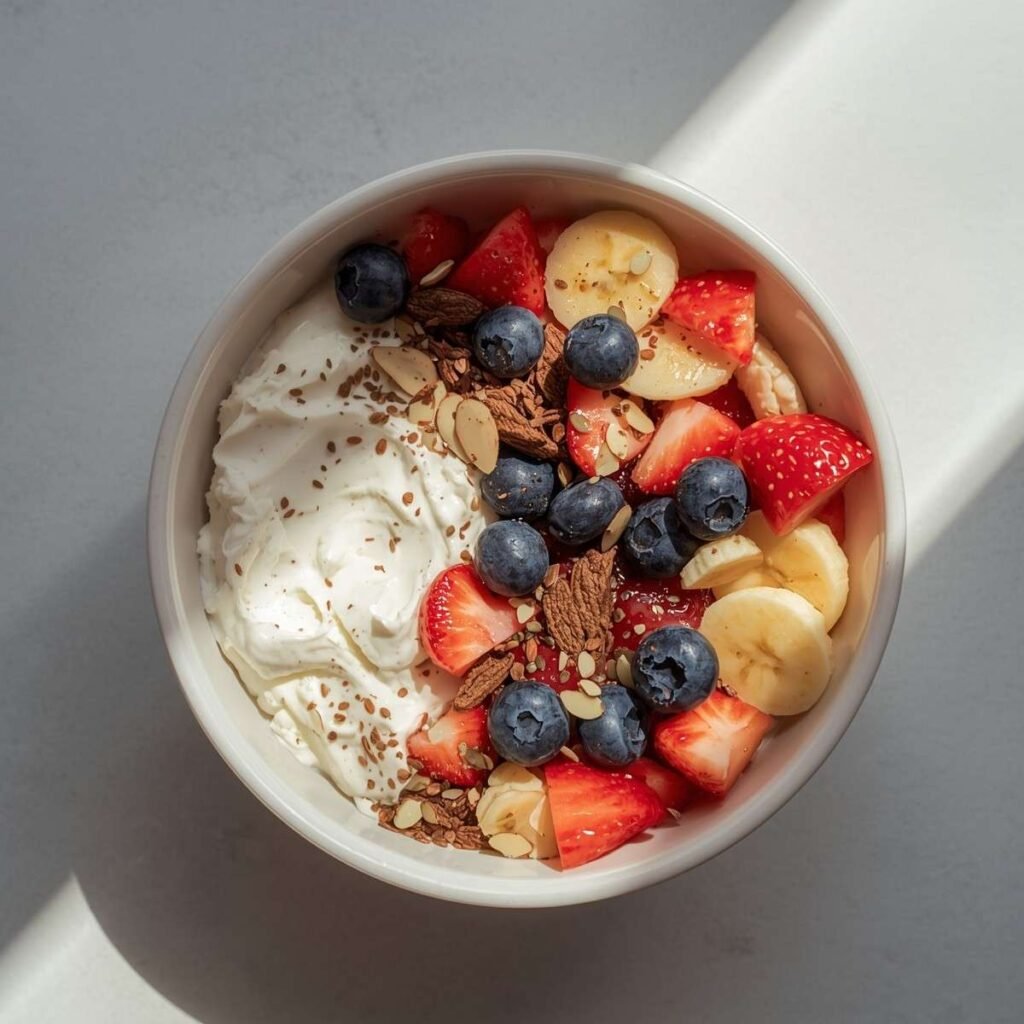
9. Cottage Cheese with Fruit and Seeds
Cottage cheese is a protein-rich option that fits well into a Mediterranean-style breakfast when paired with whole foods. It supports muscle maintenance and satiety while remaining relatively low in fat. Fruit adds fiber and vitamins, and seeds contribute essential fatty acids. This breakfast is ideal for balanced macronutrient intake.
Ingredients
- Cottage cheese – 1 cup
- Fresh fruit – ½ cup
- Chia or flax seeds – 1 tablespoon
Instructions
- Place cottage cheese in a bowl
- Top with fruit
- Sprinkle seeds and serve chilled
Nutrients (Approximate)
- Calories: ~290 kcal
- Protein: ~20 g
- Carbohydrates: ~24 g
- Fat: ~9 g
- Fiber: ~5 g
10. Mediterranean Smoothie with Yogurt and Fruit
Introduction
Smoothies can be part of the Mediterranean diet when made with whole, nutrient-dense ingredients. Greek yogurt provides protein and probiotics, fruit supplies natural carbohydrates, and olive oil contributes healthy fats. This combination supports energy, digestion, and nutrient absorption. It is ideal for busy mornings.
Ingredients
- Greek yogurt – ¾ cup
- Banana or berries – 1 cup
- Olive oil – 1 teaspoon
- Water or milk – ½ cup
Instructions
- Add all ingredients to a blender
- Blend until smooth
- Serve immediately

Nutrients (Approximate)
- Calories: ~300 kcal
- Protein: ~14 g
- Carbohydrates: ~35 g
- Fat: ~12 g
- Fiber: ~4 g
Conclusion
Mediterranean breakfast recipes emphasize balance, simplicity, and nutritional quality. By focusing on whole foods, healthy fats, fiber, and moderate protein, these breakfasts support heart health, digestion, and sustained energy. Making Mediterranean breakfasts a regular habit can contribute significantly to long-term wellness and improved dietary consistency.
FAQs
Are Mediterranean breakfasts good for weight management?
Yes, they support satiety and stable blood sugar levels.
Can Mediterranean breakfasts be eaten daily?
Yes, they are designed for long-term healthy eating.
Is olive oil suitable for breakfast?
Yes, it is a primary fat source in the Mediterranean diet.
Do these breakfasts include enough protein?
Yes, especially when yogurt, eggs, cheese, or nuts are included.

