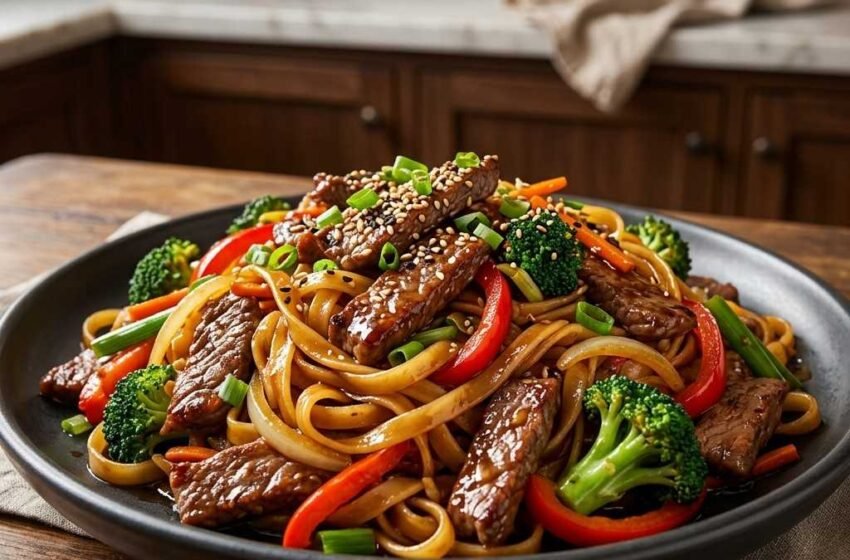
These High-Protein Beef Stir-Fry Noodles combine tender strips of beef, chewy noodles, colorful stir-fried vegetables, and a rich savory sauce in one satisfying meal. The beef is quickly marinated before being seared over high heat, helping it develop a flavorful browned exterior while remaining tender inside. Broccoli, bell peppers, onions, garlic, and ginger add freshness, crunch, and plenty of texture to every bite.
The finished dish comes together quickly, making it an excellent option for busy weeknights when you want something more exciting than a basic dinner. The savory combination of soy sauce, hoisin sauce, and sesame oil coats the noodles and vegetables beautifully, while sesame seeds add a subtle nutty finish. You can also add chili sauce or sriracha if you prefer a spicy stir-fry with extra heat.
Why You’ll Love This Recipe
- High in protein from tender beef.
- Quick enough for a weeknight dinner.
- Packed with colorful vegetables.
- Savory, slightly sweet, and deeply flavorful.
- Chewy noodles absorb the stir-fry sauce beautifully.
- Garlic and ginger add fresh aromatic flavor.
- Easy to customize with different vegetables.
- Excellent for family dinners.
- Great for meal prep.
- Easy to make mild or spicy.
Equipment
- Large wok or skillet
- Large pot for cooking noodles
- Large mixing bowl
- Small mixing bowl
- Measuring cups
- Measuring spoons
- Tongs
- Wooden spoon or wok spatula
- Colander
- Sharp chef’s knife
- Cutting board
Also CheckOut: 30-Day High-Protein Meal Plan for Weight Loss: Easy Recipes, Meal Prep Tips & Complete Nutrition Guide
Ingredients
For the Beef
- 1½ pounds lean beef steak, thinly sliced
- 2 tablespoons soy sauce
- 1 tablespoon cornstarch
- ½ teaspoon black pepper
- 1 teaspoon sesame oil
- 1 teaspoon neutral cooking oil
For the Noodles
- 8 ounces rice noodles or flat stir-fry noodles
- Water for cooking
- 1 teaspoon sesame oil, optional
For the Vegetables
- 2 cups broccoli florets
- 1 red bell pepper, thinly sliced
- 1 yellow or orange bell pepper, thinly sliced
- 1 medium yellow onion, thinly sliced
- 3 cloves garlic, minced
- 1 tablespoon fresh ginger, finely grated or minced
For the Stir-Fry Sauce
- 3 tablespoons low-sodium soy sauce
- 2 tablespoons hoisin sauce
- 1 teaspoon sesame oil
- 1 tablespoon water
- 1 teaspoon honey or another sweetener, optional
- 1–2 teaspoons chili sauce or sriracha, optional
For Garnishing
- 1 tablespoon sesame seeds
- 2 tablespoons sliced green onions
- Optional red pepper flakes
- Optional fresh cilantro
Ingredient Notes
Beef
Use a tender cut such as sirloin, flank steak, or another quick-cooking beef cut. Slice the meat thinly against the grain so it remains tender after stir-frying.
Cornstarch
Cornstarch helps create a light coating around the beef that promotes browning while helping retain moisture.
Noodles
Rice noodles or flat noodles work particularly well because they absorb the savory sauce while maintaining a pleasant chewy texture.
Broccoli
Cut the broccoli into relatively small, evenly sized florets so it cooks quickly while remaining slightly crisp.
Bell Peppers
Using two different colors makes the finished stir-fry more vibrant while providing a pleasant combination of sweetness and crunch.
Soy Sauce
Low-sodium soy sauce gives you more control over the saltiness of the finished dish.
Hoisin Sauce
Hoisin sauce contributes sweetness, depth, and a slightly tangy savory flavor that balances the soy sauce.
Sesame Oil
Sesame oil has a strong flavor, so a small amount is enough to give the entire dish a distinctive toasted, nutty aroma.
How to Make High-Protein Beef Stir-Fry Noodles
- Begin by preparing the beef. Place the thinly sliced beef in a large mixing bowl and add 2 tablespoons of soy sauce, 1 tablespoon of cornstarch, and ½ teaspoon of black pepper.
- Toss the beef thoroughly until every strip is lightly coated with the marinade. The cornstarch should cling to the surface of the beef and create a thin coating.
- Allow the beef to marinate for approximately 10–15 minutes while you prepare the vegetables and noodles.
- Wash and prepare the broccoli, bell peppers, and onion. Cut everything into relatively thin, evenly sized pieces so the vegetables cook quickly and evenly.
- Mince the garlic and finely grate or mince the fresh ginger. Keep them together in a small bowl so they’re ready to add quickly once the wok becomes hot.
- Prepare the stir-fry sauce by combining the low-sodium soy sauce, hoisin sauce, sesame oil, water, and optional honey or sweetener in a small bowl.
- If you prefer a spicy stir-fry, add 1–2 teaspoons of chili sauce or sriracha to the sauce. Stir thoroughly until all the ingredients are combined.
- Bring a large pot of water to a boil. Cook the rice noodles or flat noodles according to the package directions. Avoid overcooking because the noodles will continue cooking briefly when they are tossed with the hot stir-fry.
- Once the noodles are tender, drain them thoroughly in a colander. If they are likely to sit for several minutes, toss them with a very small amount of sesame oil to prevent excessive sticking.
- Heat a large wok or heavy skillet over high heat. Allow it to become properly hot before adding the oil.
- Add approximately 1 teaspoon of neutral cooking oil to the hot wok and swirl it around so the bottom is lightly coated.
- Add the marinated beef in a single layer. If your wok is small, cook the beef in two batches rather than overcrowding the pan.
- Allow the beef to sear undisturbed for approximately 1–2 minutes so the bottom can develop a browned exterior.
- Use tongs or a wok spatula to toss and turn the beef. Continue stir-frying for another 2–3 minutes, or until the beef is browned and cooked through.
- Transfer the cooked beef to a clean plate and set it aside. Removing the beef temporarily prevents it from overcooking while the vegetables are prepared.
- Add the sliced onion and bell peppers to the same hot wok. Stir-fry for approximately 2 minutes, tossing frequently so the vegetables begin to soften while retaining some crunch.
- Add the broccoli florets and continue cooking for another 2–3 minutes. If the broccoli is particularly firm, add 1 tablespoon of water and cover the wok briefly to create steam and soften it slightly.
- Add the minced garlic and ginger once the vegetables are nearly tender. Stir-fry for approximately 30–60 seconds, just until the garlic becomes fragrant.
- Avoid cooking the garlic for too long because it can burn quickly in the high heat of the wok and develop a bitter flavor.
- Return the cooked beef to the wok with the sautéed vegetables and toss everything together.
- Add the cooked noodles to the wok, using tongs to gently separate them as they enter the pan.
- Pour the prepared stir-fry sauce evenly over the beef, vegetables, and noodles.
- Toss everything continuously for approximately 1–2 minutes, making sure the sauce coats the noodles, beef, and vegetables evenly.
- Continue cooking just until the sauce becomes glossy and the entire dish is heated through. Avoid prolonged cooking at this stage because the noodles can become soft and the beef may lose its tenderness.
- Once the noodles, beef, and vegetables are thoroughly coated with the sauce, cook everything together for another 1–2 minutes. Toss continuously so the sauce evenly coats every strand of noodle without allowing the bottom to scorch.
- Check the consistency of the sauce. It should lightly cling to the noodles and beef rather than pooling heavily at the bottom of the wok. If the mixture seems too dry, add 1 tablespoon of water and toss again.
- Taste a small portion and adjust the seasoning if needed. Add a little extra soy sauce for saltiness, hoisin sauce for sweetness and depth, or sriracha for additional heat.
- Turn off the heat once the noodles are hot, the beef is tender, and the vegetables are cooked but still slightly crisp. Avoid leaving the stir-fry over the heat longer than necessary.
- Sprinkle the sesame seeds over the finished stir-fry and toss once more so a small amount sticks to the noodles and vegetables.
- Add sliced green onions and optional fresh cilantro for a fresh finishing flavor.
- If you enjoy spicy food, add a final drizzle of sriracha or a small pinch of red pepper flakes immediately before serving.
- Transfer the stir-fry to a large serving platter or divide it among individual bowls while everything is still hot.
- Serve immediately with additional sesame seeds and green onions on top.
- For the best texture, serve the noodles straight from the wok. The noodles will continue absorbing the sauce as they sit, so don’t allow the finished dish to stand for an extended period before serving.
Recipe Information
- Prep Time: 15 minutes
- Marinating Time: 10–15 minutes
- Cook Time: 15 minutes
- Total Time: Approximately 35–40 minutes
- Servings: 4
- Course: Lunch, Dinner
- Cuisine: Asian-inspired
- Cooking Method: Stir-Fry
Flavor Profile
- Savory
- Slightly sweet
- Garlicky
- Gingery
- Nutty
- Rich and umami-packed
- Lightly smoky
- Fresh and crunchy
- Spicy when sriracha is added
Pro Tips
- Slice the beef thinly against the grain for maximum tenderness.
- Place the beef in the freezer for about 15–20 minutes before slicing if you have difficulty cutting it thinly.
- Make sure the wok is very hot before adding the beef.
- Don’t overcrowd the pan when cooking the beef.
- Cook beef in batches if necessary.
- Keep the vegetables slightly crisp rather than completely soft.
- Add garlic and ginger toward the end of vegetable cooking so they don’t burn.
- Don’t overcook the noodles before adding them to the wok.
- Prepare the sauce before beginning the stir-fry because the cooking process moves quickly.
- Toss continuously after adding the sauce so it doesn’t stick to the bottom.
- Add sesame oil toward the end for the freshest toasted flavor.
- Serve immediately for the best noodle texture.
Variations
Spicy Beef Stir-Fry Noodles
Add extra sriracha, chili garlic sauce, or red pepper flakes to the sauce for a spicy version.
Teriyaki Beef Noodles
Replace part of the hoisin sauce with teriyaki sauce for a sweeter, glossy finish.
Ginger Garlic Beef Noodles
Increase the fresh ginger and garlic for a more aromatic and intensely savory stir-fry.
Vegetable-Packed Beef Noodles
Add mushrooms, snap peas, shredded cabbage, carrots, or baby corn to increase the vegetable content.
Low-Carb Beef Stir-Fry
Replace traditional noodles with shirataki noodles, zucchini noodles, or spaghetti squash.
Chicken Stir-Fry Noodles
Replace the beef with thinly sliced chicken breast or chicken thighs and cook until completely done.
Shrimp Stir-Fry Noodles
Use peeled and deveined shrimp instead of beef. Shrimp cook quickly, so add them only until pink and opaque.
Common Mistakes to Avoid
- Cutting the beef with the grain.
- Using a cold pan or wok.
- Overcrowding the beef.
- Overcooking the beef.
- Boiling the noodles too long.
- Using too much sauce.
- Burning the garlic.
- Overcooking the vegetables.
- Adding the noodles before the vegetables are ready.
- Leaving the finished noodles over high heat for too long.
Serving Suggestions
- Serve with steamed broccoli.
- Add a simple cucumber salad.
- Pair with edamame for additional protein.
- Serve with extra sautéed vegetables.
- Garnish with sliced green onions.
- Add sesame seeds for crunch.
- Serve with chili sauce on the side.
- Pair with a light Asian-inspired slaw.
- Add fresh cilantro for brightness.
- Serve immediately while the noodles are hot.
Storage & Reheating
- Allow leftovers to cool slightly before transferring them to an airtight container.
- Refrigerate within 2 hours of cooking.
- Store leftovers in the refrigerator for up to 3–4 days.
- Divide into individual containers for convenient meal prep.
- Reheat gently in a skillet over medium heat with a splash of water.
- Toss frequently while reheating so the noodles don’t stick.
- You can also microwave individual portions in short intervals.
- Add a small splash of water or broth before microwaving if the noodles appear dry.
- Avoid repeatedly reheating the entire batch.
- For the best texture, add fresh green onions and sesame seeds after reheating.
Nutrition Information
Exact nutrition will depend on the cut of beef, noodle variety, sauces, and portion size used.
Approximate Per Serving
- Calories: 500–600 kcal
- Protein: 35–42 g
- Fat: 18–24 g
- Carbohydrates: 50–60 g
- Fiber: 4–6 g
- Sugar: 7–10 g
For a lower-carbohydrate version, replace the rice or flat noodles with shirataki noodles or spiralized zucchini and use reduced-sugar sauces.
Final Thoughts
These High-Protein Beef Stir-Fry Noodles are the kind of dinner that brings together everything you want from a satisfying weeknight meal: tender beef, chewy noodles, colorful vegetables, aromatic garlic and ginger, and a glossy savory sauce. The high-heat cooking method keeps the vegetables vibrant and slightly crisp while giving the beef beautifully browned edges.
The recipe is also incredibly flexible. You can adjust the vegetables, noodle variety, spice level, and sauce depending on what you have available. For a lighter meal, increase the vegetables and reduce the noodles, or swap the noodles entirely for a low-carb alternative.
Frequently Asked Questions
What beef is best for stir-fry noodles?
Sirloin and flank steak are excellent choices because they cook quickly and remain tender when sliced thinly against the grain.
Why should I slice the beef against the grain?
Slicing against the grain shortens the muscle fibers, making each piece easier to chew and more tender.
Can I use frozen beef?
Yes, but thaw it completely before marinating and cooking. For easier slicing, partially freezing fresh beef for 15–20 minutes can also help.
Can I use spaghetti instead of rice noodles?
Yes. Regular spaghetti, linguine, udon, ramen-style noodles, or other flat noodles can work depending on your preference.
How do I prevent the noodles from becoming mushy?
Cook them only until just tender according to their package instructions. They will continue cooking briefly when tossed with the hot beef and sauce.
Can I make this recipe spicy?
Absolutely. Add sriracha, chili garlic sauce, red pepper flakes, or fresh sliced chilies.
Can I add more vegetables?
Yes. Mushrooms, carrots, cabbage, snap peas, zucchini, baby corn, and snow peas all work well.
Can I make this recipe ahead of time?
Yes. Prepare the stir-fry and portion it into airtight containers. Reheat gently when ready to eat.
Can I use chicken instead of beef?
Yes. Thinly sliced chicken breast or boneless chicken thighs can replace the beef. Make sure the chicken is completely cooked before serving.
How can I make this recipe lower in carbohydrates?
Replace the noodles with shirataki noodles, zucchini noodles, or another low-carbohydrate noodle alternative, and choose reduced-sugar sauces.