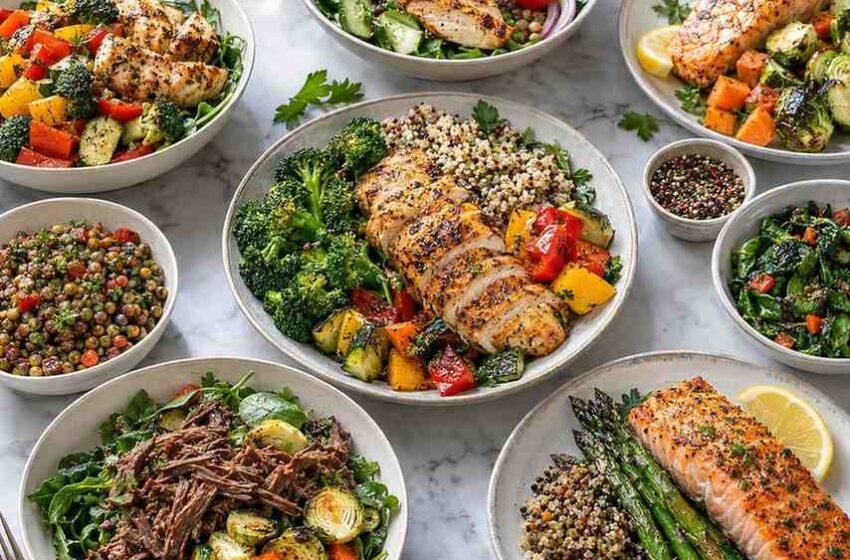
Creating satisfying meals while managing carbohydrate intake does not mean eating the same grilled chicken and steamed vegetables every evening. A well-planned diabetes-conscious menu can include comforting casseroles, tacos, pizza, slow-cooked beef, pasta, salmon, stuffed chicken, hearty stews, and even naturally sweet fruit salsas. The key is building each meal around quality protein, fiber-rich vegetables, sensible portions of carbohydrate foods, and minimally processed ingredients. This 30-day meal plan brings those principles together in a practical month of varied dinners.
The plan follows 30 different dishes, beginning with Baked Chicken Chalupas and continuing through fish, beef, turkey, pork, vegetarian dishes, and vegetable-packed skillet meals. The original lineup already includes several naturally protein-rich choices, including Rosemary Chicken with Spinach & Beans at 41 grams of protein and Turkey-Stuffed Bell Peppers at 40 grams per serving. For this high-protein version, the identity of every dish remains intact while ingredient proportions are adjusted where appropriate to emphasize lean protein, fiber, lower-sodium ingredients, and more moderate portions of refined carbohydrates.
You will find quick 25-minute dinners alongside slow-cooker meals and make-ahead casseroles, which makes the plan practical for different schedules. Some recipes are naturally lower in carbohydrates, while others use carefully portioned whole grains, beans, fruit, or starchy vegetables. Individual carbohydrate needs can differ significantly, particularly for people using glucose-lowering medication or insulin, so serving sizes should always be personalized according to your healthcare professional or registered dietitian’s recommendations.
Why This Plan Works
Protein is deliberately placed at the center of these meals because it makes a dinner more substantial without requiring large portions of refined carbohydrates. Chicken, turkey, lean beef, pork tenderloin, halibut, cod, salmon, tilapia, eggs, beans, and lentils provide variety throughout the month. Instead of eliminating carbohydrates completely, the recipes emphasize more thoughtful portions and pair carbohydrate-containing ingredients with protein, vegetables, fiber, and healthy fats.
Variety also makes a month-long eating plan easier to follow. One evening might feature Ginger Halibut with Brussels Sprouts, while another brings Chipotle Shredded Beef, Mushroom Turkey Tetrazzini, or Turkey-Stuffed Bell Peppers. Later in the month, the menu includes dishes such as Lentil Loaf, Crispy Almond Tilapia, stuffed chicken, salmon with fruit salsa, and Moroccan Vegetarian Stew. This rotation helps prevent the repetitive feeling that can make structured meal plans difficult to maintain.
Shopping List for 30 Days Meal Plan
Protein Sources
| Ingredient | Approximate Quantity |
|---|---|
| Boneless skinless chicken breasts | 12–14 lb |
| Halibut fillets | 1 1/2 lb |
| Lean beef chuck or roast | 8–9 lb |
| Lean boneless pork chops | 1 1/2 lb |
| Pork tenderloin | 4–5 lb |
| Cooked turkey breast | 3 lb |
| Extra-lean ground turkey | 4 lb |
| Lean chicken or turkey sausage | 3 lb |
| Firm white fish or cod | 4 lb |
| Salmon fillets | 5 lb |
| Tilapia fillets | 1 1/2 lb |
| Eggs | 2 dozen |
| Liquid egg whites | 32 oz |
| Plain Greek yogurt | 48 oz |
| Reduced-fat mozzarella | 24 oz |
| Reduced-fat goat cheese | 8 oz |
| Reduced-fat Parmesan | 8 oz |
| No-salt-added beans | 10 cans, 15 oz each |
| Dry lentils | 3 lb |
Vegetables
| Ingredient | Approximate Quantity |
|---|---|
| Brussels sprouts | 3 lb |
| Bell peppers | 24 medium |
| Fresh spinach | 5 lb |
| Mushrooms | 6 lb |
| Asparagus | 4 bunches |
| Cauliflower | 6 large heads |
| Broccoli | 4 lb |
| Yellow onions | 16 medium |
| Red onions | 8 medium |
| Garlic | 10 bulbs |
| Tomatoes | 18 medium |
| No-salt-added diced tomatoes | 12 cans |
| Zucchini | 12 medium |
| Carrots | 4 lb |
| Celery | 4 bunches |
| Artichoke hearts | 4 cans |
| Potatoes | 3 lb |
| Cabbage | 2 heads |
| Green beans | 3 lb |
| Mixed salad greens | 4 large containers |
| Fresh cilantro | 6 bunches |
| Fresh parsley | 6 bunches |
Fruits & Pantry Staples
| Ingredient | Approximate Quantity |
|---|---|
| Apples | 8 medium |
| Peaches | 4 medium |
| Mangoes | 5 medium |
| Blackberries | 3 cups |
| Oranges | 5 |
| Lemons | 12 |
| Limes | 14 |
| Avocados | 6 |
| Whole-grain tortillas | 3 packages |
| Whole-wheat pasta | 3 lb |
| Brown rice | 4 lb |
| Quinoa | 3 lb |
| Whole-grain pizza crusts | 2 |
| Whole-grain panko | 12 oz |
| Unsalted almonds | 12 oz |
| Extra-virgin olive oil | 32 fl oz |
| Low-sodium chicken broth | 8 cartons |
| Low-sodium beef broth | 4 cartons |
| Reduced-sodium soy sauce | 12 oz |
| Apple cider vinegar | 16 oz |
| Balsamic vinegar | 12 oz |
| Tomato paste | 4 cans |
| Ground cinnamon | 2 oz |
| Curry powder | 3 oz |
| Ground cumin | 3 oz |
| Smoked paprika | 3 oz |
| Chili powder | 3 oz |
| Dried rosemary | 2 oz |
| Dried oregano | 2 oz |
| Ground ginger | 2 oz |
| Black pepper | 2 oz |
Meal Prep Tips
- Prepare several protein portions at the beginning of each week. Trim chicken breasts, portion fish fillets, and divide ground turkey or lean beef into recipe-sized packages so dinner preparation is faster.
- Cook brown rice and quinoa in advance, cool them promptly, and refrigerate them in measured containers. Having controlled portions ready can make serving sizes more consistent.
- Wash and chop sturdy vegetables such as peppers, Brussels sprouts, mushrooms, cauliflower, broccoli, carrots, and celery ahead of time. Keep vegetables in separate airtight containers so they remain useful across several recipes.
- Make your own seasoning blends from garlic powder, paprika, cumin, oregano, rosemary, ginger, curry powder, pepper, and other herbs. This provides strong flavor while giving you better control over sodium and added sugars.
- Choose no-salt-added canned vegetables and beans whenever available. Rinsing canned beans thoroughly can also remove some of the sodium from the packing liquid.
- Prepare fruit salsa close to serving time whenever possible. When making it ahead, refrigerate it in a sealed container and add avocado shortly before serving to maintain the best color and texture.
- Do not cook all 30 meals at once. A three- to four-day meal-prep cycle is more practical for food quality, particularly when the plan includes delicate fish, fresh salsa, leafy vegetables, and cooked eggs.
01/30
Baked Chicken Chalupas
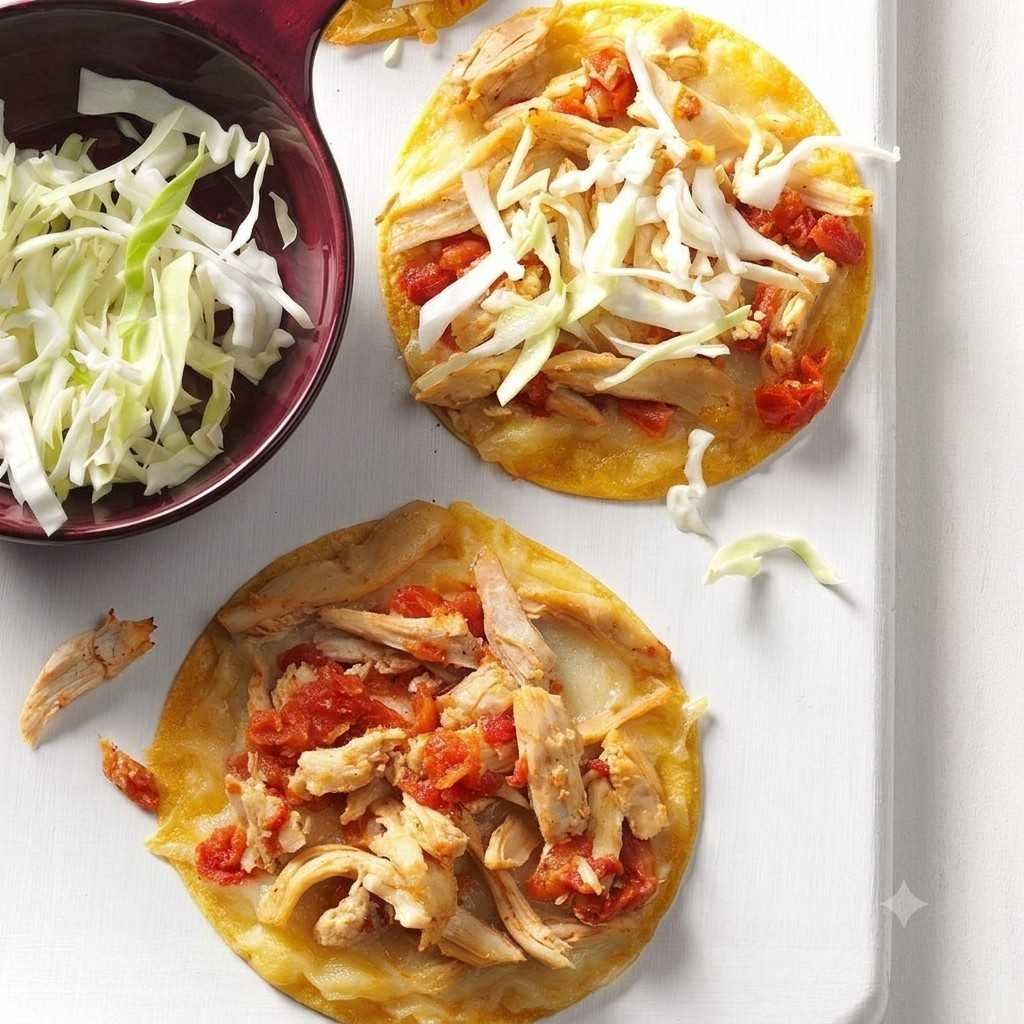
Baked Chicken Chalupas open the month with the familiar combination of seasoned chicken, crisp tortillas, vegetables, and melted cheese without relying on deep-frying. The source meal plan lists this dish at 19 grams of protein and 17 grams of carbohydrate per chalupa. This higher-protein adaptation increases the chicken-to-tortilla ratio, uses fiber-rich whole-grain tortillas, and keeps cheese and toppings sensible. The result maintains the recognizable chalupa experience while creating a satisfying dinner that can be paired with a large salad or roasted vegetables.
Ingredients
- 1 3/4 lb boneless skinless chicken breasts, cooked and finely shredded
- 6 small 6-inch high-fiber whole-grain tortillas
- 1 cup no-salt-added black beans, rinsed and drained
- 1 cup no-salt-added diced tomatoes, well drained
- 1 medium bell pepper, finely diced
- 1/2 medium yellow onion, finely diced
- 1 cup reduced-fat shredded Mexican-style cheese
- 1/2 cup plain nonfat Greek yogurt
- 1 tablespoon extra-virgin olive oil
- 1 tablespoon fresh lime juice
- 1 teaspoon ground cumin
- 1 teaspoon smoked paprika
- 1/2 teaspoon chili powder
- 1/2 teaspoon garlic powder
- 1/4 teaspoon ground black pepper
- 1/4 cup chopped fresh cilantro
- Nonstick cooking spray, as needed
How to Make Baked Chicken Chalupas
- Preheat the oven to 400°F and position a rack near the center so the tortillas can become crisp without scorching around the edges.
- Line a large baking sheet with parchment paper or lightly coat it with nonstick cooking spray.
- Place the shredded chicken in a large mixing bowl and separate any large pieces with two forks so the filling distributes evenly.
- Heat olive oil in a nonstick skillet over medium heat and add the diced onion and bell pepper.
- Cook for approximately 4–5 minutes, stirring frequently, until the vegetables soften slightly while retaining some texture.
- Add cumin, smoked paprika, chili powder, garlic powder, and black pepper and stir for approximately 30 seconds to release their aromas.
- Add the shredded chicken, black beans, and drained tomatoes and toss until everything is thoroughly combined.
- Cook the mixture for another 2–3 minutes, just until heated through, then remove the skillet from the heat.
- Stir in the lime juice and half of the cilantro.
- Warm the tortillas for approximately 20 seconds in the microwave between slightly damp paper towels so they become flexible and are less likely to crack.
- Arrange the tortillas on the prepared baking sheet and lightly mist both sides with cooking spray.
- Spoon the chicken mixture evenly onto the center of each tortilla, distributing the protein carefully so every serving contains a substantial amount.
- Sprinkle reduced-fat cheese evenly over the chicken mixture rather than concentrating it heavily on one chalupa.
- Bake for approximately 10–14 minutes until the tortilla edges are crisp and the cheese has completely melted.
- Watch closely during the final few minutes because thin whole-grain tortillas can brown quickly.
- Remove from the oven and allow the chalupas to rest for 2–3 minutes.
- Add a small spoonful of plain Greek yogurt to each chalupa as a creamy alternative to traditional sour cream.
- Finish with remaining cilantro and additional lime juice if desired.
- Serve one chalupa with a generous portion of non-starchy vegetables, or adjust the serving according to your individual nutrition requirements.
Nutrition Information (Approximate)
- Calories: 285 kcal
- Protein: 33 g
- Carbohydrates: 23 g
- Fat: 9 g
- Fiber: 7 g
- Sugar: 4 g
- Sodium: 390 mg
02/30
Ginger Halibut with Brussels Sprouts
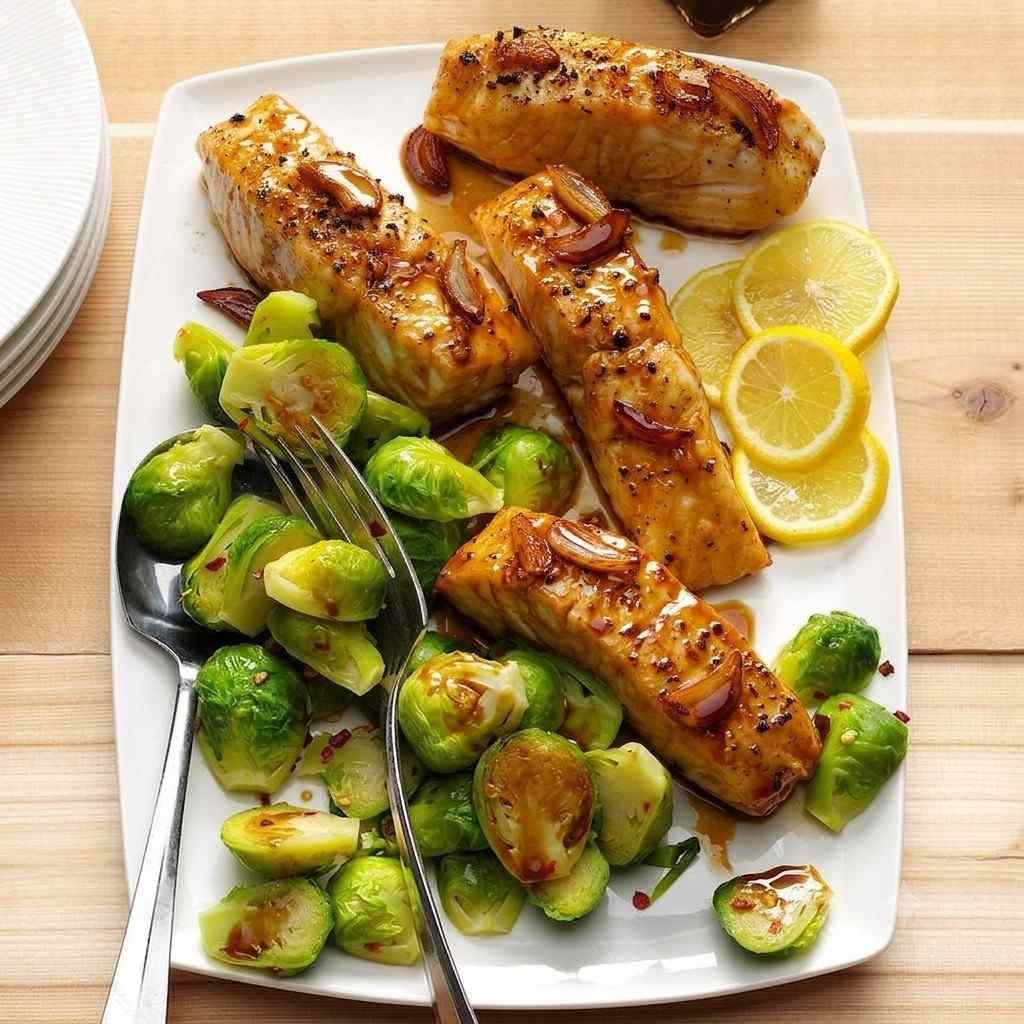
Ginger Halibut with Brussels Sprouts keeps Day 2 simple, savory, and protein-focused. The source lineup pairs halibut with soy sauce, ginger, pepper, and Brussels sprouts and lists 24 grams of protein and only 7 grams of carbohydrate per serving. Halibut’s firm texture works particularly well with aromatic ginger and garlic, while Brussels sprouts provide fiber and a slightly sweet roasted flavor. Using reduced-sodium soy sauce helps maintain the savory character while reducing unnecessary sodium.
Ingredients
- 4 halibut fillets, 6 oz each
- 5 cups Brussels sprouts, trimmed and halved
- 2 tablespoons extra-virgin olive oil
- 2 tablespoons reduced-sodium soy sauce
- 1 tablespoon fresh ginger, finely grated
- 3 garlic cloves, minced
- 2 tablespoons fresh lemon juice
- 1 teaspoon sesame oil
- 1/2 teaspoon ground black pepper
- 1/4 teaspoon red pepper flakes
- 2 tablespoons sliced green onions
- 1 teaspoon sesame seeds, optional
How to Make Ginger Halibut with Brussels Sprouts
- Preheat the oven to 425°F and line a large rimmed baking sheet with parchment paper.
- Rinse the Brussels sprouts if needed and dry them thoroughly because excess moisture prevents proper browning.
- Slice larger Brussels sprouts into halves and quarter unusually large sprouts so the pieces cook at approximately the same rate.
- Place the Brussels sprouts on the prepared pan and drizzle them with 1 tablespoon olive oil.
- Add half of the black pepper and toss thoroughly before arranging the sprouts cut-side down.
- Roast for approximately 10–12 minutes to give the vegetables a head start before adding the fish.
- While the sprouts roast, pat each halibut fillet dry with paper towels.
- Whisk reduced-sodium soy sauce, grated ginger, garlic, lemon juice, sesame oil, remaining olive oil, remaining pepper, and red pepper flakes in a small bowl.
- Remove the sheet pan from the oven and gently turn the Brussels sprouts.
- Create four spaces between the vegetables and place one halibut fillet into each opening.
- Spoon the ginger-soy mixture evenly over the fish, reserving a small amount for the vegetables.
- Toss or brush the Brussels sprouts lightly with the remaining seasoning mixture.
- Return the pan to the oven and roast for approximately 10–13 minutes, depending on the thickness of the halibut.
- Check the fish early rather than automatically extending cooking time because lean halibut can become dry when overcooked.
- Remove the pan once the fish flakes easily and reaches a safe internal temperature.
- Allow the halibut to rest for approximately 2 minutes.
- Divide the Brussels sprouts among four plates and place one fillet beside each portion.
- Garnish with green onions and a light sprinkle of sesame seeds if desired.
Nutrition Information (Approximate)
- Calories: 310 kcal
- Protein: 37 g
- Carbohydrates: 13 g
- Fat: 13 g
- Fiber: 5 g
- Sugar: 3 g
- Sodium: 420 mg
03/30
Chipotle Shredded Beef
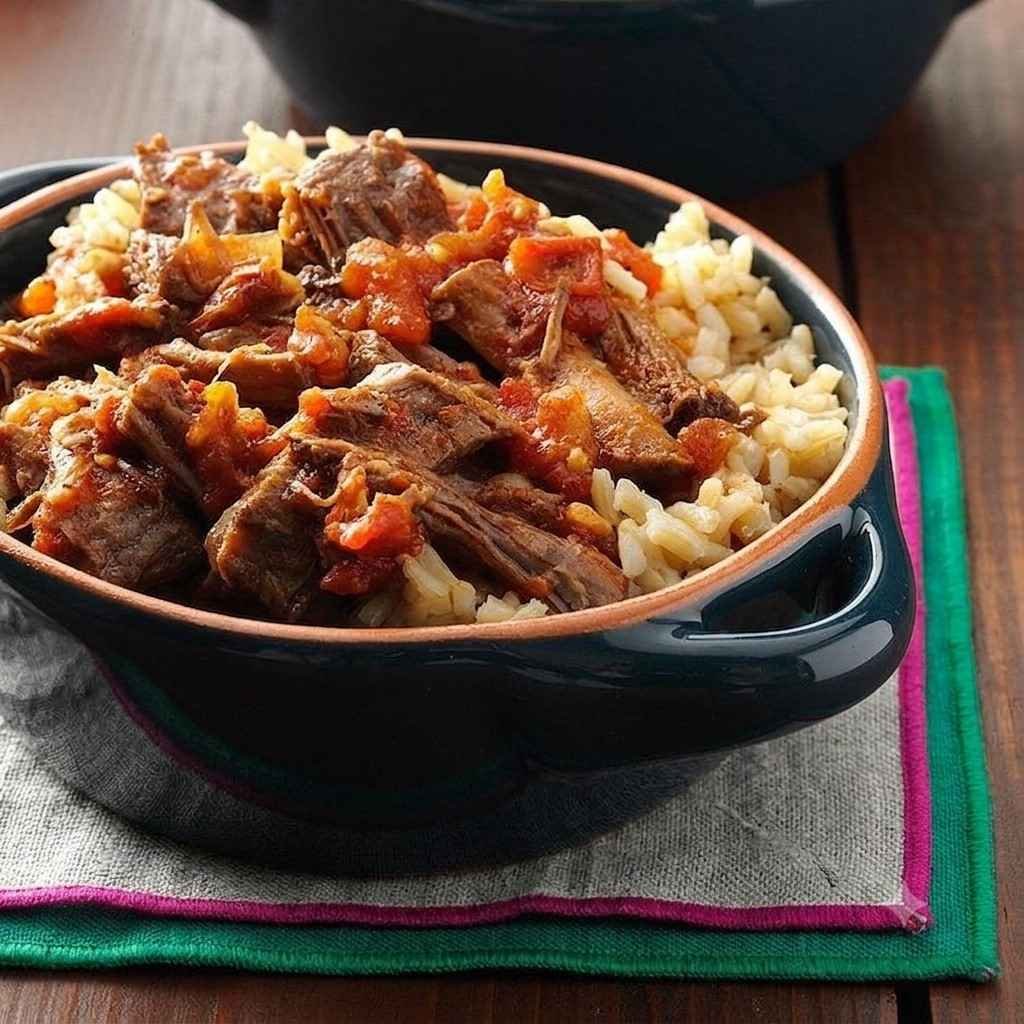
Chipotle Shredded Beef brings slow-cooked comfort to Day 3 and is especially convenient for batch cooking. In the supplied plan, the dish is served as a tender beef mixture that can work with tortillas, salsa, rice, or other accompaniments, and the listed serving with rice provides 26 grams of protein. For this high-protein version, lean beef is slowly cooked with tomatoes, chipotle, peppers, onion, and spices until it pulls apart effortlessly. Serving it with cauliflower rice and a smaller amount of brown rice provides the familiar bowl experience with more vegetables and a controlled grain portion.
Ingredients
- 2 1/2 lb lean beef chuck roast, trimmed of visible excess fat
- 1 can no-salt-added diced tomatoes, 14.5 oz
- 1 medium yellow onion, diced
- 1 large red bell pepper, diced
- 4 garlic cloves, minced
- 1 chipotle pepper in adobo, finely chopped
- 1 tablespoon adobo sauce
- 1 cup low-sodium beef broth
- 1 tablespoon extra-virgin olive oil
- 2 teaspoons ground cumin
- 1 teaspoon smoked paprika
- 1 teaspoon dried oregano
- 1/2 teaspoon ground black pepper
- 1 tablespoon fresh lime juice
- 3 cups cauliflower rice
- 1 1/2 cups cooked brown rice
- 1/4 cup chopped cilantro
How to Make Chipotle Shredded Beef
- Pat the beef dry thoroughly and trim away large pieces of exterior fat while leaving enough marbling to keep the slow-cooked meat tender.
- Cut the roast into three or four large pieces so the beef fits comfortably in the slow cooker and cooks more evenly.
- Heat olive oil in a large skillet over medium-high heat.
- Add the beef pieces without crowding the skillet and sear for approximately 2–3 minutes per side until a deep brown crust develops.
- Transfer the browned beef directly to a 6-quart slow cooker.
- Add onion and bell pepper to the same skillet and cook for approximately 3 minutes, scraping up the browned bits left by the beef.
- Add garlic, cumin, smoked paprika, oregano, and black pepper and stir for approximately 30 seconds.
- Transfer the seasoned vegetables into the slow cooker.
- Add diced tomatoes, chipotle pepper, adobo sauce, and low-sodium beef broth.
- Turn the beef pieces gently so they become coated with the cooking liquid.
- Cover and cook on low for approximately 7–8 hours, or until the beef is tender enough to pull apart easily with two forks.
- Transfer the cooked beef to a large cutting board or shallow dish.
- Allow it to cool just enough to handle safely, then shred it thoroughly using two forks.
- Skim excess visible fat from the surface of the cooking liquid if necessary.
- Return the shredded beef to the slow cooker and stir it into the vegetables and sauce.
- Cook uncovered on high for approximately 10–15 minutes if the mixture contains more liquid than desired.
- Stir in fresh lime juice immediately before serving.
- Prepare the cauliflower rice in a nonstick skillet until tender and combine it with the measured cooked brown rice.
- Divide the cauliflower-and-brown-rice mixture among serving bowls.
- Spoon a generous portion of shredded beef and vegetables over each bowl.
- Finish with fresh cilantro and additional lime wedges.
Nutrition Information (Approximate)
- Calories: 395 kcal
- Protein: 40 g
- Carbohydrates: 26 g
- Fat: 15 g
- Fiber: 6 g
- Sugar: 6 g
- Sodium: 360 mg
04/30
Cinnamon-Apple Pork Chops
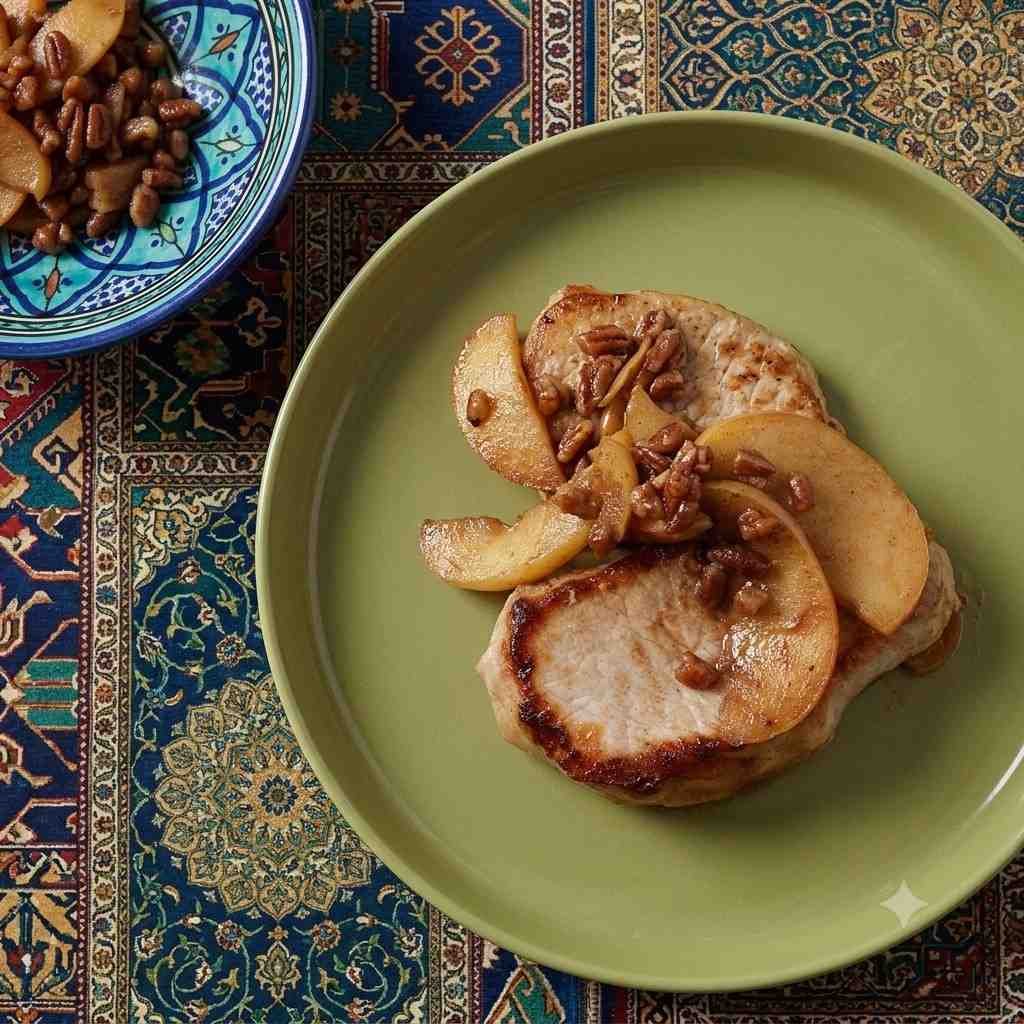
Cinnamon-Apple Pork Chops combine savory pork with warm cinnamon and naturally sweet apple for a comforting dinner that feels particularly appropriate for cooler weather. The supplied meal plan lists the original dish at approximately 22–23 grams of protein and about 31–32 grams of carbohydrate per serving. This adaptation uses lean pork chops, a smaller amount of apple, no added refined sugar, and cauliflower mash as the primary side. Cinnamon, thyme, apple cider vinegar, and a touch of Dijon give the pan sauce complexity without needing a sugary glaze.
Ingredients
- 4 boneless center-cut pork chops, 6 oz each
- 2 medium crisp apples, thinly sliced
- 1 large cauliflower, cut into florets
- 1/2 cup plain nonfat Greek yogurt
- 1 tablespoon extra-virgin olive oil
- 1/2 cup low-sodium chicken broth
- 1 tablespoon apple cider vinegar
- 2 teaspoons Dijon mustard
- 1 teaspoon ground cinnamon
- 1/2 teaspoon dried thyme
- 1/2 teaspoon ground black pepper
- 1/4 teaspoon sea salt
- 2 garlic cloves, minced
- 2 tablespoons chopped parsley
How to Make Cinnamon-Apple Pork Chops
- Bring a large pot of water to a boil or prepare a steamer for the cauliflower.
- Steam or boil the cauliflower florets until extremely tender, approximately 10–12 minutes.
- Drain the cauliflower thoroughly and leave it uncovered for several minutes so excess steam can escape.
- Transfer the cauliflower to a food processor with Greek yogurt, half of the black pepper, and one minced garlic clove.
- Blend until smooth and creamy, scraping down the bowl as necessary.
- Keep the cauliflower mash warm while preparing the pork.
- Pat the pork chops dry and season both sides with thyme, remaining pepper, and a small amount of salt.
- Heat olive oil in a large skillet over medium-high heat.
- Add the pork chops and sear without moving them for approximately 3–4 minutes.
- Turn the chops and cook the second side until nicely browned.
- Reduce the heat as necessary and continue cooking until the pork reaches a safe internal temperature.
- Transfer the pork to a plate and loosely cover it while preparing the apple mixture.
- Add sliced apples to the same skillet and cook for approximately 3 minutes.
- Add the remaining garlic and cinnamon and toss gently.
- Pour in low-sodium broth and apple cider vinegar, scraping the bottom of the skillet to release the flavorful browned bits.
- Stir in Dijon mustard until completely incorporated.
- Simmer the apples for approximately 3–5 minutes until slightly tender while still holding their shape.
- Return the pork chops and any accumulated juices to the skillet.
- Spoon the cinnamon-apple mixture over the chops and warm everything together briefly.
- Divide the cauliflower mash between four plates and add one pork chop to each serving.
- Spoon a controlled portion of apple and pan sauce over each pork chop.
- Garnish with chopped parsley and serve warm.
Nutrition Information (Approximate)
- Calories: 365 kcal
- Protein: 42 g
- Carbohydrates: 24 g
- Fat: 12 g
- Fiber: 7 g
- Sugar: 13 g
- Sodium: 390 mg
05/30
Mushroom Turkey Tetrazzini
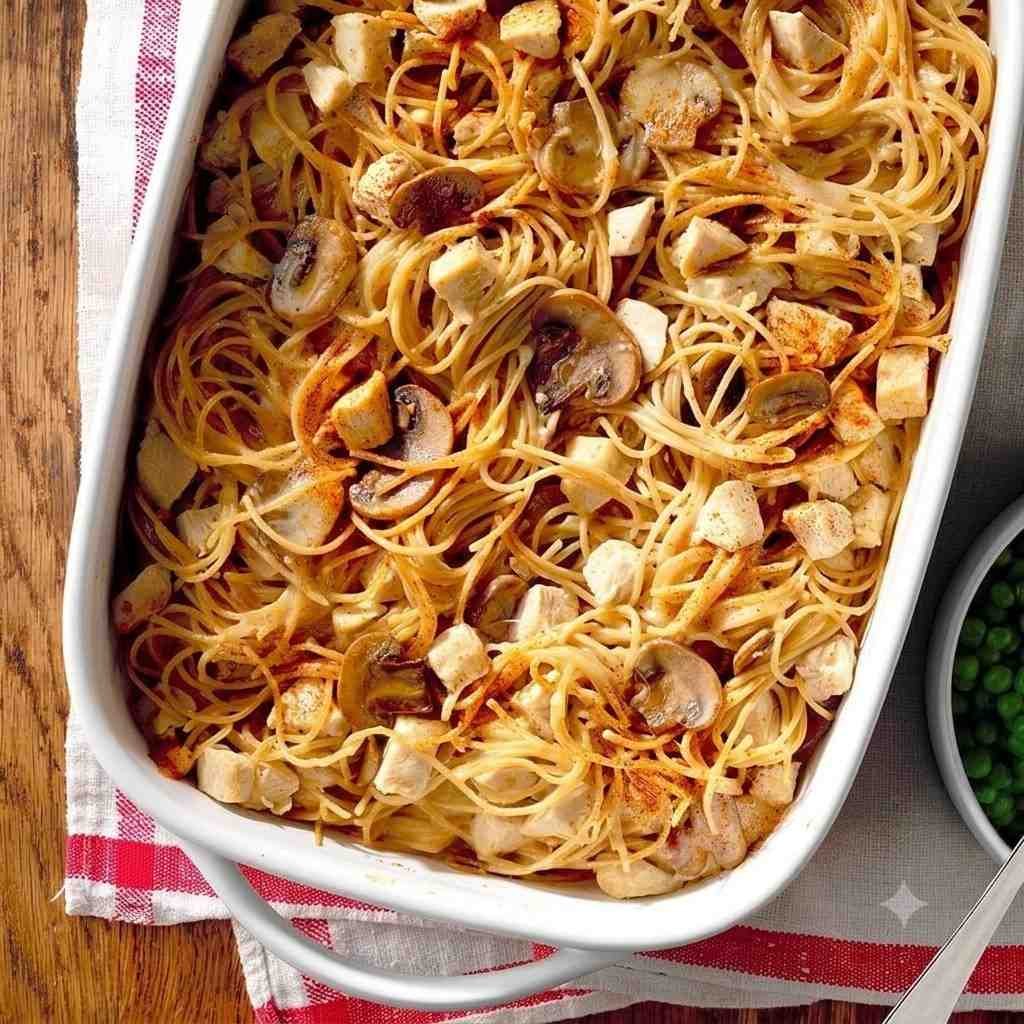
Mushroom Turkey Tetrazzini gives Day 5 the creamy comfort of a classic casserole while maintaining a stronger protein-to-carbohydrate balance. The supplied version is already notably protein-rich, providing 34 grams of protein per cup, although it also contains 38 grams of carbohydrate and 717 milligrams of sodium. This version keeps turkey and mushrooms at the heart of the casserole while using whole-wheat pasta, Greek yogurt, reduced-fat dairy, spinach, and lower-sodium ingredients. It is creamy, filling, freezer-friendly, and particularly useful when cooked turkey is already available.
Ingredients
- 3 cups cooked skinless turkey breast, chopped
- 8 oz whole-wheat spaghetti
- 4 cups sliced cremini mushrooms
- 3 cups fresh spinach
- 1 small yellow onion, finely diced
- 3 garlic cloves, minced
- 1 tablespoon extra-virgin olive oil
- 2 cups low-sodium chicken broth
- 1 cup plain nonfat Greek yogurt
- 1/2 cup low-fat milk
- 1 cup reduced-fat shredded mozzarella
- 1/3 cup grated Parmesan
- 2 tablespoons whole-wheat flour
- 1 teaspoon dried thyme
- 1/2 teaspoon ground black pepper
- 2 tablespoons chopped parsley
How to Make Mushroom Turkey Tetrazzini
- Preheat the oven to 375°F and lightly coat a 9 × 13-inch baking dish with nonstick cooking spray.
- Bring a large pot of water to a boil and cook the whole-wheat spaghetti approximately 2 minutes less than the package’s recommended time.
- Drain the pasta thoroughly and set it aside; slightly undercooking it prevents the noodles from becoming overly soft during baking.
- Heat olive oil in a large deep skillet over medium heat.
- Add diced onion and cook for approximately 3 minutes until it begins to soften.
- Add the sliced mushrooms and spread them across the skillet.
- Cook for 6–8 minutes, stirring periodically, until the mushrooms release their moisture and begin to brown.
- Add garlic, thyme, and black pepper and cook for approximately 30 seconds.
- Sprinkle whole-wheat flour evenly over the vegetables and stir continuously for approximately 1 minute.
- Slowly pour in the low-sodium broth while whisking or stirring constantly to prevent lumps.
- Add the milk and simmer gently until the sauce begins to thicken.
- Reduce the heat to low before adding the Greek yogurt so it incorporates smoothly without separating.
- Stir until the sauce becomes creamy and uniform.
- Add chopped turkey and spinach and stir until the spinach begins to wilt.
- Add the drained whole-wheat spaghetti and gently toss until every strand is coated.
- Stir in half of the mozzarella and half of the Parmesan.
- Transfer the mixture to the prepared baking dish and spread it evenly.
- Sprinkle the remaining mozzarella and Parmesan lightly across the top.
- Bake uncovered for approximately 20–25 minutes until bubbling around the edges and lightly golden on top.
- Allow the tetrazzini to rest for 5–10 minutes before portioning.
- Garnish with chopped parsley and serve with a non-starchy vegetable or green salad.
Nutrition Information (Approximate)
- Calories: 390 kcal
- Protein: 41 g
- Carbohydrates: 36 g
- Fat: 10 g
- Fiber: 6 g
- Sugar: 6 g
- Sodium: 470 mg
06/30
Rosemary Chicken with Spinach & Beans
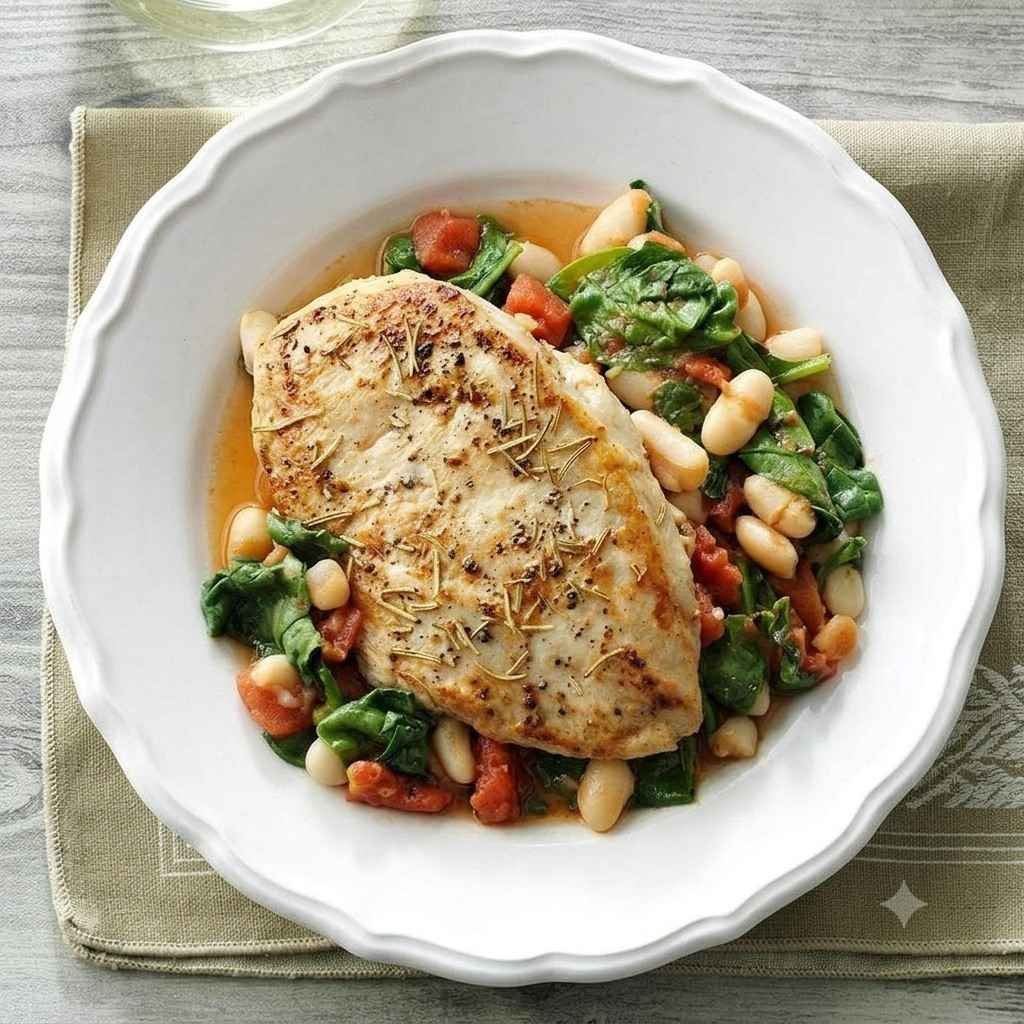
Rosemary Chicken with Spinach & Beans is one of the naturally strongest high-protein meals in the entire 30-day lineup. The supplied recipe provides 41 grams of protein and 6 grams of fiber per serving, making its basic combination of chicken, leafy greens, and beans an excellent fit for this plan. Fresh rosemary, garlic, tomatoes, and lemon give the skillet an aromatic Mediterranean character, while cannellini beans provide satisfying fiber and additional plant protein. Everything cooks in one skillet, making this an especially practical weeknight dinner.
Ingredients
- 4 boneless skinless chicken breasts, 6 oz each
- 1 can no-salt-added cannellini beans, 15 oz, rinsed and drained
- 6 cups fresh baby spinach
- 1 can no-salt-added diced tomatoes, 14.5 oz
- 1 small yellow onion, diced
- 3 garlic cloves, minced
- 1 tablespoon extra-virgin olive oil
- 3/4 cup low-sodium chicken broth
- 1 tablespoon fresh rosemary, finely chopped
- 2 tablespoons fresh lemon juice
- 1/2 teaspoon ground black pepper
- 1/4 teaspoon crushed red pepper flakes
- 2 tablespoons chopped fresh parsley
How to Make Rosemary Chicken with Spinach & Beans
- Pat the chicken breasts dry and trim away visible fat.
- If the chicken breasts are unusually thick, gently pound them to a more even thickness so they cook uniformly.
- Season the chicken with rosemary and black pepper, pressing the herbs gently onto the surface.
- Heat olive oil in a large deep skillet over medium-high heat.
- Add the chicken breasts and cook undisturbed for approximately 4–5 minutes until the first side develops a golden crust.
- Turn the chicken and brown the second side for another 3–4 minutes.
- Transfer the partially cooked chicken to a clean plate.
- Reduce the skillet to medium heat and add diced onion.
- Cook the onion for approximately 3 minutes, scraping the browned chicken bits from the bottom.
- Add garlic and crushed red pepper and stir for approximately 30 seconds.
- Pour in the diced tomatoes and low-sodium broth.
- Rinse the cannellini beans thoroughly under cool running water, drain them, and add them to the skillet.
- Stir the mixture and bring it to a gentle simmer.
- Return the chicken breasts to the skillet, nestling them partially into the beans and tomatoes.
- Cover and simmer gently until the chicken reaches 165°F internally.
- Transfer the chicken briefly to a plate once fully cooked.
- Add spinach to the skillet in several handfuls, stirring after each addition until it wilts.
- Stir in fresh lemon juice and taste the sauce before deciding whether additional seasoning is necessary.
- Return the chicken to the skillet and spoon the bean-and-spinach mixture around it.
- Divide among four plates, ensuring every serving receives chicken, beans, spinach, and tomato sauce.
- Garnish with fresh parsley and serve immediately.
Nutrition Information (Approximate)
- Calories: 375 kcal
- Protein: 49 g
- Carbohydrates: 25 g
- Fat: 9 g
- Fiber: 8 g
- Sugar: 5 g
- Sodium: 410 mg
07/30
Turkey-Stuffed Bell Peppers
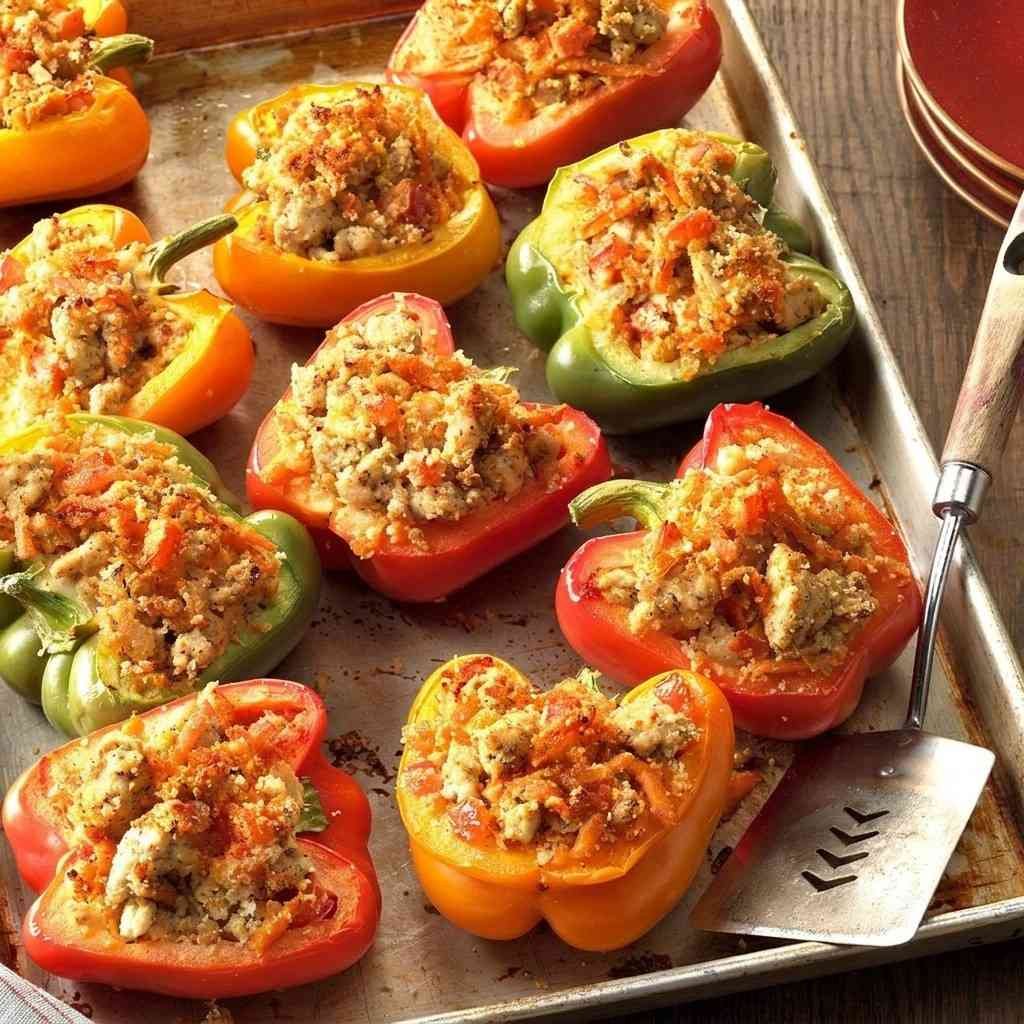
Turkey-Stuffed Bell Peppers bring together lean ground turkey, vegetables, tomato, seasonings, and a modest carbohydrate component inside naturally portioned bell-pepper shells. The supplied meal plan already lists an impressive 40 grams of protein per two stuffed pepper halves, along with 20 grams of carbohydrate and 4 grams of fiber. This adaptation keeps that high-protein character while using cauliflower rice alongside a smaller amount of quinoa, plus reduced-fat cheese for a satisfying finish. The peppers also reheat well, making them an excellent make-ahead dinner.
Ingredients
- 5 large bell peppers
- 1 3/4 lb extra-lean ground turkey
- 2 cups cauliflower rice
- 3/4 cup cooked quinoa
- 1 can no-salt-added diced tomatoes, 14.5 oz, drained
- 2 cups fresh spinach, chopped
- 1 small yellow onion, diced
- 3 garlic cloves, minced
- 1 tablespoon extra-virgin olive oil
- 1 teaspoon smoked paprika
- 1 teaspoon dried oregano
- 1 teaspoon ground cumin
- 1/2 teaspoon ground black pepper
- 1 cup reduced-fat shredded mozzarella
- 2 tablespoons chopped parsley
How to Make Turkey-Stuffed Bell Peppers
- Preheat the oven to 375°F and lightly coat a 9 × 13-inch baking dish with nonstick cooking spray.
- Slice each bell pepper in half lengthwise through the stem.
- Remove the seeds and pale interior membranes carefully while keeping the outer pepper walls intact.
- Arrange all 10 pepper halves cut-side up in the baking dish.
- Add approximately 1/4 cup water to the bottom of the dish and cover loosely with foil.
- Bake the empty pepper shells for approximately 10 minutes to begin softening them.
- Meanwhile, heat olive oil in a large skillet over medium heat.
- Add diced onion and cook for 3–4 minutes until softened.
- Add garlic and stir for approximately 30 seconds.
- Add ground turkey and immediately begin breaking it into small crumbles.
- Continue cooking until the turkey is no longer pink and excess moisture has mostly evaporated.
- Add paprika, oregano, cumin, and black pepper.
- Stir in cauliflower rice and cook for approximately 3 minutes.
- Add drained tomatoes, cooked quinoa, and chopped spinach.
- Continue cooking until the spinach wilts and the filling becomes moist but not watery.
- Remove the peppers from the oven and carefully drain any water that has accumulated inside them.
- Spoon the turkey mixture evenly into all 10 pepper halves, gently pressing the filling down without packing it excessively.
- Sprinkle reduced-fat mozzarella evenly over the filled peppers.
- Return the dish to the oven uncovered.
- Bake for approximately 18–22 minutes until the peppers are tender and the cheese is melted.
- Allow the peppers to rest for 5 minutes so the filling settles.
- Garnish with fresh parsley before serving.
Nutrition Information (Approximate)
- Calories: 350 kcal
- Protein: 43 g
- Carbohydrates: 23 g
- Fat: 11 g
- Fiber: 6 g
- Sugar: 8 g
- Sodium: 420 mg
08/30
Sausage Asparagus Pasta
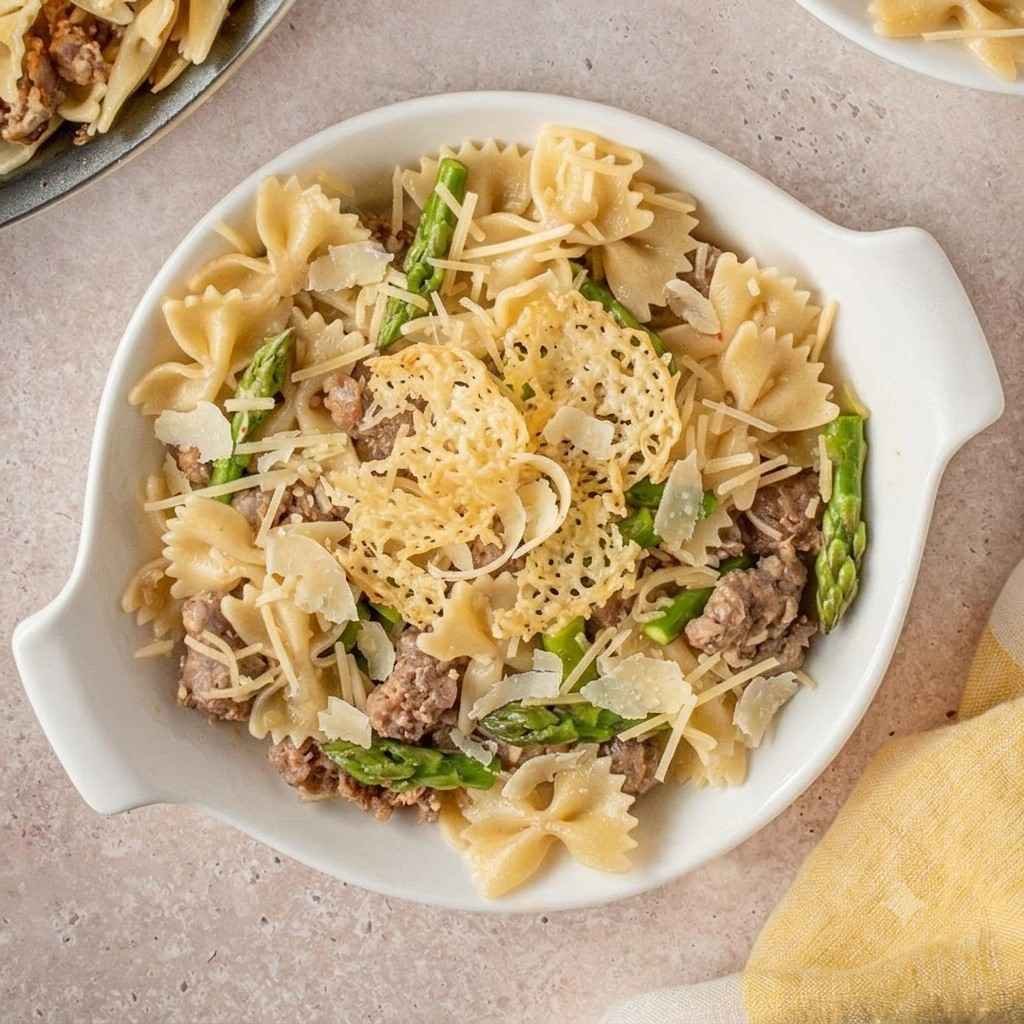
Sausage Asparagus Pasta is a fast 30-minute dinner in the supplied meal plan, where the original serving provides 17 grams of protein, 28 grams of carbohydrate, and 4 grams of fiber. For this higher-protein adaptation, lean chicken or turkey sausage replaces fattier sausage, while whole-wheat pasta, asparagus, spinach, garlic, and Parmesan create a satisfying skillet meal. Increasing the ratio of sausage and vegetables to pasta preserves the identity of the dish without making refined starch the dominant ingredient.
Ingredients
- 1 1/2 lb lean chicken or turkey sausage, casings removed
- 8 oz whole-wheat bow-tie pasta
- 1 1/2 lb asparagus, trimmed and cut into 2-inch pieces
- 3 cups baby spinach
- 1 cup cherry tomatoes, halved
- 3 garlic cloves, minced
- 1 tablespoon extra-virgin olive oil
- 1/2 cup low-sodium chicken broth
- 1/3 cup grated Parmesan
- 1 tablespoon fresh lemon juice
- 1/2 teaspoon ground black pepper
- 1/4 teaspoon crushed red pepper flakes
- 2 tablespoons chopped parsley
How to Make Sausage Asparagus Pasta
- Bring a large pot of water to a rolling boil.
- Add the whole-wheat bow-tie pasta and cook until just al dente according to package directions.
- Reserve approximately 1/2 cup pasta cooking water before draining.
- Drain the pasta and set it aside without rinsing.
- Heat olive oil in a large deep skillet over medium-high heat.
- Add the lean sausage and break it into bite-sized crumbles.
- Cook until browned and completely cooked through.
- Transfer excess rendered fat from the skillet if necessary.
- Add asparagus and cook with the sausage for approximately 4 minutes.
- Add garlic and crushed red pepper flakes and stir for 30 seconds.
- Add cherry tomatoes and low-sodium chicken broth.
- Simmer for approximately 2 minutes until the tomatoes begin to soften.
- Add spinach and stir until just wilted.
- Return the cooked pasta to the skillet.
- Toss thoroughly so the sausage and vegetables distribute evenly throughout the smaller pasta portion.
- Add a little reserved pasta water if the mixture seems dry.
- Stir in Parmesan, black pepper, and lemon juice.
- Continue tossing over low heat until the cheese lightly coats the pasta.
- Divide into six portions, making sure each serving contains plenty of sausage and asparagus rather than mostly pasta.
- Finish with chopped parsley and serve warm.
Nutrition Information (Approximate)
- Calories: 370 kcal
- Protein: 30 g
- Carbohydrates: 34 g
- Fat: 13 g
- Fiber: 7 g
- Sugar: 5 g
- Sodium: 490 mg
09/30
Tuscan Fish Packets
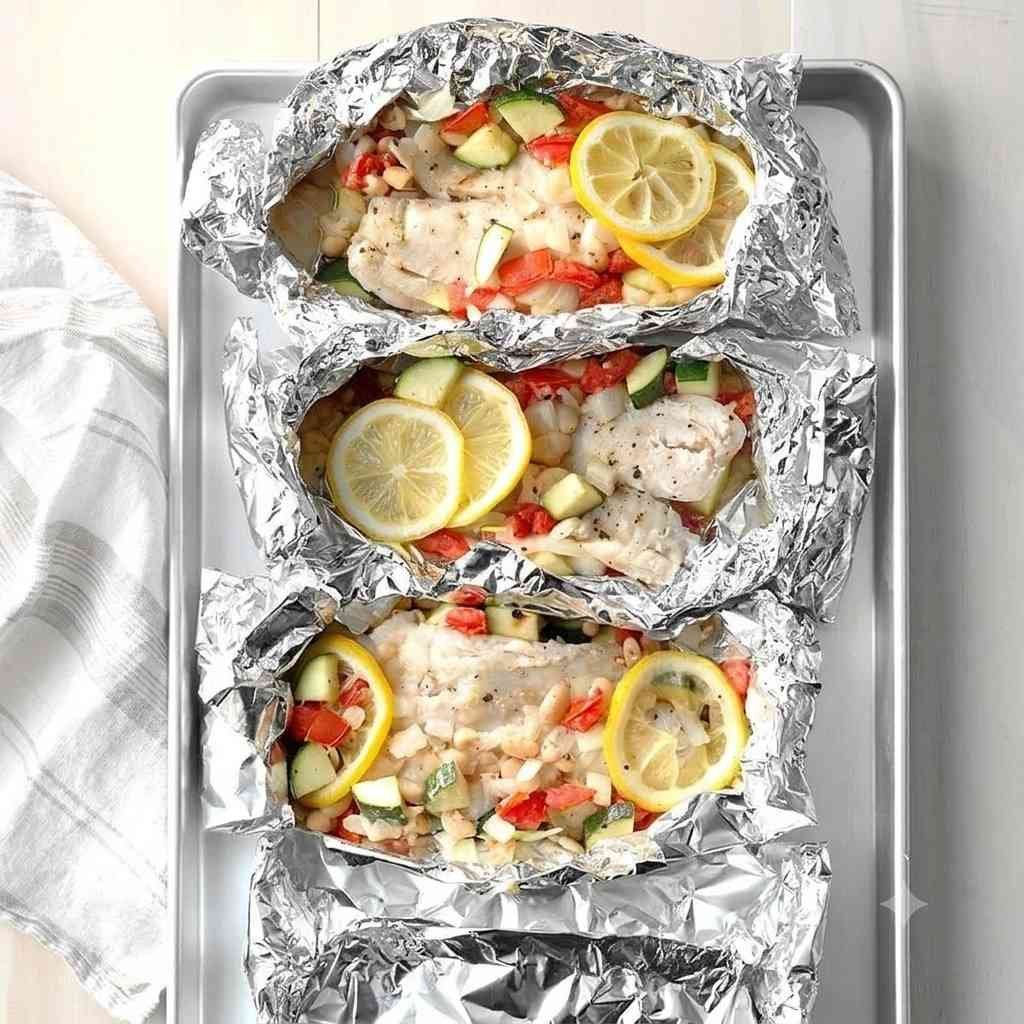
Tuscan Fish Packets make Day 9 exceptionally convenient because the fish and vegetables cook together inside sealed parcels that trap steam and flavor. The supplied meal-plan version provides 38 grams of protein, 23 grams of carbohydrate, and 7 grams of fiber per serving. This version keeps the Italian-inspired character with firm white fish, tomatoes, zucchini, cannellini beans, spinach, garlic, lemon, and herbs. The packets produce tender fish without requiring heavy sauces, and individual portions make serving straightforward.
Ingredients
- 4 firm white fish fillets, 6 oz each
- 1 cup no-salt-added cannellini beans, rinsed and drained
- 1 medium zucchini, thinly sliced
- 2 cups cherry tomatoes, halved
- 2 cups fresh spinach
- 1 small red bell pepper, thinly sliced
- 3 garlic cloves, minced
- 1 tablespoon extra-virgin olive oil
- 3 tablespoons fresh lemon juice
- 1 teaspoon dried oregano
- 1 teaspoon dried basil
- 1/2 teaspoon ground black pepper
- 2 tablespoons chopped fresh parsley
How to Make Tuscan Fish Packets
- Preheat the oven to 400°F.
- Tear four large pieces of heavy-duty aluminum foil or parchment-lined foil, each approximately 16 inches long.
- Place the sheets on a clean work surface and lightly mist the centers with cooking spray if needed.
- Divide the spinach among the four sheets, creating a vegetable bed for each fish fillet.
- Add equal portions of zucchini, bell pepper, tomatoes, and cannellini beans.
- Pat the fish fillets dry thoroughly with paper towels.
- Place one fish fillet over the vegetables in each packet.
- Combine olive oil, lemon juice, garlic, oregano, basil, and black pepper in a small bowl.
- Spoon the herb mixture evenly over all four fish fillets.
- Bring the long sides of each foil sheet together above the fish.
- Fold the edges over several times to form a secure seam.
- Fold and crimp both ends so steam cannot easily escape while leaving a small amount of interior space around the food.
- Arrange the sealed packets on a large baking sheet.
- Bake for approximately 15–18 minutes, depending on the thickness of the fish.
- Carefully open one packet while directing the hot steam away from your face and hands.
- Check that the fish flakes easily and has reached a safe internal temperature.
- Transfer each packet to a plate or carefully slide the fish and vegetables onto serving plates.
- Spoon the flavorful cooking juices over the fish.
- Finish with fresh parsley and additional lemon juice if desired.
Nutrition Information (Approximate)
- Calories: 300 kcal
- Protein: 42 g
- Carbohydrates: 20 g
- Fat: 7 g
- Fiber: 7 g
- Sugar: 6 g
- Sodium: 330 mg
10/30
Slow-Cooker Pork Medallions
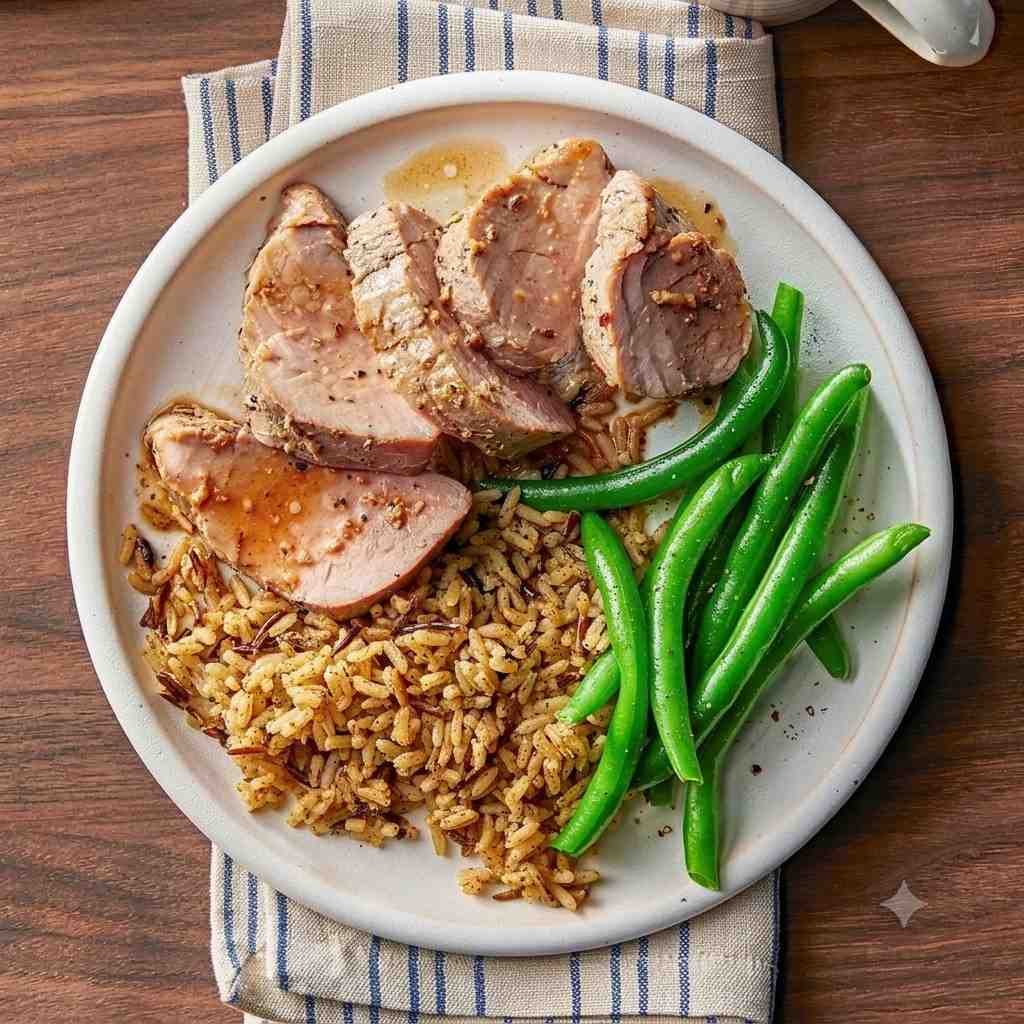
Slow-Cooker Pork Medallions provide a protein-centered Day 10 dinner with very little active preparation. The supplied version is especially low in carbohydrate, listing 31 grams of protein and zero grams of carbohydrate for a 5-ounce serving of cooked pork. This adaptation keeps pork tenderloin as the focus while using a simple low-sodium herb broth instead of relying on highly salted sauces. The pork is sliced into medallions after cooking and can be paired with roasted non-starchy vegetables for a balanced plate.
Ingredients
- 2 lb pork tenderloin
- 1 cup low-sodium chicken broth
- 1 tablespoon Dijon mustard
- 1 tablespoon apple cider vinegar
- 1 tablespoon extra-virgin olive oil
- 3 garlic cloves, minced
- 1 teaspoon dried thyme
- 1 teaspoon dried rosemary
- 1/2 teaspoon onion powder
- 1/2 teaspoon ground black pepper
- 1 lb green beans, trimmed
- 1 lb cauliflower florets
- 2 tablespoons chopped parsley
How to Make Slow-Cooker Pork Medallions
- Trim the silver skin and any large pieces of visible fat from the pork tenderloin.
- Pat the pork completely dry with paper towels.
- Rub the tenderloin with olive oil, thyme, rosemary, onion powder, and black pepper.
- Heat a large skillet over medium-high heat.
- Sear the pork for approximately 2 minutes on each major side until lightly browned.
- Transfer the pork to a slow cooker.
- Whisk low-sodium chicken broth, Dijon mustard, apple cider vinegar, and minced garlic.
- Pour the liquid around the pork rather than washing all the seasoning from its surface.
- Cover the slow cooker and cook on low until the pork reaches a safe internal temperature and remains tender.
- Avoid unnecessarily prolonged cooking because pork tenderloin is lean and can dry out even in a slow cooker.
- Transfer the pork to a cutting board and rest it for approximately 8 minutes.
- While the pork rests, steam or roast the green beans and cauliflower until tender-crisp.
- Pour the slow-cooker liquid into a small saucepan if a slightly more concentrated sauce is desired.
- Simmer the liquid for several minutes until reduced slightly.
- Taste before adding any salt because the broth and mustard already provide seasoning.
- Slice the rested pork crosswise into thick medallions.
- Divide the vegetables among serving plates.
- Add approximately 5–6 oz pork to each plate.
- Spoon a small amount of warm herb sauce over the medallions.
- Garnish with chopped parsley and serve immediately.
Nutrition Information (Approximate)
- Calories: 335 kcal
- Protein: 45 g
- Carbohydrates: 14 g
- Fat: 11 g
- Fiber: 5 g
- Sugar: 5 g
- Sodium: 350 mg
11/30
Chicken Foil Packet Meals
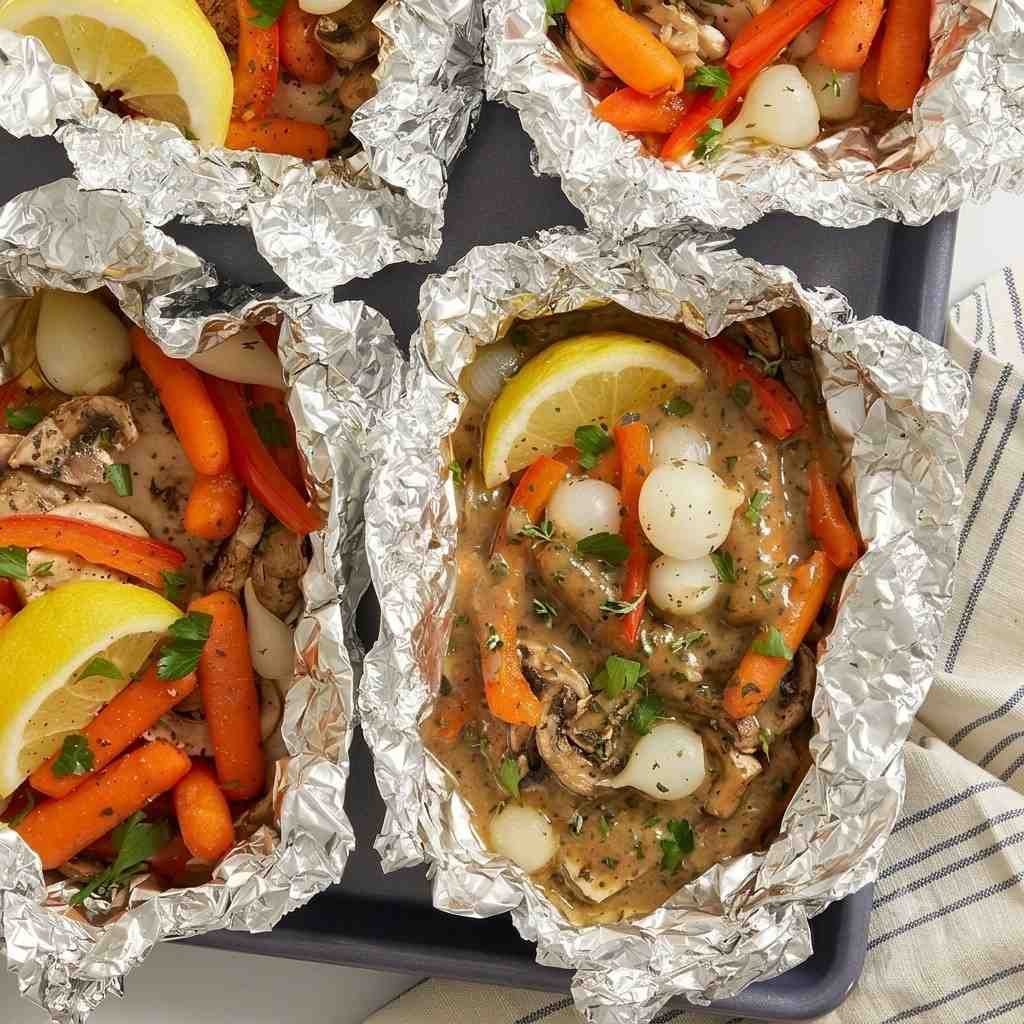
Chicken Foil Packet Meals are another easy individual-portion dinner, using sealed foil packets to keep lean chicken tender while vegetables cook in their own flavorful juices. The supplied meal plan lists the dish at 25 grams of protein and 11 grams of carbohydrate per serving. Increasing the chicken portion slightly makes this adaptation more protein-focused, while zucchini, broccoli, peppers, tomatoes, herbs, and lemon provide volume and flavor. Cleanup is minimal because every serving cooks inside its own packet.
Ingredients
- 4 boneless skinless chicken breasts, 6 oz each
- 2 cups broccoli florets
- 1 medium zucchini, sliced
- 1 red bell pepper, sliced
- 1 yellow bell pepper, sliced
- 1 1/2 cups cherry tomatoes, halved
- 1 tablespoon extra-virgin olive oil
- 3 tablespoons fresh lemon juice
- 3 garlic cloves, minced
- 1 teaspoon dried oregano
- 1 teaspoon dried thyme
- 1/2 teaspoon smoked paprika
- 1/2 teaspoon ground black pepper
- 2 tablespoons chopped parsley
How to Make Chicken Foil Packet Meals
- Preheat the oven to 400°F.
- Prepare four large pieces of heavy-duty aluminum foil and place them on a flat work surface.
- Pound particularly thick chicken breasts gently until they are relatively even in thickness.
- Pat the chicken dry and set one breast in the center of each foil sheet.
- Divide broccoli, zucchini, peppers, and tomatoes evenly around the chicken.
- Whisk olive oil, lemon juice, garlic, oregano, thyme, paprika, and black pepper.
- Spoon the seasoning mixture evenly over the chicken and vegetables.
- Lift the long sides of the foil above each chicken breast.
- Fold the edges together securely and then fold the short ends inward to seal the packets.
- Leave a little space inside each packet so hot air and steam can circulate.
- Place the packets on a large rimmed baking sheet.
- Bake for approximately 22–28 minutes depending on the thickness of the chicken.
- Carefully open one packet and test the thickest section of chicken with an instant-read thermometer.
- Continue baking if necessary until the chicken reaches 165°F.
- Allow the packets to rest unopened for approximately 3 minutes.
- Open each packet carefully because a considerable amount of hot steam may escape.
- Spoon the cooking juices over the chicken and vegetables.
- Garnish with fresh parsley and serve directly from the foil or transfer to plates.
Nutrition Information (Approximate)
- Calories: 285 kcal
- Protein: 41 g
- Carbohydrates: 15 g
- Fat: 8 g
- Fiber: 5 g
- Sugar: 7 g
- Sodium: 220 mg
12/30
Quinoa Unstuffed Peppers
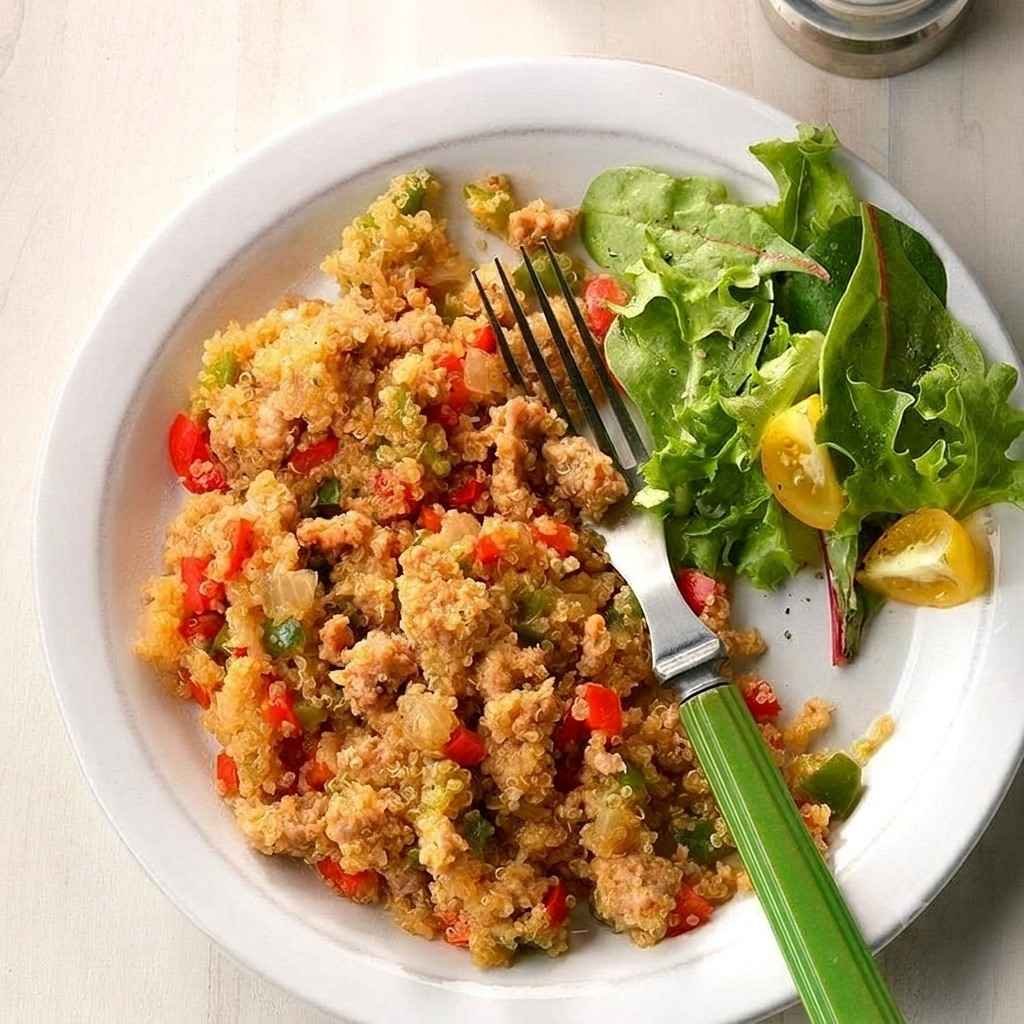
Quinoa Unstuffed Peppers deliver everything appealing about stuffed peppers without the additional work of filling and baking individual pepper shells. The supplied dish provides 17 grams of protein and 28 grams of carbohydrate per cup. For this high-protein version, extra-lean turkey is increased while quinoa remains an important part of the dish in a controlled quantity. Bell peppers, cauliflower rice, tomatoes, spinach, garlic, and spices create a colorful one-pan meal that is also convenient for freezer-friendly meal prep.
Ingredients
- 1 1/2 lb extra-lean ground turkey
- 1 1/2 cups cooked quinoa
- 3 large bell peppers, diced
- 2 cups cauliflower rice
- 1 can no-salt-added diced tomatoes, 14.5 oz
- 2 cups chopped spinach
- 1 small yellow onion, diced
- 3 garlic cloves, minced
- 1 tablespoon extra-virgin olive oil
- 1 teaspoon smoked paprika
- 1 teaspoon dried oregano
- 1/2 teaspoon ground cumin
- 1/2 teaspoon black pepper
- 1/2 cup reduced-fat mozzarella
- 2 tablespoons chopped parsley
How to Make Quinoa Unstuffed Peppers
- Heat olive oil in a large deep skillet over medium heat.
- Add diced onion and bell peppers.
- Cook for approximately 5 minutes until the vegetables begin to soften.
- Add garlic and stir for 30 seconds.
- Add ground turkey and break it into small crumbles with a wooden spoon.
- Cook until no pink remains.
- Drain excess liquid from the skillet if necessary.
- Add paprika, oregano, cumin, and black pepper.
- Stir in cauliflower rice and cook for approximately 3 minutes.
- Add diced tomatoes and continue cooking until some of their excess moisture evaporates.
- Fold in the cooked quinoa.
- Add spinach and stir until wilted.
- Reduce the heat to low and taste the mixture for seasoning.
- Sprinkle reduced-fat mozzarella across the surface.
- Cover the skillet for 2–3 minutes until the cheese melts.
- Remove from heat and allow the mixture to stand for several minutes.
- Divide evenly into bowls.
- Garnish with fresh parsley before serving.
Nutrition Information (Approximate)
- Calories: 365 kcal
- Protein: 37 g
- Carbohydrates: 31 g
- Fat: 11 g
- Fiber: 7 g
- Sugar: 7 g
- Sodium: 390 mg
13/30
Cedar Plank Salmon with Blackberry Sauce
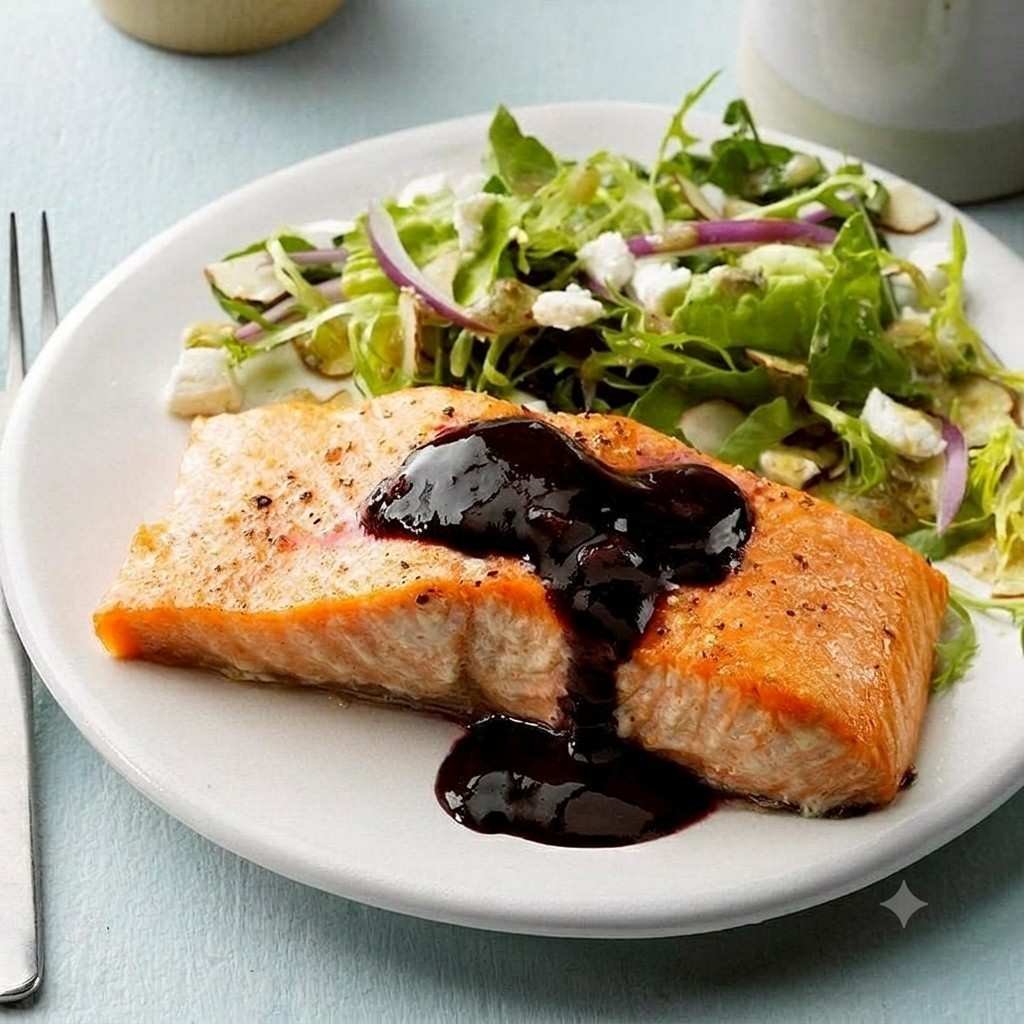
Cedar Plank Salmon with Blackberry Sauce combines smoky salmon with a savory-sweet berry sauce, creating one of the most distinctive meals in the 30-day lineup. The supplied version provides 29 grams of protein and 10 grams of carbohydrate per fillet with sauce. This adaptation keeps blackberries at the center of the sauce but avoids relying on substantial added sugar, instead balancing the berries with balsamic vinegar, lemon, pepper, and a small amount of optional non-nutritive sweetener. Salmon provides satisfying protein and naturally occurring omega-3 fats.
Ingredients
- 6 salmon fillets, 5 oz each
- 2 cups fresh blackberries
- 1 tablespoon balsamic vinegar
- 2 tablespoons fresh lemon juice
- 1 tablespoon Dijon mustard
- 1 teaspoon optional granulated monk fruit sweetener
- 1 tablespoon extra-virgin olive oil
- 1 teaspoon smoked paprika
- 1/2 teaspoon garlic powder
- 1/2 teaspoon ground black pepper
- 1/4 teaspoon crushed red pepper flakes
- 2 tablespoons chopped parsley
- 1 food-safe cedar grilling plank, approximately 15 × 5 inches
How to Make Cedar Plank Salmon with Blackberry Sauce
- Submerge the untreated food-safe cedar plank completely in water for at least 1–2 hours before cooking.
- Preheat an outdoor grill to medium heat.
- Pat the salmon fillets dry.
- Lightly brush the salmon with olive oil.
- Season with smoked paprika, garlic powder, and black pepper.
- Place blackberries in a small saucepan over medium-low heat.
- Add balsamic vinegar, lemon juice, Dijon mustard, crushed red pepper, and optional monk fruit sweetener.
- Cook gently while crushing some of the berries with the back of a spoon.
- Simmer until the berries soften and the sauce becomes lightly syrupy.
- Remove the sauce from heat and leave some berry pieces intact for texture.
- Remove the cedar plank from its soaking water and shake off excess liquid.
- Arrange the salmon fillets on the plank with a little space between them.
- Place the plank directly on the grill grate and close the lid.
- Grill until the salmon flakes easily and reaches the desired safe internal temperature.
- Watch the grill carefully and keep water nearby in case the edges of the plank flare.
- Remove the plank from the grill using heatproof gloves or sturdy tongs.
- Allow the salmon to rest for several minutes.
- Spoon approximately 2 tablespoons blackberry sauce over each fillet.
- Garnish with fresh parsley and serve with roasted non-starchy vegetables.
Nutrition Information (Approximate)
- Calories: 315 kcal
- Protein: 32 g
- Carbohydrates: 9 g
- Fat: 17 g
- Fiber: 4 g
- Sugar: 4 g
- Sodium: 220 mg
14/30
Artichoke Ratatouille Chicken
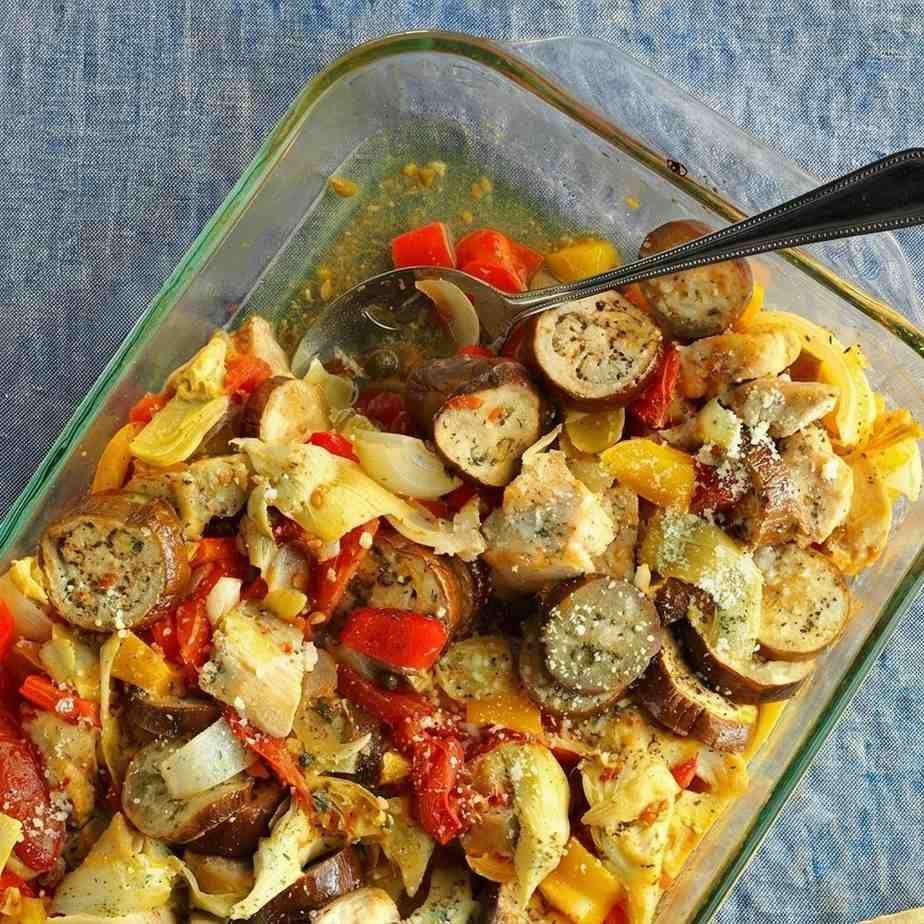
Artichoke Ratatouille Chicken combines lean chicken with a generous amount of colorful produce, including artichokes, zucchini, tomatoes, peppers, and onions. The supplied meal plan describes it as a produce-packed chicken dinner and lists 28 grams of protein, 15 grams of carbohydrate, and 4 grams of fiber per serving. This high-protein adaptation increases the chicken slightly and keeps the vegetable-heavy character intact. Garlic, basil, oregano, lemon, and tomatoes create a light Mediterranean-style sauce that does not require pasta to make the meal satisfying.
Ingredients
- 2 lb boneless skinless chicken breasts, cut into chunks
- 1 can artichoke hearts, 14 oz, drained and quartered
- 2 medium zucchini, chopped
- 1 large red bell pepper, chopped
- 1 large yellow bell pepper, chopped
- 1 medium eggplant, chopped
- 1 medium yellow onion, diced
- 1 can no-salt-added diced tomatoes, 14.5 oz
- 4 garlic cloves, minced
- 2 tablespoons extra-virgin olive oil
- 1 teaspoon dried oregano
- 1 teaspoon dried basil
- 1/2 teaspoon ground black pepper
- 2 tablespoons fresh lemon juice
- 1/4 cup chopped parsley
How to Make Artichoke Ratatouille Chicken
- Preheat the oven to 400°F.
- Pat the chicken dry and cut it into evenly sized chunks.
- Heat 1 tablespoon olive oil in a large oven-safe skillet or Dutch oven over medium-high heat.
- Add the chicken in batches so the pieces brown rather than steam.
- Sear the chicken lightly on several sides and transfer it to a plate.
- Add the remaining olive oil to the skillet.
- Add onion, bell peppers, eggplant, and zucchini.
- Cook for approximately 6 minutes, stirring periodically.
- Add garlic, oregano, basil, and black pepper.
- Stir for approximately 30 seconds.
- Add diced tomatoes and their juices.
- Fold in the drained artichoke hearts.
- Return the browned chicken and accumulated juices to the skillet.
- Stir gently so the vegetables surround the chicken.
- Cover and transfer the skillet to the oven.
- Bake for approximately 25–30 minutes until the chicken is cooked through and the vegetables are tender.
- Remove the lid during the final 5–10 minutes if the mixture contains excess liquid.
- Stir in fresh lemon juice.
- Allow the dish to stand for approximately 5 minutes.
- Divide into six generous portions.
- Garnish with parsley and serve on its own or with a modest portion of whole grain if appropriate for your meal plan.
Nutrition Information (Approximate)
- Calories: 315 kcal
- Protein: 38 g
- Carbohydrates: 18 g
- Fat: 10 g
- Fiber: 7 g
- Sugar: 8 g
- Sodium: 360 mg
15/30
Spicy Roasted Sausage, Potatoes and Peppers
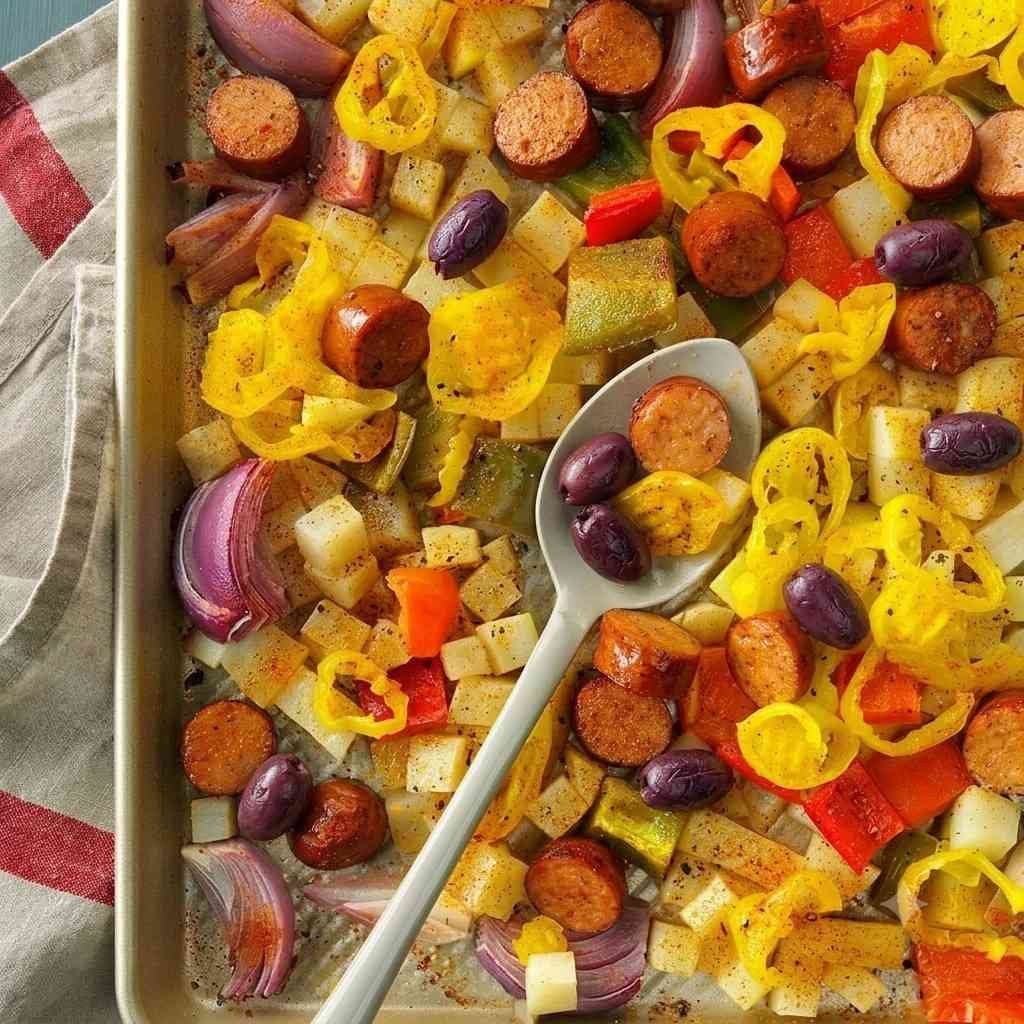
Spicy Roasted Sausage, Potatoes and Peppers is a hearty sheet-pan dinner built around the familiar combination of savory sausage, roasted potatoes, and colorful peppers. The supplied meal plan lists the dish at 17 grams of protein and 24 grams of carbohydrate per serving. To increase protein while keeping the same dish, this version uses lean chicken sausage, increases its proportion, moderates the potato serving, and adds extra peppers and cauliflower. Paprika, chili flakes, garlic, and oregano provide the spicy character without requiring sugary sauces.
Ingredients
- 1 3/4 lb lean chicken sausage, sliced into thick rounds
- 1 lb baby potatoes, quartered
- 3 large bell peppers, cut into chunks
- 1 large red onion, cut into wedges
- 3 cups cauliflower florets
- 2 tablespoons extra-virgin olive oil
- 1 teaspoon smoked paprika
- 1 teaspoon dried oregano
- 1/2 teaspoon garlic powder
- 1/2 teaspoon crushed red pepper flakes
- 1/2 teaspoon ground black pepper
- 2 tablespoons chopped parsley
How to Make Spicy Roasted Sausage, Potatoes and Peppers
- Preheat the oven to 425°F.
- Line a large rimmed sheet pan with parchment paper.
- Cut the potatoes into relatively small, even pieces so they cook in approximately the same time as the remaining ingredients.
- Place potatoes on the pan and toss with 1 tablespoon olive oil and half of the seasonings.
- Roast the potatoes alone for approximately 12 minutes.
- Meanwhile, slice the sausage and prepare the peppers, onion, and cauliflower.
- Remove the sheet pan from the oven.
- Add sausage, peppers, onion, and cauliflower.
- Drizzle with remaining olive oil.
- Sprinkle with remaining paprika, oregano, garlic powder, red pepper flakes, and black pepper.
- Toss thoroughly so everything is lightly coated.
- Spread the ingredients into one even layer.
- Return the pan to the oven.
- Roast for approximately 20–25 minutes.
- Stir or turn the ingredients halfway through cooking.
- Continue roasting until the potatoes are tender, the vegetables develop browned edges, and the sausage is completely heated through.
- Broil for 1–2 minutes at the end if additional browning is desired, watching closely.
- Remove from the oven and allow the sheet pan to rest for several minutes.
- Divide evenly among serving plates so potato portions remain balanced.
- Finish with chopped parsley.
Nutrition Information (Approximate)
- Calories: 375 kcal
- Protein: 31 g
- Carbohydrates: 28 g
- Fat: 17 g
- Fiber: 6 g
- Sugar: 7 g
- Sodium: 520 mg
16/30
Wild Mushroom Pizza
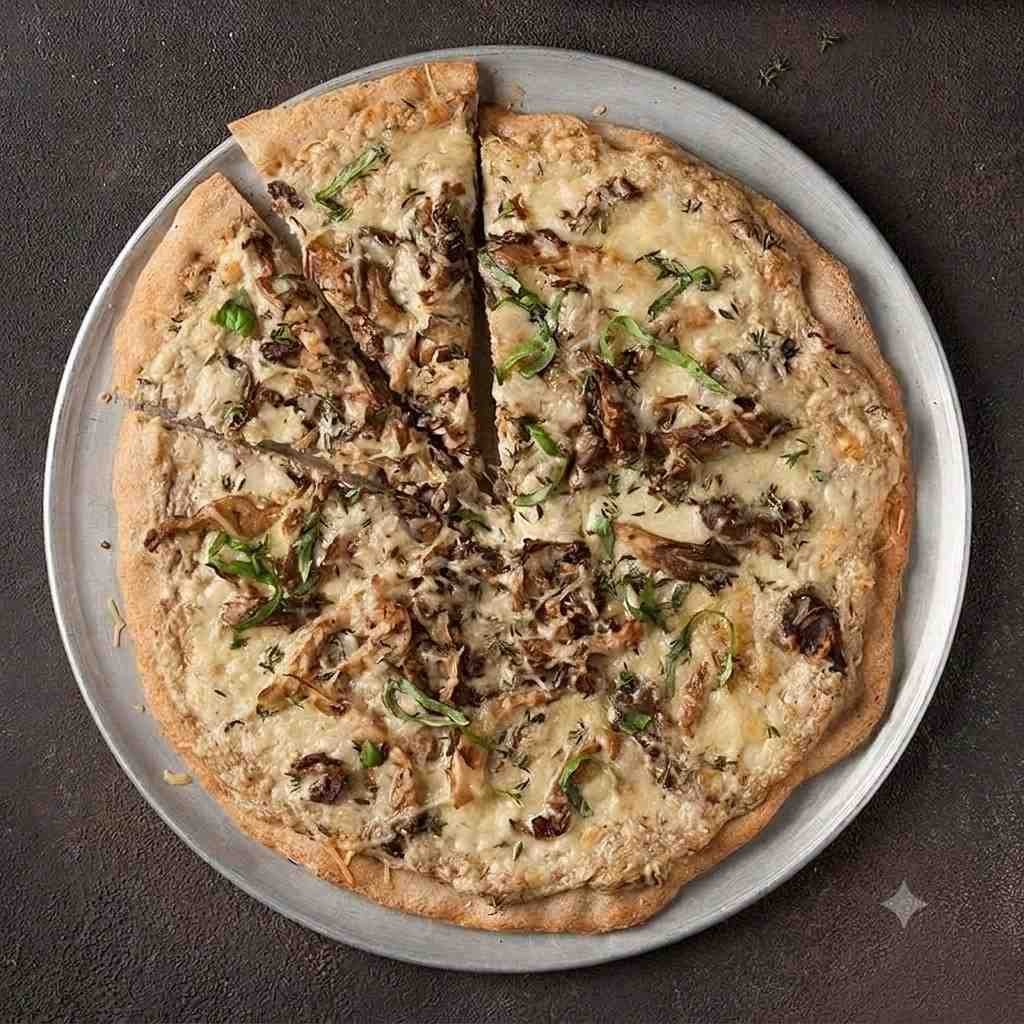
Wild Mushroom Pizza proves that pizza can still appear in a diabetes-conscious high-protein meal plan when the crust and toppings are balanced thoughtfully. The supplied version contains 12 grams of protein and 37 grams of carbohydrate per slice. This adaptation keeps mushrooms as the defining topping while using a thin whole-grain crust, reduced-fat mozzarella, cottage cheese for additional protein, spinach, garlic, and several mushroom varieties. A large salad alongside one or two appropriately portioned slices can turn it into a satisfying vegetable-forward meal.
Ingredients
- 1 thin 12-inch whole-grain pizza crust
- 5 cups mixed mushrooms, sliced
- 2 cups fresh spinach
- 1 cup reduced-fat shredded mozzarella
- 3/4 cup low-fat cottage cheese
- 1/4 cup grated Parmesan
- 1 tablespoon extra-virgin olive oil
- 3 garlic cloves, minced
- 1 teaspoon dried thyme
- 1/2 teaspoon ground black pepper
- 1/4 teaspoon crushed red pepper flakes
- 2 tablespoons chopped parsley
How to Make Wild Mushroom Pizza
- Preheat the oven to 450°F and place a pizza stone or inverted heavy baking sheet inside while the oven heats if available.
- Heat olive oil in a large skillet over medium-high heat.
- Add the mushrooms in batches if necessary so they have enough room to brown.
- Cook until the mushrooms release their liquid and the moisture largely evaporates.
- Add garlic, thyme, black pepper, and red pepper flakes.
- Stir for approximately 30 seconds.
- Add spinach and toss just until wilted.
- Remove the mushroom mixture from heat.
- Place the whole-grain pizza crust on parchment paper.
- Blend or process the cottage cheese briefly if a smoother texture is preferred.
- Spread the cottage cheese in a thin layer over the crust, leaving a narrow border.
- Scatter the mushroom-spinach mixture evenly across the pizza.
- Sprinkle reduced-fat mozzarella and Parmesan over the vegetables.
- Carefully transfer the pizza to the preheated stone or baking sheet.
- Bake according to the crust’s requirements, generally 10–14 minutes.
- Remove when the crust is crisp and the cheese has melted and developed light golden spots.
- Rest the pizza for approximately 5 minutes before slicing.
- Cut into six equal pieces.
- Garnish with fresh parsley.
- Serve with a large leafy salad or roasted vegetables rather than additional refined-carbohydrate sides.
Nutrition Information (Approximate)
- Calories: 290 kcal
- Protein: 22 g
- Carbohydrates: 31 g
- Fat: 10 g
- Fiber: 6 g
- Sugar: 5 g
- Sodium: 460 mg
17/30
Chicken with Peach-Avocado Salsa
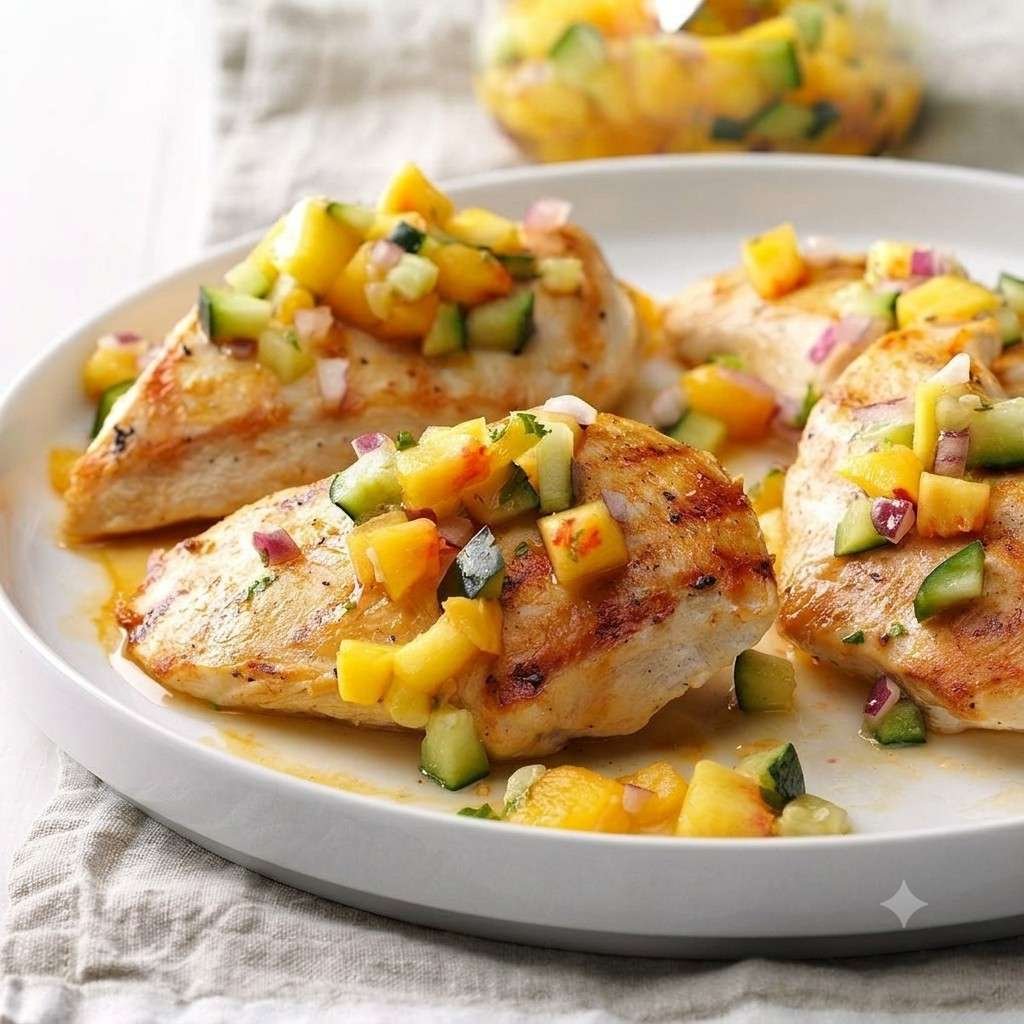
Chicken with Peach-Avocado Salsa combines lean grilled chicken with a refreshing mixture of peach, avocado, lime, vegetables, and herbs. The supplied meal-plan serving contains 36 grams of protein and only 9 grams of carbohydrate. Rather than removing the fruit that defines the recipe, this adaptation keeps peach in a controlled quantity and pairs it with avocado, tomato, onion, cilantro, and substantial lean protein. The contrast between warm seasoned chicken and cool fruit salsa makes this an excellent summer dinner.
Ingredients
- 4 boneless skinless chicken breasts, 6 oz each
- 2 medium peaches, diced
- 1 medium avocado, diced
- 1 cup cherry tomatoes, finely chopped
- 1/4 cup red onion, finely diced
- 1 small jalapeño, finely minced, optional
- 3 tablespoons fresh lime juice
- 1 tablespoon extra-virgin olive oil
- 1 teaspoon ground cumin
- 1/2 teaspoon smoked paprika
- 1/2 teaspoon garlic powder
- 1/2 teaspoon ground black pepper
- 1/4 cup chopped cilantro
How to Make Chicken with Peach-Avocado Salsa
- Pat the chicken breasts dry and pound particularly thick pieces to an even thickness.
- Combine olive oil, cumin, paprika, garlic powder, and black pepper.
- Rub the seasoning mixture over both sides of the chicken.
- Preheat a grill, grill pan, or heavy skillet over medium-high heat.
- Cook the chicken for approximately 5–7 minutes on the first side.
- Turn and continue cooking until the center reaches 165°F.
- Transfer the chicken to a clean plate and rest for at least 5 minutes.
- While the chicken cooks, dice the peaches into small uniform pieces.
- Place peaches, tomatoes, red onion, jalapeño, and cilantro in a bowl.
- Add lime juice and toss gently.
- Dice the avocado shortly before serving.
- Fold the avocado carefully into the peach mixture so the pieces remain intact.
- Taste the salsa and add additional lime or black pepper if desired.
- Slice the rested chicken or leave each breast whole.
- Divide chicken among four plates.
- Spoon approximately 1/2 cup peach-avocado salsa over or alongside each chicken breast.
- Serve immediately while the chicken is warm and the salsa remains cool and fresh.
Nutrition Information (Approximate)
- Calories: 340 kcal
- Protein: 43 g
- Carbohydrates: 14 g
- Fat: 13 g
- Fiber: 5 g
- Sugar: 7 g
- Sodium: 180 mg
18/30
Mediterranean Pot Roast Dinner
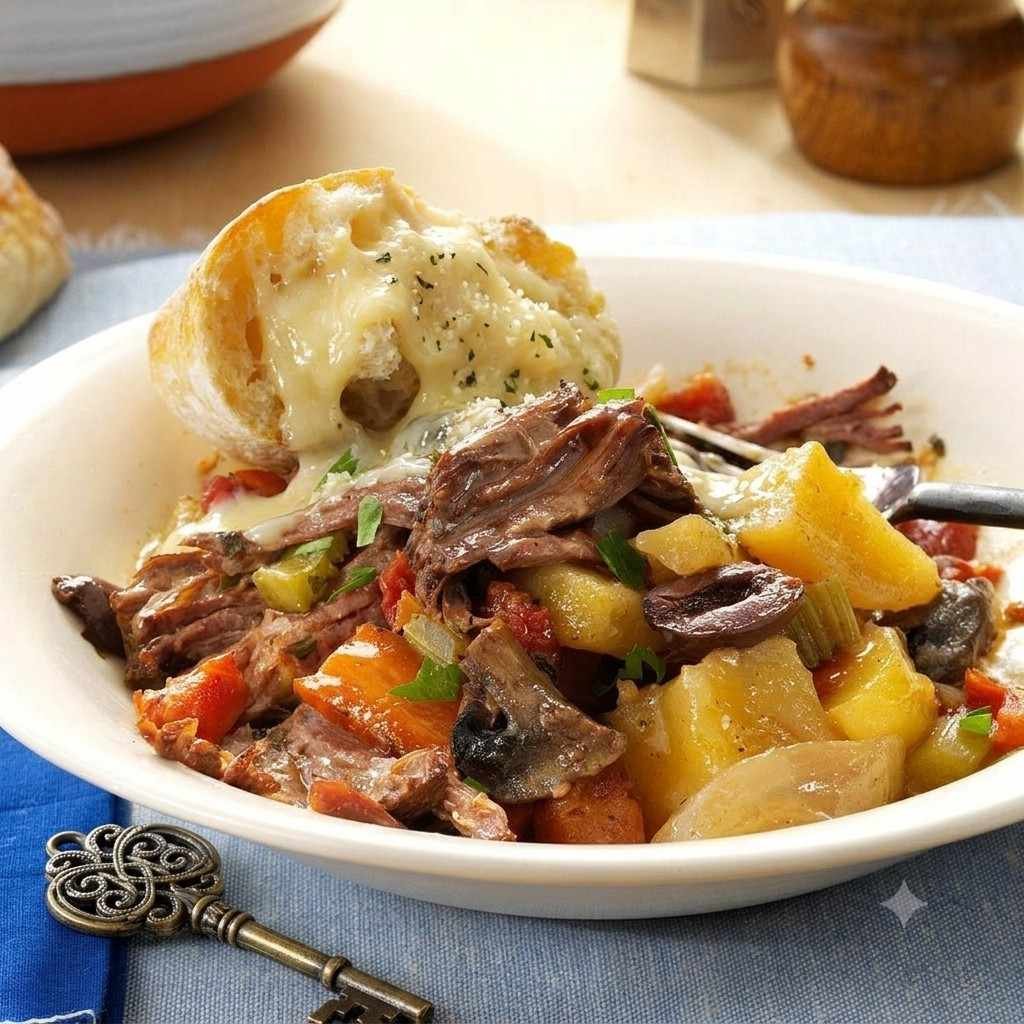
Mediterranean Pot Roast Dinner provides a substantial slow-cooked meal for Day 18, combining tender beef with vegetables and aromatic Mediterranean seasonings. The supplied version provides 37 grams of protein with 28 grams of carbohydrate per serving of beef and vegetables. This adaptation uses a well-trimmed lean roast, plenty of vegetables, tomatoes, herbs, and a moderated quantity of potatoes. Slow cooking creates a rich sauce without requiring flour-heavy gravy or sugary seasoning packets.
Ingredients
- 3 1/2 lb lean beef chuck roast, trimmed
- 1 lb baby potatoes, halved
- 4 medium carrots, cut into chunks
- 3 celery stalks, chopped
- 1 large yellow onion, chopped
- 2 cups mushrooms, halved
- 1 can no-salt-added diced tomatoes, 14.5 oz
- 2 cups low-sodium beef broth
- 4 garlic cloves, minced
- 1 tablespoon extra-virgin olive oil
- 1 teaspoon dried oregano
- 1 teaspoon dried rosemary
- 1 teaspoon dried thyme
- 1/2 teaspoon ground black pepper
- 2 tablespoons balsamic vinegar
- 1/4 cup chopped parsley
How to Make Mediterranean Pot Roast Dinner
- Trim large exterior pieces of fat from the roast.
- Pat the beef dry thoroughly.
- Rub it with oregano, rosemary, thyme, and black pepper.
- Heat olive oil in a large skillet over medium-high heat.
- Sear the roast for several minutes on each major side until deeply browned.
- Transfer the roast to a 6- to 7-quart slow cooker.
- Add onion, carrots, celery, mushrooms, and potatoes around the beef.
- Add garlic and diced tomatoes.
- Pour low-sodium beef broth and balsamic vinegar around the roast.
- Cover and cook on low for approximately 8 hours.
- Check the beef toward the end of cooking; it should be fork-tender.
- Transfer the roast to a cutting board.
- Allow it to rest for approximately 10 minutes.
- Skim visible fat from the surface of the cooking liquid.
- Slice or pull the roast into serving portions.
- Taste the vegetables and sauce before adjusting seasoning.
- Divide the vegetables evenly among eight bowls or plates.
- Add approximately 5 oz cooked beef to each portion.
- Spoon a modest amount of cooking broth over the beef and vegetables.
- Garnish generously with fresh parsley.
Nutrition Information (Approximate)
- Calories: 410 kcal
- Protein: 42 g
- Carbohydrates: 26 g
- Fat: 16 g
- Fiber: 6 g
- Sugar: 7 g
- Sodium: 410 mg
19/30
Cod with Hearty Tomato Sauce
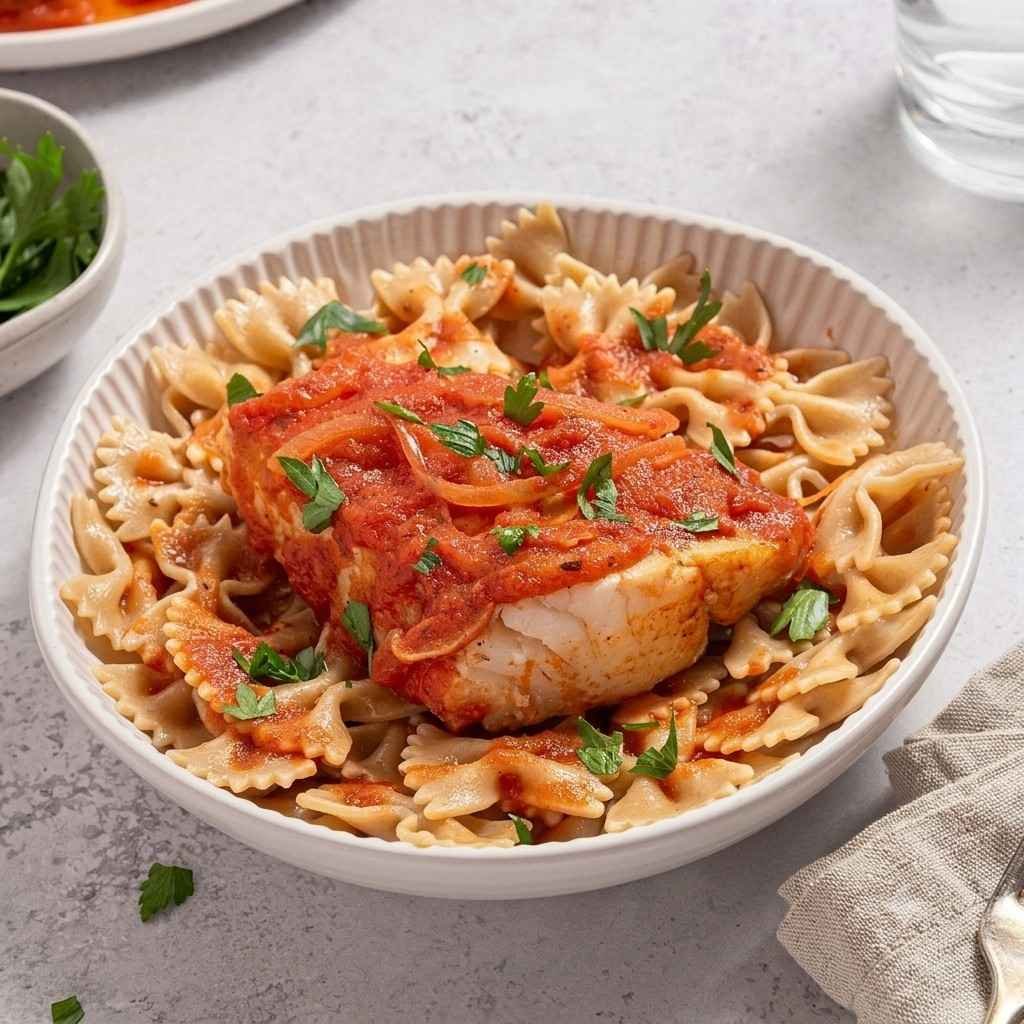
Cod with Hearty Tomato Sauce combines mild white fish with a robust vegetable-rich tomato sauce. The supplied meal plan lists 29 grams of protein, 17 grams of carbohydrate, and 4 grams of fiber per serving. This adaptation increases the cod portion slightly and builds the sauce from no-salt-added tomatoes, peppers, mushrooms, zucchini, garlic, and herbs. The result is filling enough to enjoy by itself, although a modest portion of brown rice or whole-wheat pasta can be added when appropriate.
Ingredients
- 4 cod fillets, 6 oz each
- 1 can no-salt-added crushed tomatoes, 28 oz
- 2 cups mushrooms, sliced
- 1 medium zucchini, diced
- 1 red bell pepper, diced
- 1 small yellow onion, diced
- 4 garlic cloves, minced
- 1 tablespoon extra-virgin olive oil
- 1 teaspoon dried oregano
- 1 teaspoon dried basil
- 1/2 teaspoon ground black pepper
- 1/4 teaspoon crushed red pepper flakes
- 2 tablespoons fresh lemon juice
- 1/4 cup chopped parsley
How to Make Cod with Hearty Tomato Sauce
- Pat the cod fillets dry and refrigerate them while preparing the sauce.
- Heat olive oil in a large deep skillet over medium heat.
- Add onion, bell pepper, mushrooms, and zucchini.
- Cook for approximately 6–7 minutes until the vegetables soften and some of their moisture evaporates.
- Add garlic, oregano, basil, black pepper, and red pepper flakes.
- Stir for approximately 30 seconds.
- Pour in the crushed tomatoes.
- Bring the sauce to a gentle simmer.
- Reduce the heat and cook uncovered for approximately 15 minutes so the flavors develop.
- Stir periodically to prevent sticking.
- Taste and adjust herbs or pepper as desired.
- Nestle the cod fillets into the tomato sauce.
- Spoon a little sauce over each fillet.
- Cover the skillet and simmer gently for approximately 8–12 minutes.
- Avoid vigorous boiling because it can cause the delicate fish to break apart.
- Check the thickest fillet for doneness.
- Remove from heat once the cod flakes easily.
- Drizzle with fresh lemon juice.
- Divide the tomato-vegetable sauce among four shallow bowls.
- Place one cod fillet over each portion and garnish with parsley.
Nutrition Information (Approximate)
- Calories: 285 kcal
- Protein: 39 g
- Carbohydrates: 18 g
- Fat: 7 g
- Fiber: 6 g
- Sugar: 10 g
- Sodium: 330 mg
20/30
Kimchi Cauliflower Fried Rice
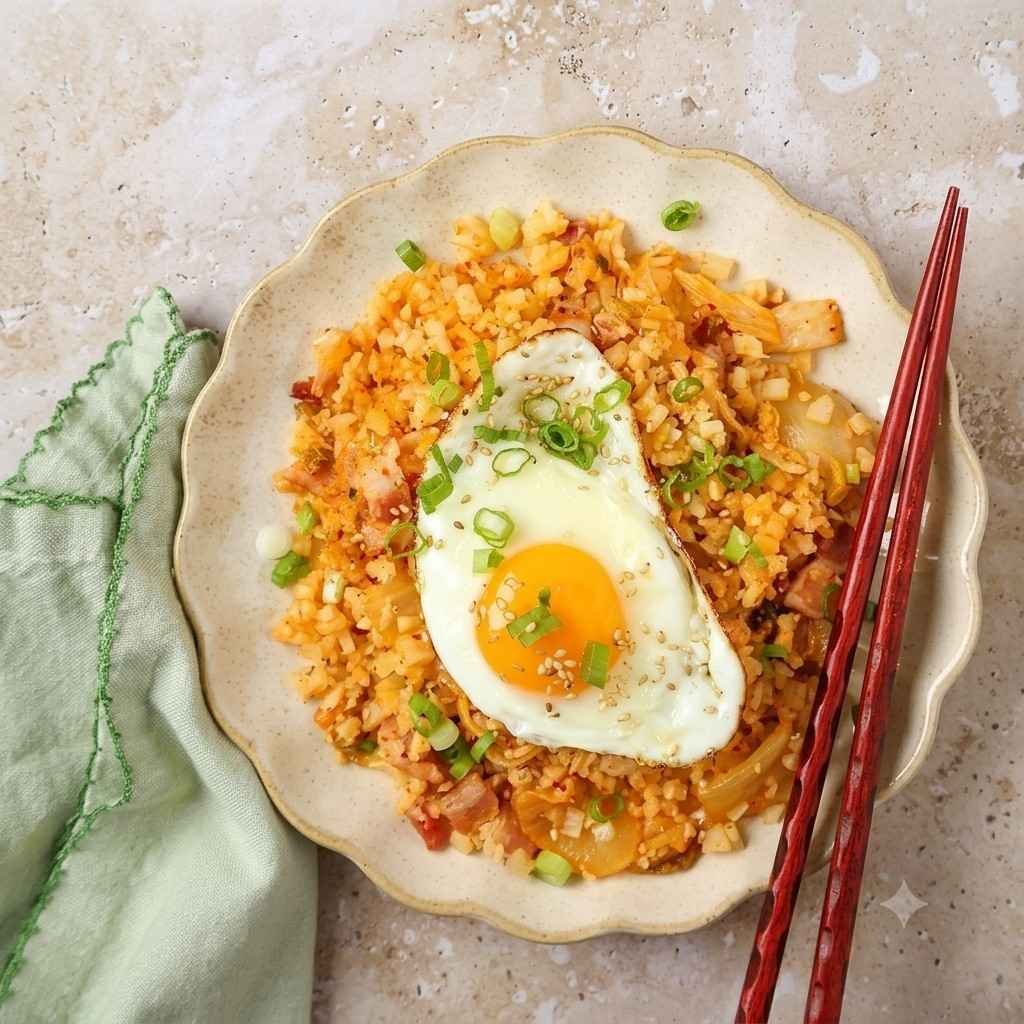
Kimchi Cauliflower Fried Rice is one of the lowest-carbohydrate dishes in the source lineup, where a serving contains 13 grams of carbohydrate, 6 grams of fiber, and 15 grams of protein. To make it more appropriate for a high-protein plan while preserving its identity, this version combines cauliflower rice and kimchi with whole eggs, additional egg whites, edamame, vegetables, and a small amount of lean turkey bacon. Reduced-sodium soy sauce and careful kimchi selection help keep the savory flavor from becoming excessively salty.
Ingredients
- 6 cups cauliflower rice
- 1 1/2 cups kimchi, chopped, preferably lower-sodium
- 2 large eggs
- 1 1/2 cups liquid egg whites
- 1 cup shelled edamame
- 4 slices lean turkey bacon, chopped
- 1 cup mushrooms, diced
- 1 cup shredded carrots
- 4 green onions, sliced
- 2 garlic cloves, minced
- 1 teaspoon fresh ginger, grated
- 1 tablespoon avocado or olive oil
- 1 tablespoon reduced-sodium soy sauce
- 1 teaspoon sesame oil
How to Make Kimchi Cauliflower Fried Rice
- Heat a large wok or nonstick skillet over medium heat.
- Cook the chopped turkey bacon until browned and lightly crisp.
- Transfer the bacon to a plate.
- Add half of the cooking oil to the skillet.
- Whisk the whole eggs and egg whites together.
- Pour them into the skillet and gently scramble until just set.
- Transfer the eggs to the plate with the bacon.
- Add remaining cooking oil to the skillet.
- Add mushrooms and carrots and stir-fry for approximately 3 minutes.
- Add garlic and ginger and cook for approximately 30 seconds.
- Add cauliflower rice and increase the heat to medium-high.
- Cook for approximately 5 minutes, stirring periodically, until excess moisture evaporates.
- Add chopped kimchi and shelled edamame.
- Stir-fry for another 2–3 minutes.
- Return the scrambled eggs and turkey bacon to the skillet.
- Add reduced-sodium soy sauce and toss thoroughly.
- Remove from heat and drizzle with sesame oil.
- Fold in most of the green onions.
- Divide among four bowls.
- Garnish with remaining green onions and serve immediately.
Nutrition Information (Approximate)
- Calories: 325 kcal
- Protein: 31 g
- Carbohydrates: 20 g
- Fat: 14 g
- Fiber: 8 g
- Sugar: 7 g
- Sodium: 590 mg
21/30
Curried Chicken Skillet
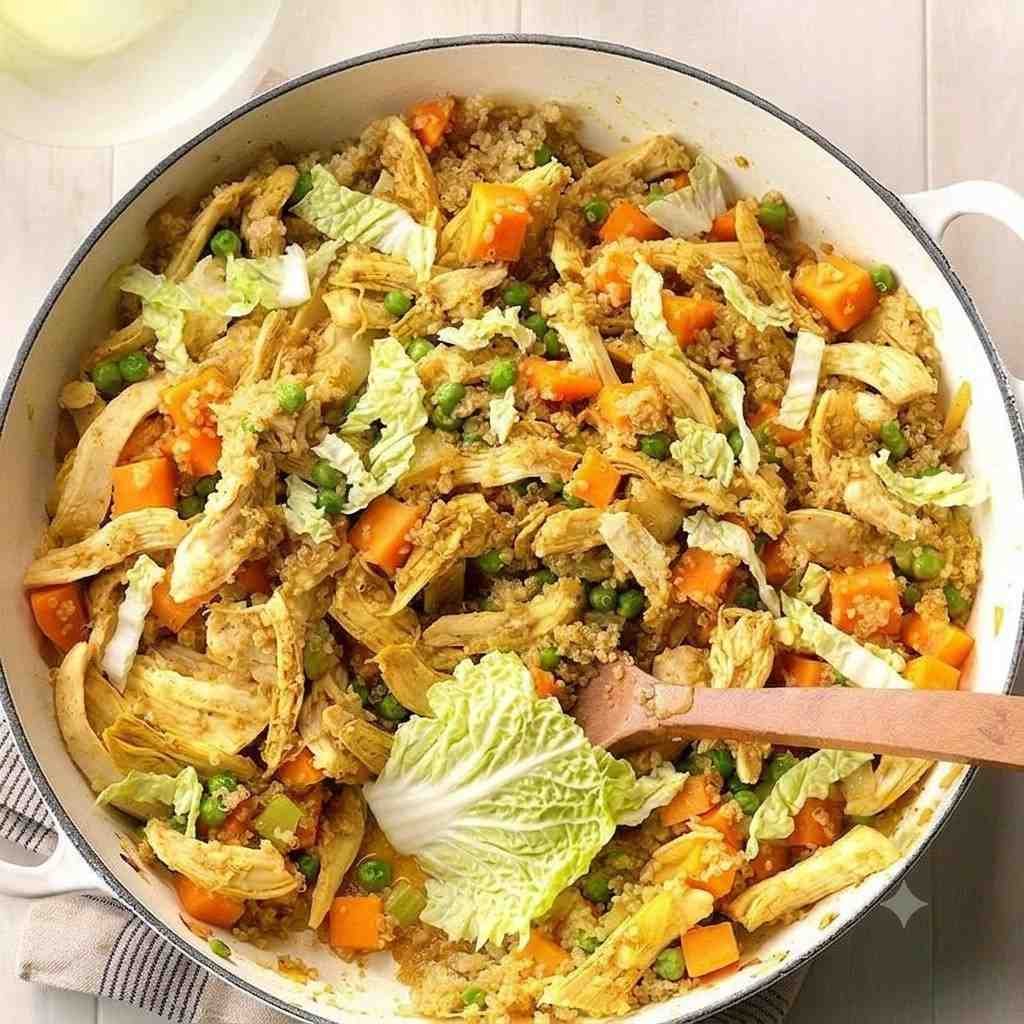
Curried Chicken Skillet brings warm spices and a comforting one-pan format to Day 21. The supplied meal plan lists 29 grams of protein, 39 grams of carbohydrate, and 6 grams of fiber per serving. This high-protein adaptation increases lean chicken while using cauliflower, chickpeas, spinach, tomatoes, and a smaller amount of brown rice to keep the dish hearty without letting starch dominate the bowl. Curry powder, garlic, ginger, cumin, and turmeric create depth without sweet bottled sauces.
Ingredients
- 1 3/4 lb boneless skinless chicken breast, cubed
- 3 cups cauliflower florets
- 2 cups fresh spinach
- 1 cup no-salt-added chickpeas, rinsed
- 1 1/2 cups cooked brown rice
- 1 can no-salt-added diced tomatoes, 14.5 oz
- 1 small yellow onion, diced
- 3 garlic cloves, minced
- 1 tablespoon fresh ginger, grated
- 1 tablespoon extra-virgin olive oil
- 2 tablespoons curry powder
- 1/2 teaspoon ground cumin
- 1/2 teaspoon turmeric
- 1/2 teaspoon black pepper
- 1 cup low-sodium chicken broth
- 1/2 cup plain Greek yogurt
- 2 tablespoons chopped cilantro
How to Make Curried Chicken Skillet
- Pat the chicken pieces dry so they brown properly.
- Heat olive oil in a large deep skillet over medium-high heat.
- Add the chicken in an even layer and cook until lightly browned on several sides.
- Transfer the partially cooked chicken to a clean plate.
- Reduce heat to medium and add diced onion.
- Cook for approximately 3 minutes.
- Add garlic and ginger and stir for 30 seconds.
- Add curry powder, cumin, turmeric, and black pepper.
- Stir constantly for approximately 30 seconds to toast the spices lightly.
- Add diced tomatoes and low-sodium broth.
- Stir in cauliflower florets and chickpeas.
- Return the chicken to the skillet.
- Cover and simmer gently until the cauliflower is tender and the chicken reaches 165°F.
- Add spinach and stir until wilted.
- Remove the skillet from direct heat.
- Allow it to cool for approximately 1 minute before stirring in Greek yogurt.
- Fold in cooked brown rice so it distributes evenly rather than forming the majority of the meal.
- Return to very low heat briefly if necessary, avoiding a hard boil after adding yogurt.
- Divide among four bowls.
- Garnish with cilantro and serve warm.
Nutrition Information (Approximate)
- Calories: 430 kcal
- Protein: 45 g
- Carbohydrates: 38 g
- Fat: 11 g
- Fiber: 9 g
- Sugar: 7 g
- Sodium: 430 mg
22/30
Lentil Loaf
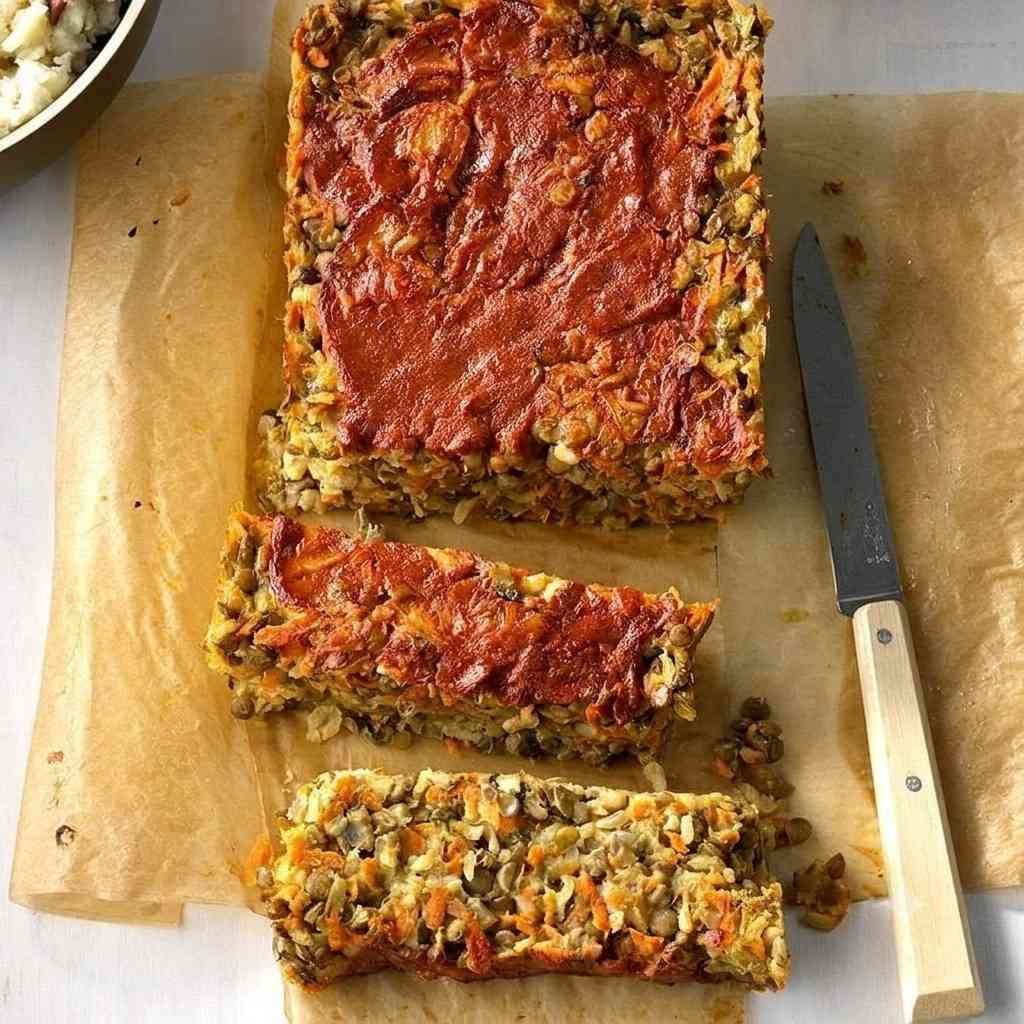
Lentil Loaf is the plant-forward answer to traditional meatloaf in the supplied 30-day plan. Its listed serving contains 14 grams of protein, 29 grams of carbohydrate, and 5 grams of fiber. To increase protein while keeping lentils as the defining ingredient, this version adds eggs, egg whites, cottage cheese, mushrooms, oats, and walnuts in carefully balanced quantities. The finished loaf remains hearty and sliceable while providing fiber-rich legumes as its foundation.
Ingredients
- 3 cups cooked brown or green lentils, well drained
- 1 cup low-fat cottage cheese
- 2 large eggs
- 1 cup liquid egg whites
- 1 cup old-fashioned rolled oats
- 2 cups finely chopped mushrooms
- 1 medium carrot, finely grated
- 1 small yellow onion, finely diced
- 2 celery stalks, finely diced
- 3 garlic cloves, minced
- 1/4 cup chopped walnuts
- 1 tablespoon extra-virgin olive oil
- 2 tablespoons no-sugar-added tomato paste
- 1 tablespoon reduced-sodium soy sauce
- 1 teaspoon smoked paprika
- 1 teaspoon dried thyme
- 1/2 teaspoon black pepper
How to Make Lentil Loaf
- Preheat the oven to 375°F.
- Line a 9 × 5-inch loaf pan with parchment paper, leaving enough overhang to lift out the cooked loaf.
- Heat olive oil in a large skillet over medium heat.
- Add onion, carrot, celery, and mushrooms.
- Cook for approximately 7–8 minutes until the vegetables soften and excess mushroom moisture evaporates.
- Add garlic, paprika, thyme, and black pepper.
- Stir for 30 seconds and remove from heat.
- Place approximately half of the cooked lentils in a food processor.
- Pulse several times until partially mashed but not completely smooth.
- Transfer the processed lentils and remaining whole lentils to a large bowl.
- Add the cooked vegetables.
- Stir in rolled oats and chopped walnuts.
- Blend cottage cheese briefly if a smoother texture is preferred.
- Add cottage cheese, eggs, egg whites, tomato paste, and reduced-sodium soy sauce.
- Mix thoroughly until the ingredients are evenly distributed.
- Allow the mixture to stand for approximately 5 minutes so the oats absorb moisture.
- Transfer to the prepared loaf pan.
- Press the mixture firmly and smooth the surface.
- Bake for approximately 45–55 minutes until the center is set.
- Allow the loaf to cool in the pan for at least 15 minutes before lifting it out.
- Slice into six equal portions using a sharp knife.
Nutrition Information (Approximate)
- Calories: 320 kcal
- Protein: 25 g
- Carbohydrates: 38 g
- Fat: 9 g
- Fiber: 10 g
- Sugar: 6 g
- Sodium: 380 mg
23/30
Pork Tacos with Mango Salsa
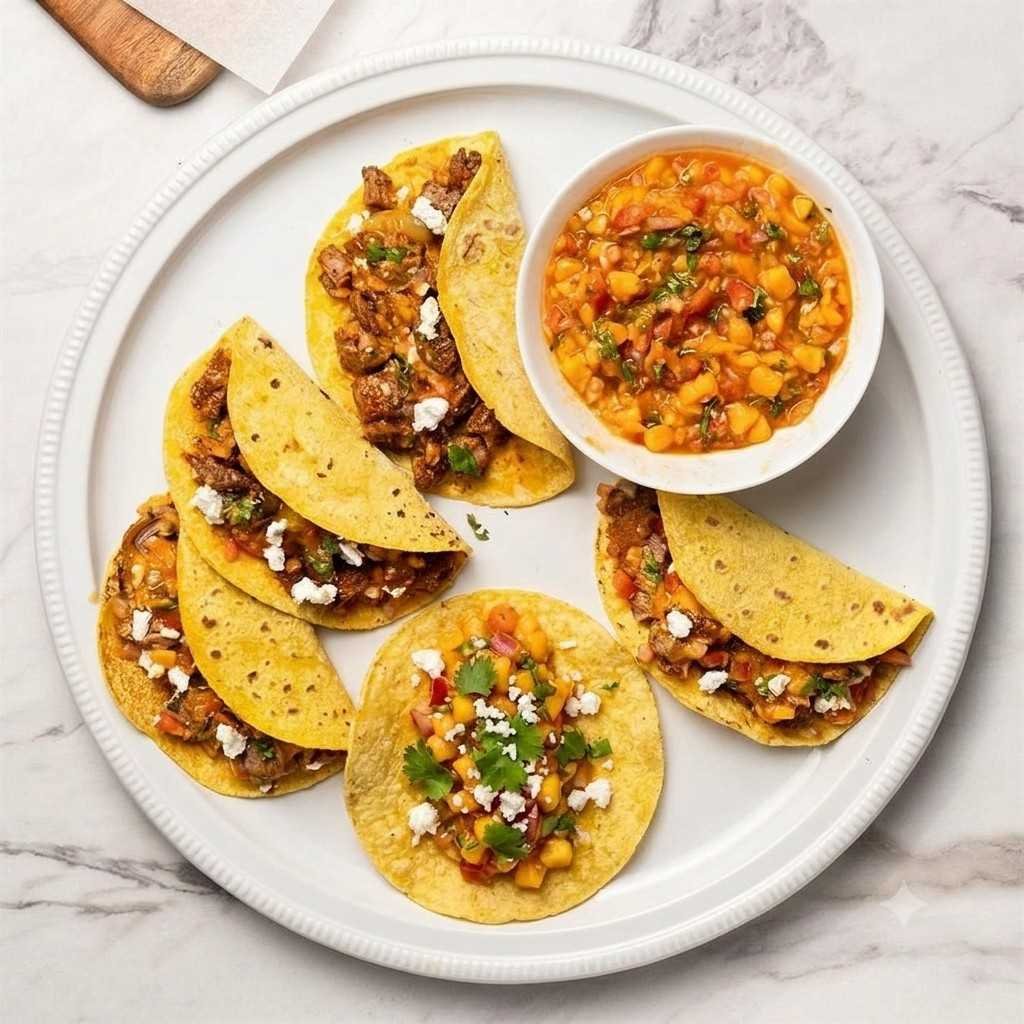
Pork Tacos with Mango Salsa combine slow-cooked savory pork with bright, naturally sweet mango salsa. The supplied version provides 26 grams of protein, 30 grams of carbohydrate, and 5 grams of fiber for two tacos. This adaptation keeps both tacos and mango integral to the recipe while using lean pork tenderloin, smaller high-fiber tortillas, cabbage, avocado, lime, and a salsa containing plenty of tomato and pepper alongside a controlled amount of mango. The result stays colorful and satisfying without needing sugary taco sauces.
Ingredients
- 2 1/2 lb pork tenderloin
- 12 small high-fiber corn or whole-grain tortillas
- 2 cups shredded cabbage
- 1 large mango, finely diced
- 1 cup diced tomatoes
- 1/2 red bell pepper, finely diced
- 1/4 cup red onion, finely diced
- 1 small jalapeño, minced
- 1/2 avocado, diced
- 4 tablespoons fresh lime juice
- 1 cup low-sodium chicken broth
- 3 garlic cloves, minced
- 2 teaspoons ground cumin
- 1 teaspoon smoked paprika
- 1 teaspoon chili powder
- 1/2 teaspoon black pepper
- 1/3 cup chopped cilantro
How to Make Pork Tacos with Mango Salsa
- Trim silver skin from the pork tenderloin.
- Cut the pork into several large sections.
- Season with cumin, paprika, chili powder, and black pepper.
- Place the pork in a slow cooker.
- Add garlic, low-sodium chicken broth, and 2 tablespoons lime juice.
- Cover and cook on low until the pork becomes tender enough to shred easily.
- Transfer the cooked pork to a clean cutting board.
- Shred with two forks.
- Skim excess fat from the cooking liquid if necessary.
- Return the shredded pork to the slow cooker and toss with enough cooking liquid to keep it moist.
- Combine diced mango, tomatoes, bell pepper, red onion, jalapeño, and cilantro.
- Add remaining lime juice and toss gently.
- Fold in diced avocado shortly before serving.
- Warm the tortillas in a dry skillet or directly over a gas flame using appropriate kitchen tongs.
- Place shredded cabbage onto each tortilla.
- Add a generous portion of shredded pork.
- Spoon a modest amount of mango salsa over the meat.
- Serve two tacos per portion with additional cabbage or salad alongside.
Nutrition Information (Approximate)
- Calories: 350 kcal
- Protein: 35 g
- Carbohydrates: 31 g
- Fat: 10 g
- Fiber: 8 g
- Sugar: 8 g
- Sodium: 410 mg
24/30
Sweet-and-Sour Beef Stew
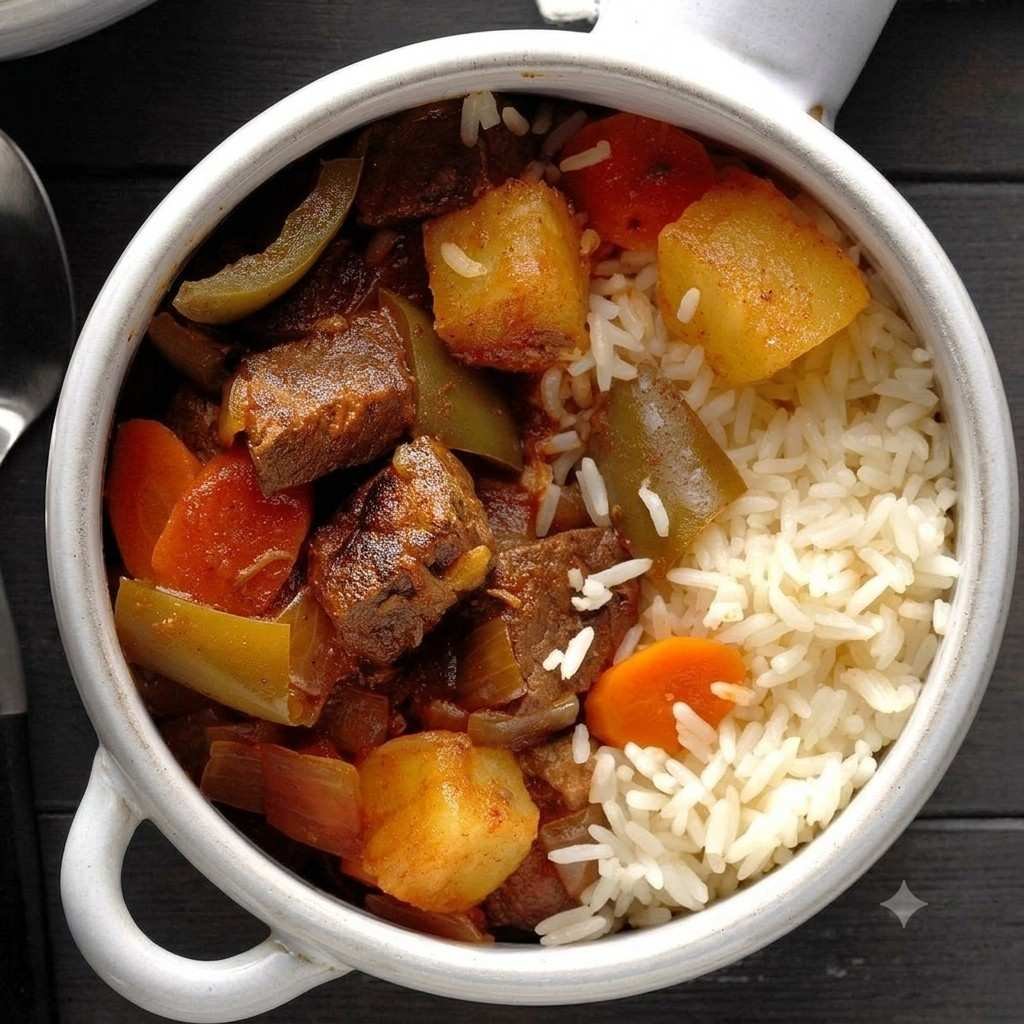
Sweet-and-Sour Beef Stew provides the comforting texture of a slow-cooked beef stew with a distinctive tangy-sweet sauce. The supplied version contains 28 grams of protein and 29 grams of carbohydrate, including 17 grams of sugar, per cup. This diabetes-conscious adaptation keeps the sweet-and-sour identity while reducing dependence on added sugar. Tomato, red bell pepper, carrots, apple cider vinegar, paprika, and a small amount of non-nutritive sweetener create the contrast, while lean beef increases the protein content.
Ingredients
- 2 1/2 lb lean beef stew meat, trimmed
- 3 cups low-sodium beef broth
- 1 can no-salt-added diced tomatoes, 14.5 oz
- 2 large bell peppers, chopped
- 2 medium carrots, chopped
- 2 celery stalks, chopped
- 1 large yellow onion, chopped
- 2 cups mushrooms, halved
- 3 tablespoons apple cider vinegar
- 2 tablespoons no-sugar-added tomato paste
- 1 tablespoon reduced-sodium soy sauce
- 1 tablespoon extra-virgin olive oil
- 1–2 teaspoons granulated monk fruit sweetener, optional
- 1 teaspoon smoked paprika
- 1/2 teaspoon ground ginger
- 1/2 teaspoon black pepper
- 2 tablespoons chopped parsley
How to Make Sweet-and-Sour Beef Stew
- Pat the beef dry and trim away large visible pieces of fat.
- Heat olive oil in a large skillet over medium-high heat.
- Brown the beef in several batches to prevent overcrowding.
- Transfer each browned batch to a slow cooker.
- Add onion, carrots, celery, peppers, and mushrooms.
- Whisk broth, diced tomatoes, tomato paste, apple cider vinegar, soy sauce, paprika, ginger, black pepper, and optional monk fruit sweetener.
- Pour the mixture over the beef and vegetables.
- Stir gently.
- Cover and cook on low for approximately 7–8 hours.
- Check the beef for tenderness toward the end of cooking.
- Remove the lid for the final 20–30 minutes if the sauce needs to reduce.
- Taste the sauce carefully.
- Add additional vinegar for more tang rather than automatically increasing sweetness.
- Adjust the optional sweetener in very small amounts if necessary to achieve the sweet-and-sour balance.
- Skim visible fat from the surface.
- Stir thoroughly before portioning.
- Divide into eight bowls.
- Garnish with parsley.
- Serve alone or alongside cauliflower rice.
Nutrition Information (Approximate)
- Calories: 325 kcal
- Protein: 35 g
- Carbohydrates: 18 g
- Fat: 12 g
- Fiber: 5 g
- Sugar: 9 g
- Sodium: 430 mg
25/30
Crispy Almond Tilapia
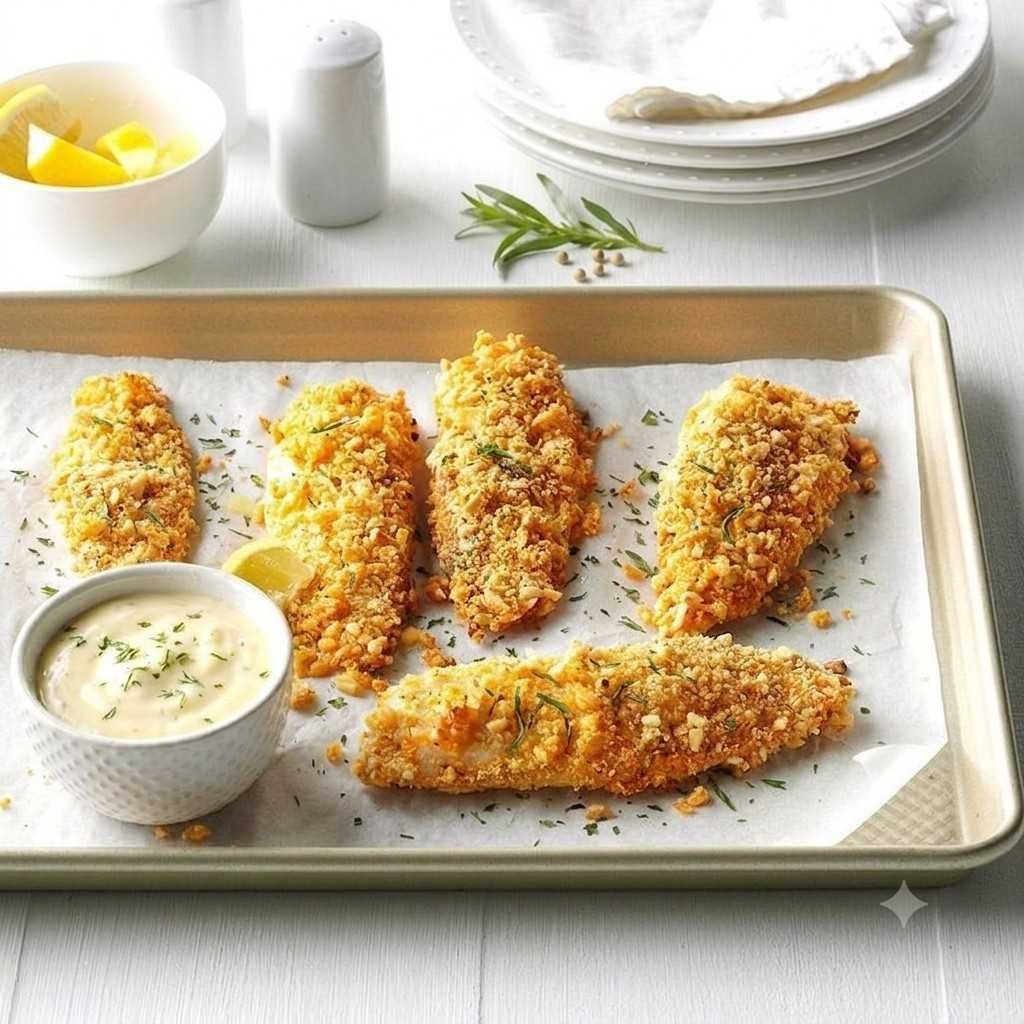
Crispy Almond Tilapia brings crunch to Day 25 without deep-frying. The supplied recipe uses almonds and panko as its coating and provides 28 grams of protein with only 9 grams of carbohydrate per serving. This adaptation maintains those defining elements while using whole-grain panko, finely ground almonds, egg white, spices, and oven baking. Tilapia’s mild flavor allows the nutty coating, paprika, lemon, and subtle heat to stand out.
Ingredients
- 4 tilapia fillets, 6 oz each
- 1/2 cup finely chopped unsalted almonds
- 1/3 cup whole-grain panko breadcrumbs
- 2 large egg whites
- 1 tablespoon Dijon mustard
- 1 teaspoon hot sauce, optional
- 1 teaspoon smoked paprika
- 1/2 teaspoon garlic powder
- 1/2 teaspoon ground black pepper
- 1 tablespoon extra-virgin olive oil
- 2 tablespoons fresh lemon juice
- 2 tablespoons chopped parsley
How to Make Crispy Almond Tilapia
- Preheat the oven to 425°F.
- Place a wire baking rack over a rimmed sheet pan and lightly coat the rack with cooking spray.
- Pat the tilapia fillets completely dry.
- Combine finely chopped almonds and whole-grain panko in a shallow dish.
- Add smoked paprika, garlic powder, and black pepper.
- Stir until the seasonings distribute evenly.
- Whisk egg whites, Dijon mustard, and optional hot sauce in a second shallow dish.
- Dip one tilapia fillet into the egg-white mixture.
- Allow excess liquid to drip away.
- Press both sides gently into the almond-panko mixture.
- Place the coated fillet on the prepared rack.
- Repeat with remaining fish.
- Lightly drizzle or brush the coating with olive oil to encourage browning.
- Bake for approximately 12–15 minutes.
- Avoid flipping unless necessary because the coating can loosen.
- Check the thickest fillet for doneness.
- Remove when the fish flakes easily and the coating is crisp and golden.
- Drizzle with fresh lemon juice.
- Garnish with parsley.
- Serve immediately with roasted broccoli, green beans, or a large salad.
Nutrition Information (Approximate)
- Calories: 310 kcal
- Protein: 38 g
- Carbohydrates: 10 g
- Fat: 14 g
- Fiber: 3 g
- Sugar: 2 g
- Sodium: 340 mg
26/30
Southwest Vegetarian Bake
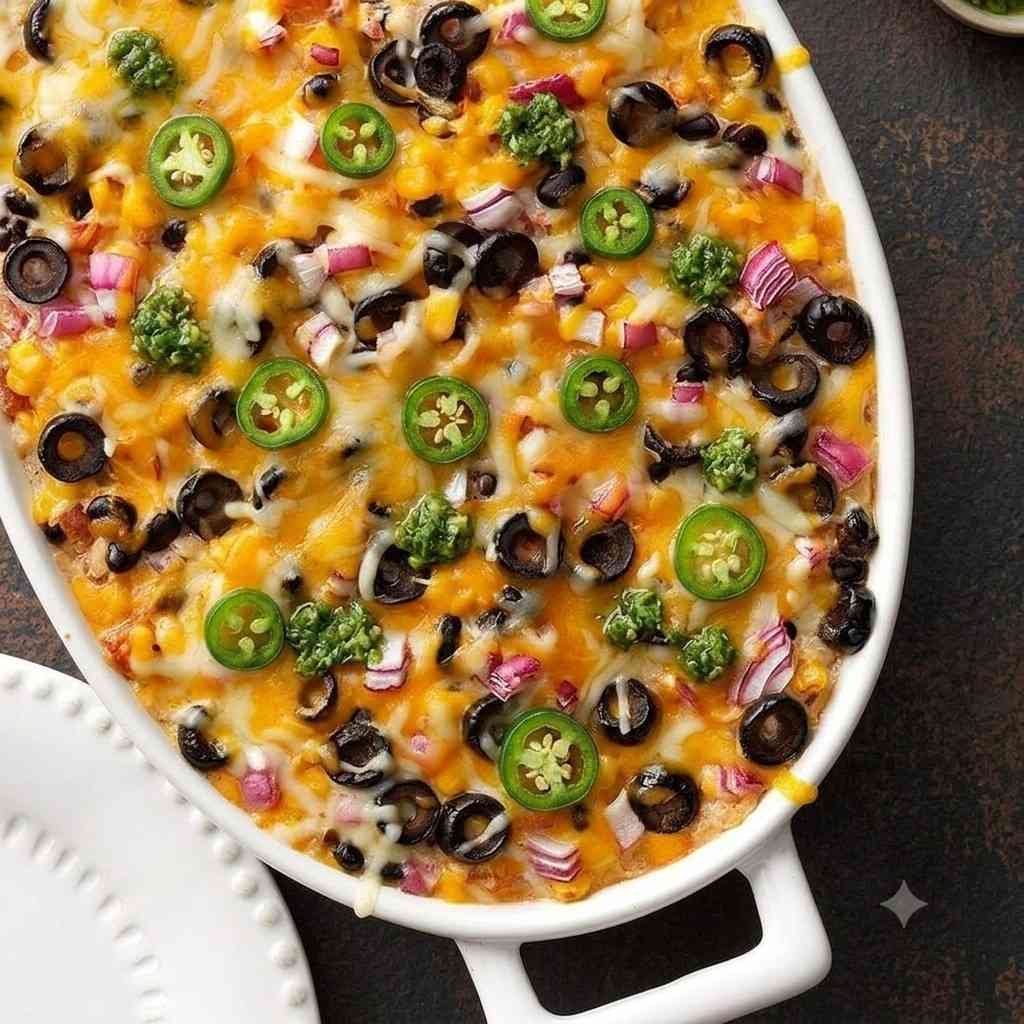
Southwest Vegetarian Bake provides a meatless change of pace while retaining the hearty, comforting feel of a casserole. The supplied meal-plan version provides 15 grams of protein, 36 grams of carbohydrate, and 4 grams of fiber per cup. To raise the protein content, this adaptation combines black beans, pinto beans, quinoa, cottage cheese, Greek yogurt, vegetables, and reduced-fat cheese. Cauliflower rice increases vegetable volume while keeping the Southwestern combination of beans, corn, peppers, tomato, cumin, and chili intact.
Ingredients
- 1 can no-salt-added black beans, 15 oz, rinsed
- 1 can no-salt-added pinto beans, 15 oz, rinsed
- 1 1/2 cups cooked quinoa
- 2 cups cauliflower rice
- 1 cup low-fat cottage cheese
- 1 cup plain nonfat Greek yogurt
- 1 cup reduced-fat shredded Mexican-style cheese
- 1 cup corn kernels
- 2 large bell peppers, diced
- 1 small yellow onion, diced
- 1 can no-salt-added diced tomatoes, 14.5 oz, drained
- 3 garlic cloves, minced
- 1 tablespoon extra-virgin olive oil
- 2 teaspoons ground cumin
- 1 teaspoon chili powder
- 1 teaspoon smoked paprika
- 1/4 cup chopped cilantro
How to Make Southwest Vegetarian Bake
- Preheat the oven to 375°F.
- Lightly coat a 9 × 13-inch baking dish with nonstick cooking spray.
- Heat olive oil in a large skillet over medium heat.
- Add onion and bell peppers.
- Cook for approximately 5 minutes until slightly softened.
- Add garlic, cumin, chili powder, and paprika.
- Stir for approximately 30 seconds.
- Add cauliflower rice and cook for 3 minutes.
- Remove the skillet from heat.
- Add rinsed black beans, pinto beans, corn, tomatoes, and quinoa.
- Stir until evenly combined.
- Blend cottage cheese briefly if a smoother casserole texture is preferred.
- Fold cottage cheese and Greek yogurt into the vegetable mixture.
- Stir in half of the shredded cheese.
- Transfer the mixture to the prepared baking dish.
- Spread it into an even layer.
- Sprinkle remaining cheese across the top.
- Cover loosely with foil and bake for approximately 25 minutes.
- Remove the foil and bake for another 10–15 minutes until bubbling.
- Allow the casserole to rest for 10 minutes before serving.
- Garnish with cilantro and divide into eight portions.
Nutrition Information (Approximate)
- Calories: 335 kcal
- Protein: 24 g
- Carbohydrates: 42 g
- Fat: 9 g
- Fiber: 11 g
- Sugar: 7 g
- Sodium: 440 mg
27/30
Goat Cheese and Spinach Stuffed Chicken
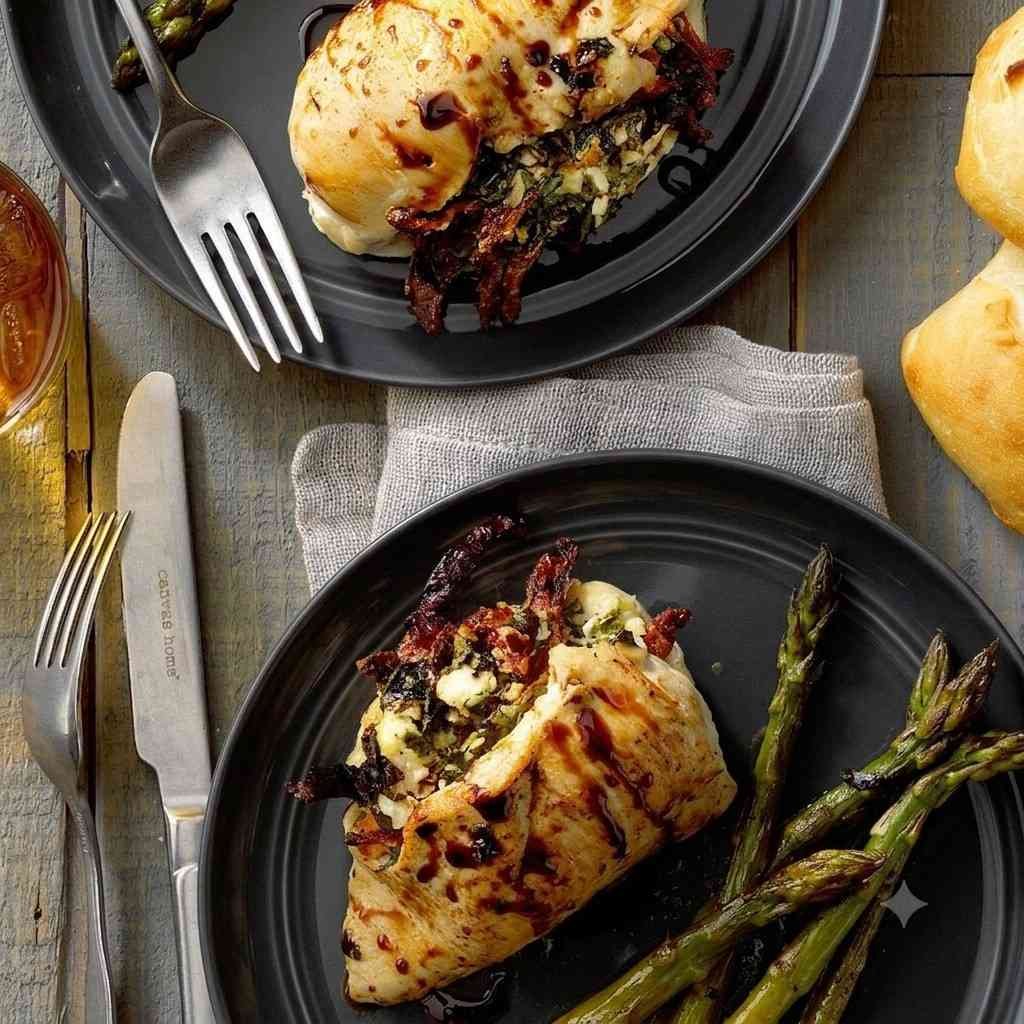
Goat Cheese and Spinach Stuffed Chicken is already among the highest-protein choices in the supplied meal plan, providing 39 grams of protein per stuffed chicken breast with only 13 grams of carbohydrate. This adaptation preserves the flavorful combination of lean chicken, spinach, tangy goat cheese, tomato, garlic, and Italian herbs while keeping the cheese portion moderate. Carefully cutting and securing the chicken creates an elegant dinner that feels much richer than its simple ingredient list suggests.
Ingredients
- 4 boneless skinless chicken breasts, 6 oz each
- 5 cups fresh spinach
- 4 oz reduced-fat goat cheese
- 1 cup diced tomatoes, well drained
- 3 garlic cloves, minced
- 1 tablespoon extra-virgin olive oil
- 1 teaspoon dried Italian seasoning
- 1/2 teaspoon ground black pepper
- 1/2 teaspoon smoked paprika
- 2 tablespoons fresh lemon juice
- 2 tablespoons chopped parsley
How to Make Goat Cheese and Spinach Stuffed Chicken
- Preheat the oven to 375°F.
- Heat half of the olive oil in an oven-safe skillet over medium heat.
- Add spinach in several batches and cook just until wilted.
- Add garlic and stir for approximately 30 seconds.
- Transfer the spinach to a cutting board and allow it to cool slightly.
- Chop the wilted spinach finely.
- Combine spinach with goat cheese and drained tomatoes.
- Pat the chicken breasts dry.
- Using a sharp knife, carefully cut a deep horizontal pocket into the thick side of each breast without cutting completely through.
- Divide the spinach-goat-cheese mixture evenly among the chicken pockets.
- Secure the openings with toothpicks if necessary.
- Season the exterior with Italian seasoning, paprika, and black pepper.
- Heat remaining olive oil in the oven-safe skillet.
- Sear the stuffed chicken for approximately 3 minutes on the first side.
- Turn carefully and sear the second side for approximately 2 minutes.
- Transfer the entire skillet to the preheated oven.
- Bake until the thickest section of chicken reaches 165°F.
- Remove from the oven and rest for approximately 5 minutes.
- Remove all toothpicks before serving.
- Drizzle lightly with lemon juice and garnish with parsley.
Nutrition Information (Approximate)
- Calories: 335 kcal
- Protein: 46 g
- Carbohydrates: 8 g
- Fat: 13 g
- Fiber: 3 g
- Sugar: 4 g
- Sodium: 390 mg
28/30
Mushroom and Brown Rice Hash with Poached Eggs
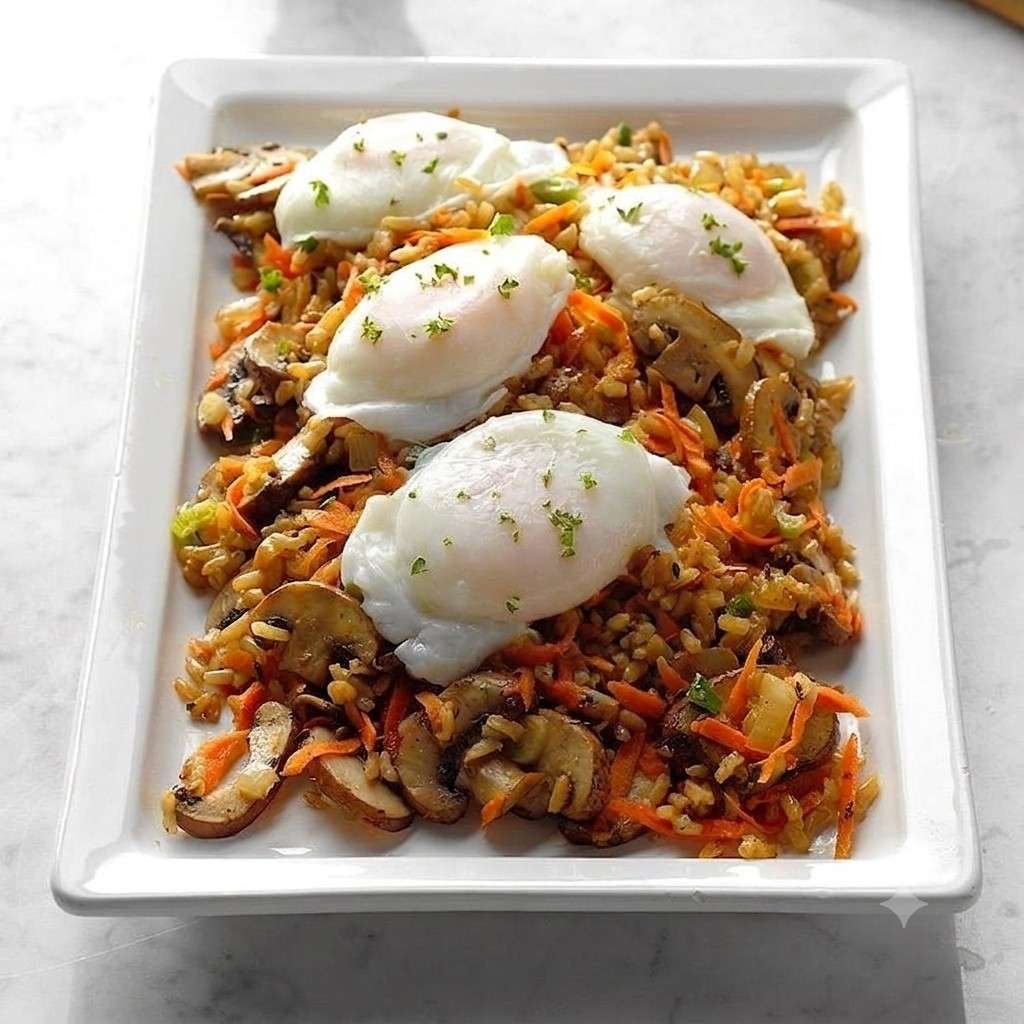
Mushroom and Brown Rice Hash with Poached Eggs combines earthy mushrooms, nutty brown rice, vegetables, and softly poached eggs in a comforting meatless skillet. The supplied version provides 13 grams of protein and 26 grams of carbohydrate per serving. This high-protein adaptation retains the eggs and brown rice while adding egg whites, edamame, spinach, and additional mushrooms. The result preserves the hash-style character but creates a more substantial protein profile suitable for a main meal.
Ingredients
- 2 cups cooked brown rice
- 5 cups sliced cremini mushrooms
- 4 large eggs
- 1 1/2 cups liquid egg whites
- 1 cup shelled edamame
- 3 cups fresh spinach
- 1 small yellow onion, diced
- 2 garlic cloves, minced
- 1 tablespoon extra-virgin olive oil
- 1 teaspoon smoked paprika
- 1/2 teaspoon dried thyme
- 1/2 teaspoon ground black pepper
- 1 tablespoon apple cider vinegar
- 2 tablespoons chopped parsley
How to Make Mushroom and Brown Rice Hash with Poached Eggs
- Heat olive oil in a large skillet over medium-high heat.
- Add diced onion and cook for approximately 3 minutes.
- Add mushrooms and spread them into an even layer.
- Cook until they release their moisture and develop browned edges.
- Add garlic, smoked paprika, thyme, and black pepper.
- Stir for approximately 30 seconds.
- Add cooked brown rice and edamame.
- Cook for 4–5 minutes, stirring occasionally, until the rice is heated and develops lightly crisp areas.
- Add spinach and stir until wilted.
- Cook the liquid egg whites separately in a nonstick skillet until just set.
- Fold the cooked egg whites gently into the mushroom-rice hash.
- Keep the hash warm over low heat.
- Bring a wide saucepan of water to a gentle simmer.
- Add apple cider vinegar.
- Crack each whole egg into an individual small cup.
- Slide the eggs gently into the simmering water.
- Poach until the whites are set while the yolks remain cooked to your preferred doneness.
- Lift the eggs from the water with a slotted spoon and drain briefly.
- Divide the mushroom and brown rice hash among four bowls.
- Place one poached egg over each serving.
- Garnish with parsley and additional black pepper.
Nutrition Information (Approximate)
- Calories: 365 kcal
- Protein: 27 g
- Carbohydrates: 36 g
- Fat: 13 g
- Fiber: 8 g
- Sugar: 5 g
- Sodium: 290 mg
29/30
Salmon with Mango-Citrus Salsa
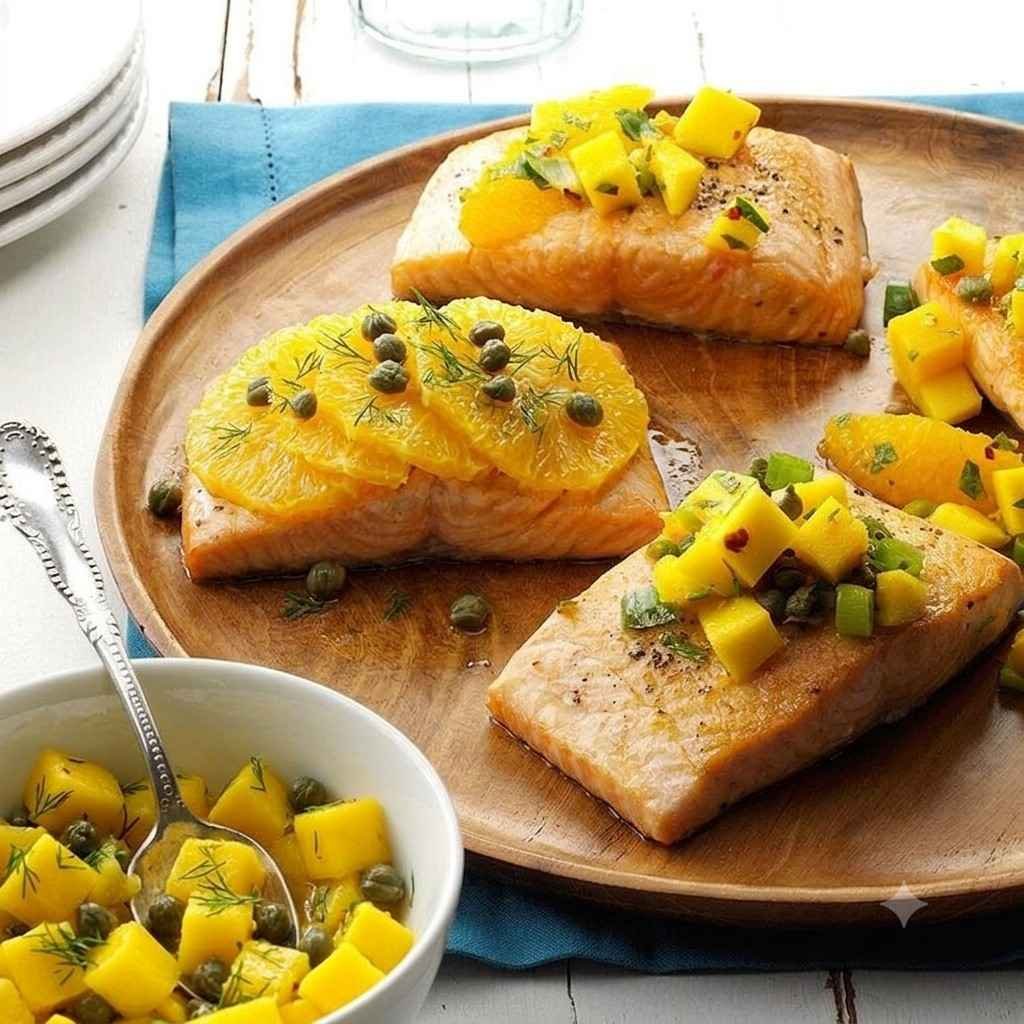
Salmon with Mango-Citrus Salsa combines rich salmon with a refreshing fruit topping for a colorful Day 29 dinner. The supplied recipe contains 30 grams of protein and 19 grams of carbohydrate, with 16 grams of sugar coming largely from the fruit-based salsa. This version keeps mango and citrus because they define the dish but reduces the fruit proportion by combining them with cucumber, bell pepper, onion, cilantro, and lime. The salmon provides abundant protein and healthy fats while the fresh salsa adds acidity, crunch, and natural sweetness.
Ingredients
- 4 salmon fillets, 6 oz each
- 1 medium mango, diced
- 1 small orange, segmented and chopped
- 1 cup cucumber, finely diced
- 1 red bell pepper, finely diced
- 1/4 cup red onion, finely diced
- 1 small jalapeño, minced, optional
- 3 tablespoons fresh lime juice
- 1 tablespoon extra-virgin olive oil
- 1 teaspoon smoked paprika
- 1/2 teaspoon garlic powder
- 1/2 teaspoon ground black pepper
- 1/4 cup chopped cilantro
How to Make Salmon with Mango-Citrus Salsa
- Preheat the oven to 400°F or preheat a grill to medium-high heat.
- Pat the salmon fillets dry thoroughly.
- Brush each fillet lightly with olive oil.
- Season with smoked paprika, garlic powder, and black pepper.
- Arrange salmon on a parchment-lined baking sheet if using the oven.
- Bake for approximately 10–13 minutes depending on thickness.
- Check the salmon early to avoid overcooking.
- While the salmon cooks, dice the mango into small pieces.
- Chop the orange segments, removing seeds and excess membrane.
- Combine mango and orange with cucumber, bell pepper, red onion, jalapeño, and cilantro.
- Add lime juice and toss gently.
- Refrigerate the salsa briefly if the salmon is still cooking.
- Remove salmon from heat once it flakes easily and reaches the preferred safe internal temperature.
- Rest the fish for approximately 3 minutes.
- Divide salmon among four plates.
- Spoon approximately 1/2 cup mango-citrus salsa over each fillet.
- Serve with leafy greens, asparagus, broccoli, or another non-starchy vegetable.
Nutrition Information (Approximate)
- Calories: 395 kcal
- Protein: 38 g
- Carbohydrates: 18 g
- Fat: 20 g
- Fiber: 4 g
- Sugar: 11 g
- Sodium: 210 mg
30/30
Moroccan Vegetarian Stew
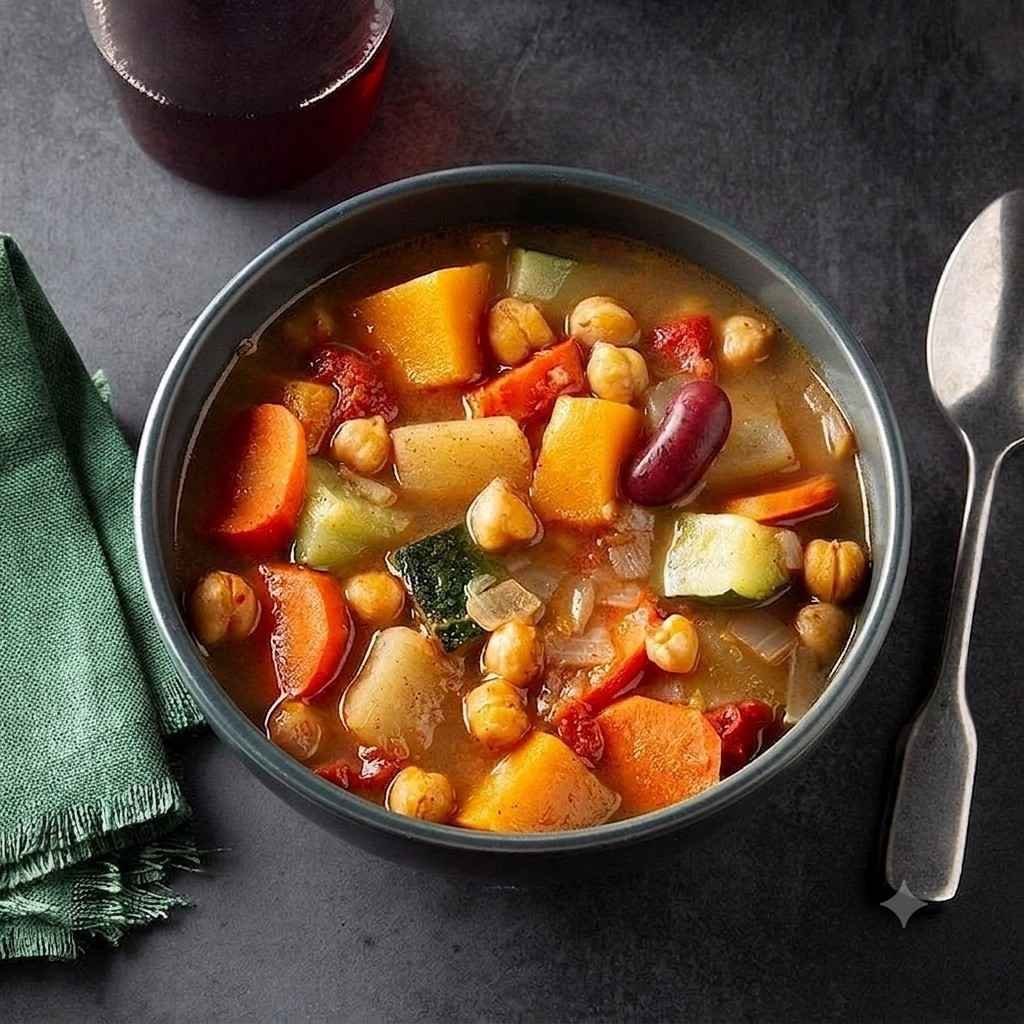
Moroccan Vegetarian Stew closes the 30-day plan with warming spices, vegetables, legumes, and a rich tomato broth. The supplied version is particularly fiber-rich, providing 9 grams of fiber in a 1 1/2-cup serving, but it contains only 5 grams of protein. To bring the dish in line with a high-protein plan while preserving its vegetarian identity, this adaptation combines lentils, chickpeas, edamame, cauliflower, zucchini, tomatoes, spinach, and Moroccan-inspired spices. The result remains a vegetable-and-legume stew rather than turning into an unrelated protein dish.
Ingredients
- 1 1/2 cups dry brown or green lentils, rinsed
- 1 can no-salt-added chickpeas, 15 oz, rinsed
- 2 cups shelled edamame
- 1 large cauliflower, cut into small florets
- 2 medium zucchini, chopped
- 2 medium carrots, chopped
- 1 large yellow onion, diced
- 4 cups fresh spinach
- 1 can no-salt-added diced tomatoes, 28 oz
- 6 cups low-sodium vegetable broth
- 4 garlic cloves, minced
- 1 tablespoon extra-virgin olive oil
- 2 teaspoons ground cumin
- 1 teaspoon ground coriander
- 1 teaspoon smoked paprika
- 1/2 teaspoon ground cinnamon
- 1/2 teaspoon turmeric
- 1/2 teaspoon ground black pepper
- 2 tablespoons fresh lemon juice
- 1/4 cup chopped cilantro
How to Make Moroccan Vegetarian Stew
- Heat olive oil in a large 7-quart Dutch oven or soup pot over medium heat.
- Add diced onion and carrots.
- Cook for approximately 5 minutes until the onion becomes translucent.
- Add garlic, cumin, coriander, paprika, cinnamon, turmeric, and black pepper.
- Stir continuously for approximately 30–45 seconds until the spices become fragrant.
- Add the rinsed lentils.
- Pour in diced tomatoes and low-sodium vegetable broth.
- Stir thoroughly and bring the mixture to a gentle boil.
- Reduce the heat to maintain a steady simmer.
- Cover partially and cook for approximately 20 minutes.
- Add cauliflower, zucchini, and rinsed chickpeas.
- Continue simmering for another 15–20 minutes.
- Stir periodically and add a small amount of additional broth if the stew becomes excessively thick before the lentils are tender.
- Add shelled edamame once the lentils are nearly cooked.
- Simmer until the edamame is heated through and all vegetables are tender.
- Add spinach in several handfuls.
- Stir after each addition until wilted.
- Remove the pot from heat.
- Add fresh lemon juice and stir thoroughly.
- Taste and adjust the spices or acidity as needed.
- Allow the stew to stand for approximately 5 minutes before serving.
- Divide into eight generous bowls.
- Garnish with fresh cilantro.
Nutrition Information (Approximate)
- Calories: 350 kcal
- Protein: 24 g
- Carbohydrates: 51 g
- Fat: 7 g
- Fiber: 17 g
- Sugar: 9 g
- Sodium: 330 mg
Also CheckOut: 30-Day High-Protein Meal Plan for Weight Loss: Easy Recipes, Meal Prep Tips & Complete Nutrition Guide
FAQs
Is this 30-day meal plan suitable for everyone with diabetes?
No single meal plan is appropriate for every person with diabetes. Individual carbohydrate targets, calorie needs, medications, insulin use, food allergies, kidney function, activity level, and other health considerations can change what portions are appropriate. Use this plan as a collection of diabetes-conscious meal ideas and personalize it with your healthcare professional or registered dietitian.
Are all 30 recipes high in protein?
The recipes have been structured to emphasize protein, but the amount varies because the plan intentionally includes fish, poultry, beef, pork, eggs, legumes, and vegetarian dishes. Meat and fish dishes generally provide more protein naturally, while vegetarian recipes use ingredients such as lentils, beans, edamame, eggs, cottage cheese, and Greek yogurt to increase protein.
Do I need to completely avoid carbohydrates when following this plan?
No. The plan includes controlled portions of foods such as quinoa, brown rice, whole-wheat pasta, whole-grain tortillas, potatoes, beans, lentils, fruit, and whole-grain pizza crust. The emphasis is on balancing carbohydrate-containing foods with protein, fiber-rich vegetables, and healthy fats rather than automatically eliminating all carbohydrates.
Can I meal prep these recipes in advance?
Many of them work very well for meal preparation. Chipotle Shredded Beef, Mushroom Turkey Tetrazzini, Turkey-Stuffed Bell Peppers, Quinoa Unstuffed Peppers, Mediterranean Pot Roast Dinner, Lentil Loaf, Sweet-and-Sour Beef Stew, Southwest Vegetarian Bake, and Moroccan Vegetarian Stew are particularly convenient for advance preparation. Fish and fresh fruit salsa dishes are generally best prepared closer to serving.
Can I freeze meals from this 30-day plan?
Several recipes freeze well, especially shredded beef, turkey tetrazzini, stuffed peppers, unstuffed peppers, pot roast, lentil loaf, beef stew, vegetarian bake, and Moroccan stew. Cool cooked foods promptly before freezing and store them in airtight freezer-safe containers. Fresh salsa, avocado, and delicate cooked fish are usually better prepared fresh.
What can I use instead of brown rice or quinoa?
Cauliflower rice can replace some or all of the grain when a lower-carbohydrate meal is desired. Other possibilities include barley or another whole grain in an individually appropriate portion. Remember that carbohydrate needs differ, so substitutions and portions should reflect your personal meal plan.
Can I increase the serving size if I need more protein?
You can increase the lean protein component rather than automatically doubling the entire recipe. For example, adding extra chicken, fish, turkey, egg whites, Greek yogurt, cottage cheese, tofu, edamame, or another appropriate protein can raise protein without proportionally doubling rice, pasta, tortillas, potatoes, or fruit.
Why are the nutrition numbers listed as approximate?
Nutrition values change according to ingredient brands, exact portion sizes, meat trimming, cooking losses, tortilla and bread products, dairy choices, and substitutions. Calculate nutrition using the exact products and serving sizes you use when precise carbohydrate or nutrient information is medically important.