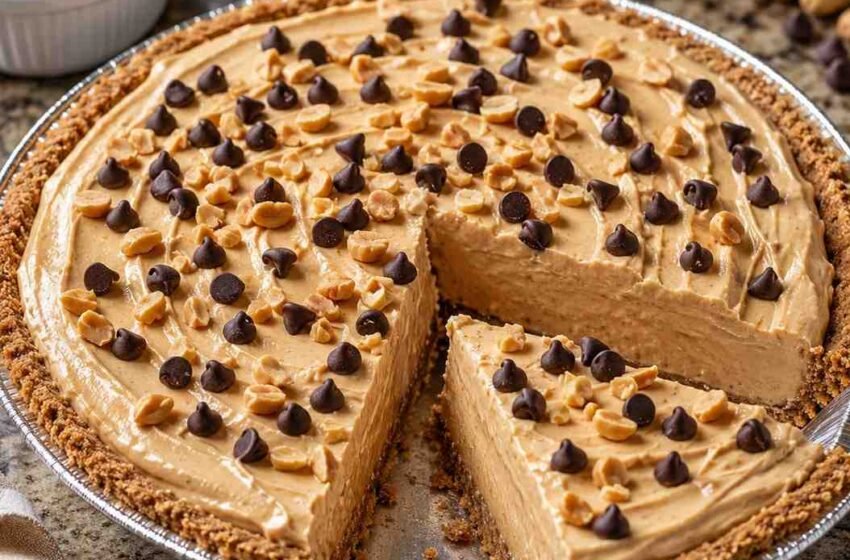
Creamy, rich, and incredibly satisfying, this Diabetic High-Protein Peanut Butter Pudding Pie transforms a classic no-bake dessert into a healthier treat that’s packed with protein and lower in added sugar. Instead of relying on traditional pudding mixes, sweetened condensed milk, and sugary fillings, this recipe uses protein-rich Greek yogurt, reduced-fat cream cheese, natural peanut butter, sugar-free pudding mix, and a diabetic-friendly sweetener to create a silky smooth filling with an irresistible peanut butter flavor.
Traditional peanut butter pudding pies are often loaded with refined sugar, high-fat ingredients, and a graham cracker crust that significantly increases the carbohydrate content. This healthier version replaces the standard crust with a high-protein almond flour crust that’s naturally lower in carbohydrates while providing healthy fats and extra protein. The filling is lightened with plain Greek yogurt and enhanced with vanilla protein powder, creating a dessert that’s both indulgent and nourishing.
Whether you’re preparing dessert for a family gathering, meal-prepping healthy treats for the week, or simply looking for a guilt-free way to satisfy your peanut butter cravings, this no-bake pie is an excellent choice. It requires minimal preparation, chills beautifully, and tastes even better after a few hours in the refrigerator. Every creamy slice delivers rich peanut butter flavor while supporting a balanced diabetic-friendly lifestyle.
Why You’ll Love This Recipe
- High in protein from Greek yogurt and protein powder.
- Diabetic-friendly with no refined sugar.
- No baking required after preparing the crust.
- Rich peanut butter flavor in every bite.
- Creamy, smooth, and satisfying texture.
- Perfect for meal prep.
- Lower in carbohydrates than traditional pudding pie.
- Family-friendly dessert.
- Easy to customize with healthy toppings.
- Great for holidays, parties, and everyday treats.
Equipments
- 9-inch pie dish for assembling the pie.
- Large mixing bowl (3-quart) for preparing the filling.
- Medium mixing bowl (2-quart) for preparing the crust.
- Electric hand mixer or stand mixer for a smooth filling.
- Silicone spatula for folding and spreading the mixture.
- Measuring cups for dry and liquid ingredients.
- Measuring spoons for sweetener and vanilla.
- Food processor for finely grinding almonds if making homemade almond flour.
- Offset spatula for smoothing the pie filling.
- Plastic wrap or pie cover for chilling.
- Sharp knife for clean slices.
Also CheckOut: 30-Day High-Protein Meal Plan for Weight Loss: Easy Recipes, Meal Prep Tips & Complete Nutrition Guide
Ingredients
For the High-Protein Almond Crust
- 2 cups almond flour
- 3 tablespoons melted unsalted butter
- 2 tablespoons monk fruit sweetener
- 1 teaspoon vanilla extract
- ¼ teaspoon sea salt
For the Peanut Butter Filling
- 1 package (1 ounce) sugar-free vanilla pudding mix
- 1½ cups cold unsweetened almond milk
- 8 ounces reduced-fat cream cheese, softened
- 1 cup natural unsweetened peanut butter
- 1 cup plain nonfat Greek yogurt
- 1 scoop (about 30 grams) vanilla whey protein powder
- 2 tablespoons monk fruit sweetener
- 1 teaspoon vanilla extract
- ¼ teaspoon sea salt
Optional Toppings
- 2 tablespoons sugar-free dark chocolate chips
- Chopped roasted peanuts
- Whipped Greek yogurt
- Sugar-free chocolate drizzle
- Crushed roasted peanuts
Ingredients Notes
- Almond Flour
Almond flour creates a naturally gluten-free, lower-carbohydrate crust while providing healthy fats, fiber, and additional protein. Finely ground almond flour produces the best texture. - Butter
Melted butter helps bind the crust ingredients together while adding rich flavor. Unsalted butter allows better control of the overall sodium level. - Sugar-Free Vanilla Pudding Mix
Sugar-free pudding mix gives the filling its silky texture while keeping the carbohydrate content much lower than traditional pudding mixes. - Unsweetened Almond Milk
Almond milk reduces carbohydrates and calories compared to regular dairy milk while maintaining a creamy consistency. - Reduced-Fat Cream Cheese
Cream cheese provides rich texture and classic cheesecake flavor while using less saturated fat than full-fat versions. - Natural Peanut Butter
Choose natural peanut butter made with only peanuts and salt. Avoid varieties containing added sugar or hydrogenated oils.
- Plain Greek Yogurt
Greek yogurt dramatically increases the protein content while adding a light tangy flavor that balances the richness of the peanut butter. - Vanilla Protein Powder
A high-quality vanilla whey protein powder boosts protein and helps stabilize the filling while adding subtle vanilla flavor. - Monk Fruit Sweetener
Monk fruit sweetener replaces refined sugar while keeping the pie suitable for diabetic-friendly eating. - Vanilla Extract
Pure vanilla enhances the peanut butter flavor and adds warmth to the filling. - Sea Salt
A small amount of salt balances the sweetness and intensifies the peanut butter flavor.
How to Make Diabetic High-Protein Peanut Butter Pudding Pie
- Lightly grease a 9-inch pie dish with a thin coating of butter or nonstick cooking spray to make serving easier after chilling.
- In a medium mixing bowl, combine the almond flour, monk fruit sweetener, sea salt, melted butter, and vanilla extract.
- Stir thoroughly until the mixture resembles moist sand and holds together when pressed between your fingers.
- Firmly press the almond flour mixture into the bottom and slightly up the sides of the pie dish using the bottom of a measuring cup or drinking glass. Create an even thickness throughout the crust.
- Refrigerate the prepared crust for at least 20 minutes while making the filling. Chilling helps the crust firm up and hold together when sliced.
- In a large mixing bowl, whisk the sugar-free vanilla pudding mix with the cold unsweetened almond milk for about 2 minutes until it begins to thicken.
- Add the softened reduced-fat cream cheese to the pudding mixture and beat with an electric mixer until completely smooth and creamy with no lumps remaining.
- Add the natural peanut butter, plain Greek yogurt, vanilla protein powder, monk fruit sweetener, vanilla extract, and sea salt.
- Continue mixing on medium speed for several minutes until the filling becomes thick, silky smooth, and evenly blended. Scrape the sides of the bowl occasionally with a silicone spatula to ensure everything is fully incorporated.
- Taste the filling and adjust the sweetness if desired by adding a small additional amount of monk fruit sweetener.
- Remove the chilled almond crust from the refrigerator and spoon the peanut butter filling into the prepared crust.
- Spread the filling evenly using an offset spatula, creating a smooth top with decorative swirls if desired.
- Sprinkle a light layer of sugar-free dark chocolate chips over the top along with a few chopped roasted peanuts for added texture and presentation.
- Cover the pie tightly with plastic wrap or a pie cover and refrigerate for at least 4 hours, or preferably overnight, until the filling is completely firm and easy to slice.
- Continue chilling the pie in the refrigerator for at least 4 hours, although overnight chilling produces the firmest texture and allows the flavors to fully develop.
- Before serving, remove the pie from the refrigerator about 10 minutes early. This softens the filling slightly and makes slicing easier while maintaining its creamy consistency.
- If desired, garnish the top with additional sugar-free dark chocolate chips, chopped roasted peanuts, a drizzle of sugar-free chocolate syrup, or a few dollops of whipped Greek yogurt for an elegant presentation.
- Using a sharp knife dipped in warm water and wiped dry between slices, cut the pie into eight even portions for clean, professional-looking slices.
- Serve each slice chilled with a few fresh raspberries or strawberries for a refreshing contrast to the rich peanut butter filling.
- For an even higher-protein dessert, add a spoonful of plain Greek yogurt alongside each serving and sprinkle with chopped peanuts.
- If preparing individual desserts, divide the filling into small glass dessert cups instead of using a pie crust for convenient portion-controlled treats.
- Return any leftover pie to the refrigerator immediately after serving to preserve its texture and freshness.
- Keep the pie covered whenever refrigerated to prevent it from absorbing odors from other foods.
- Enjoy chilled directly from the refrigerator for the best flavor and creamy consistency.
Recipe Information
- Prep Time: 25 minutes
- Chill Time: 4 hours
- Total Time: 4 hours 25 minutes
- Servings: 8
- Cuisine: American
- Course: Dessert
Flavor Profile Breakdown
- Creamy
Greek yogurt, cream cheese, and peanut butter create an ultra-smooth, rich texture. - Nutty
Natural peanut butter and almond flour provide deep roasted nut flavor. - Sweet
Monk fruit sweetener delivers balanced sweetness without refined sugar. - Tangy
Greek yogurt adds a subtle tang that balances the richness. - Chocolatey
Optional sugar-free chocolate chips provide classic peanut butter and chocolate flavor. - Rich
Every bite is satisfying while remaining lighter than traditional peanut butter pie.
Pro Tips for Best Results
- Use room-temperature cream cheese.
- Stir natural peanut butter thoroughly before measuring.
- Blend the filling until completely smooth.
- Chill the crust before adding the filling.
- Refrigerate overnight for the firmest texture.
- Use full-fat Greek yogurt if you prefer a richer filling.
- Slice using a warm knife for cleaner cuts.
- Keep the pie well covered during chilling.
- Add toppings immediately before serving.
- Store leftovers refrigerated at all times.
Variations & Substitutions
- Use almond butter instead of peanut butter.
- Replace vanilla pudding with sugar-free chocolate pudding.
- Add chopped roasted almonds.
- Mix in unsweetened shredded coconut.
- Fold sugar-free mini chocolate chips into the filling.
- Add cinnamon for extra warmth.
- Replace almond flour with finely ground pecans.
- Use chocolate protein powder for a richer flavor.
- Add espresso powder for a mocha variation.
- Top with crushed roasted peanuts for extra crunch.
Common Mistakes to Avoid
- Using sweetened peanut butter.
- Skipping the chilling time.
- Using cold cream cheese.
- Overmixing after the filling has thickened.
- Adding too much almond milk.
- Forgetting to chill the crust first.
- Using low-quality protein powder.
- Slicing before the pie has fully set.
- Leaving the pie at room temperature too long.
- Freezing without proper wrapping.
Serving Suggestions
- Serve with fresh raspberries.
- Pair with sliced strawberries.
- Add a spoonful of plain Greek yogurt.
- Garnish with roasted peanuts.
- Drizzle with sugar-free chocolate syrup.
- Serve with unsweetened whipped cream.
- Pair with hot coffee.
- Enjoy with herbal tea.
- Add fresh blueberries.
- Serve as a healthy holiday dessert.
Storage & Reheating Tips
- Store covered in the refrigerator for up to 5 days.
- Keep refrigerated below 40°F.
- Freeze individual slices for up to 2 months.
- Wrap slices tightly before freezing.
- Thaw overnight in the refrigerator.
- Do not microwave to thaw.
- Keep toppings separate until serving.
- Store in an airtight container if sliced.
- Avoid repeated freezing and thawing.
- Serve chilled after storage.
Nutrition Information (Approximate)
- Calories: 320 kcal
- Protein: 20 g
- Carbohydrates: 12 g
- Fat: 22 g
- Fiber: 4 g
- Sugar: 4 g
- Sodium: 220 mg
Final Thoughts
This Diabetic High-Protein Peanut Butter Pudding Pie proves that healthy desserts can be every bit as creamy, rich, and satisfying as traditional favorites. By combining natural peanut butter, Greek yogurt, cream cheese, vanilla protein powder, and a lower-carb almond flour crust, this recipe delivers indulgent flavor with significantly more protein and far less added sugar.
Whether you’re celebrating a special occasion, preparing healthy desserts for the week, or simply craving something sweet without compromising your goals, this no-bake pie is sure to become a favorite. It’s easy to prepare, stores beautifully, and offers the perfect balance of creamy peanut butter goodness in every bite.
FAQs
Can people with diabetes enjoy this pie?
Yes. This version uses monk fruit sweetener, sugar-free pudding mix, and a lower-carbohydrate almond flour crust, making it a healthier alternative when enjoyed in moderation.
Why is this pie considered high in protein?
Greek yogurt, vanilla protein powder, and natural peanut butter significantly increase the protein content compared to traditional peanut butter pies.
Can I use crunchy peanut butter?
Yes. Crunchy natural peanut butter adds extra texture while maintaining the same delicious flavor.
Can I make this pie ahead of time?
Absolutely. In fact, chilling overnight produces the best texture and flavor.
Can I freeze the pie?
Yes. Wrap the pie or individual slices tightly and freeze for up to two months.
Can I substitute another nut butter?
Yes. Almond butter, cashew butter, or sunflower seed butter all work well.
Is this recipe gluten-free?
Yes. The almond flour crust and filling are naturally gluten-free. Always verify packaged ingredients before use.
Can I use regular milk instead of almond milk?
Yes. Low-fat dairy milk can be substituted, although unsweetened almond milk keeps the carbohydrate content lower.
How do I make the pie even higher in protein?
Add an extra half scoop of vanilla protein powder or increase the amount of Greek yogurt slightly while maintaining the overall consistency.
Can I make individual servings instead of one pie?
Yes. Spoon the filling into ramekins or small dessert jars for convenient single-serving desserts.